Covers queue synchronization using semaphores with exclusive queue patterns. Explains leader-follower synchronization where paired threads must dance together, using counters, mutexes, and rendezvous semaphores to enforce concurrent pairing constraints.
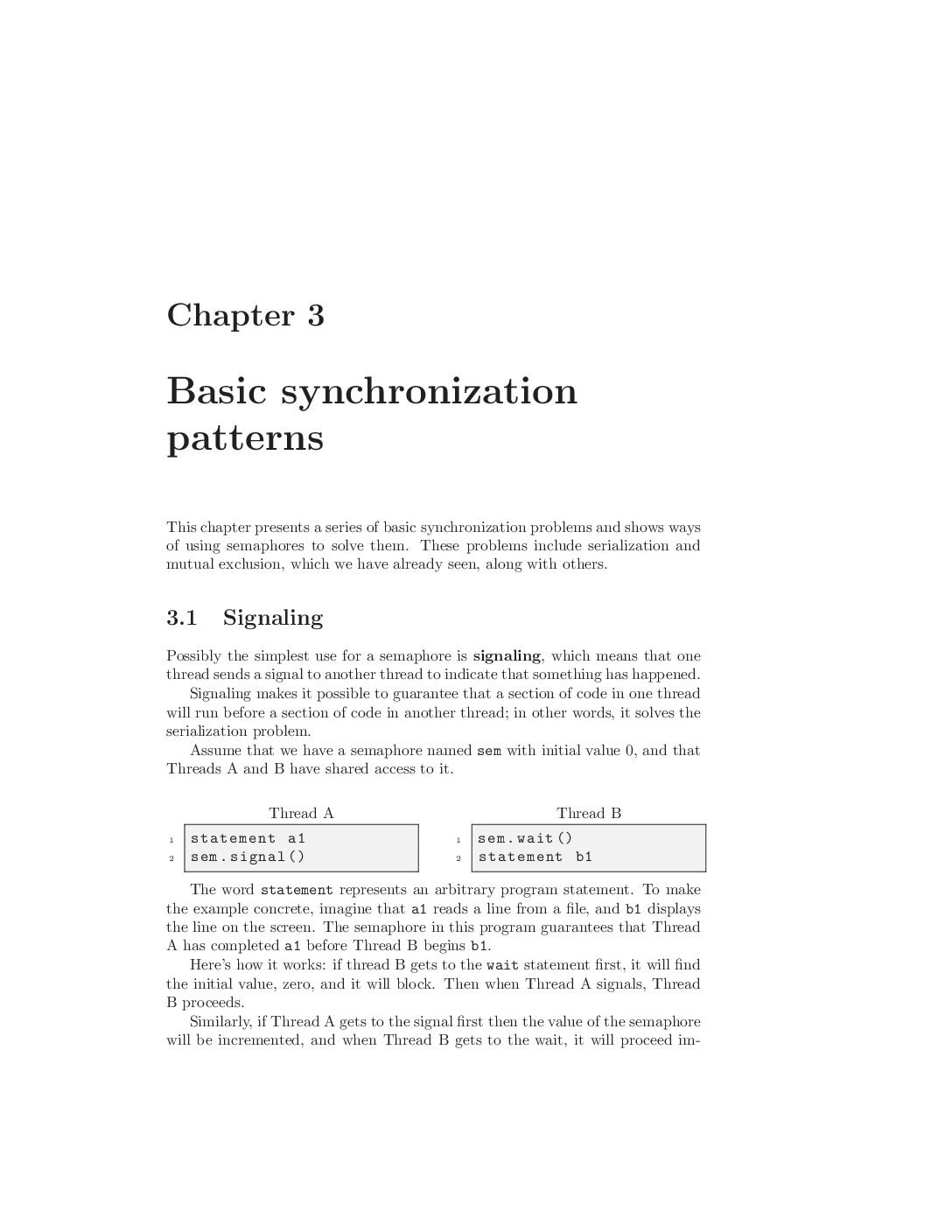
Introduces fundamental synchronization patterns including signaling and rendezvous. Demonstrates how semaphores solve serialization problems by enabling one thread to send signals indicating completion, allowing guaranteed event ordering in concurrent execution.
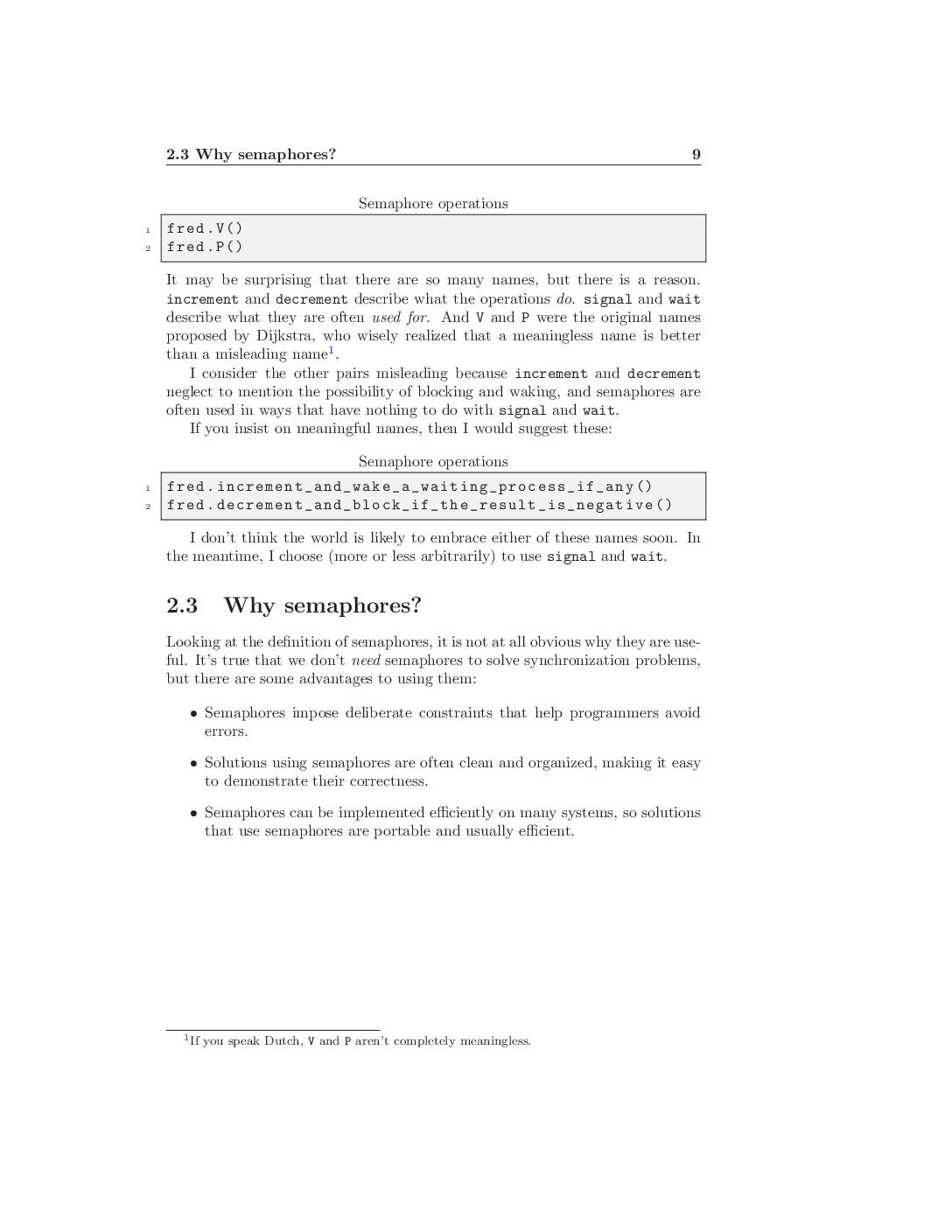
Discusses advantages of using semaphores for synchronization: deliberate constraint enforcement, clean organized solutions, and efficient portable implementations across systems. Explores alternative naming conventions (V/P operations) from Dijkstra’s original design.
Defines semaphores as synchronization primitives with wait and signal operations. Details how semaphores block threads based on value state and explains fundamental properties including thread blocking, waking mechanisms, and their role in managing concurrent access.
Covers non-determinism in concurrent programs and shared variable access issues. Analyzes concurrent writes, updates, and the importance of mutual exclusion to prevent race conditions and ensure atomic operations in multithreaded environments.