Copyright protects original creative works and, unlike a patent, arises automatically the moment a work is fixed in tangible form. This chapter explains how copyright is obtained, why registration matters only for enforcement, how copyright differs from patents, and how the system balances the rights of authors against the public interest.
How Copyright Is Obtained
In the United States copyright is administered by the U.S. Copyright Office, part of the Library of Congress, but registration is not required to hold a copyright. Protection is granted automatically to the author at the moment of creation, as soon as the work is expressed in a tangible form that can be seen or copied, such as writing on paper, a file on a computer, or a recording. Registration becomes necessary only if the copyright holder wants to bring an infringement suit in federal court.
Copyright Versus Patents
Unlike patents, the United States never built an examination system to decide whether a creative work deserves protection. The validity of an invention can be judged fairly objectively by its utility, novelty, and non-obviousness, but the merit of a cultural work is far more subjective, as shown by how often publishers reject books that later become classics. What both systems share is the recognition that protecting the property rights of inventors and authors preserves the incentive to create.
Authors and the Public Interest
Both copyright and patent law pursue a public purpose: to marshal the benefits of individual creativity, whether technological or cultural, toward the progress of the nation and the general welfare of its citizens. The system therefore balances two aims, rewarding authors so they continue to create, while ensuring that creative works ultimately enrich the public. The Founders approached this balance differently for copyright than for patents, but both rest on the same underlying bargain between private incentive and public good.
A patent gives an inventor the right to exclude others from making, using, or selling an invention for a limited time. This chapter explains what a patent is, the requirement that an invention be new, useful, and non-obvious, the difference between product and process patents, and why ideas alone cannot be patented.
What a Patent Is
A patent is a document issued by the United States Patent and Trademark Office that gives an inventor the right to exclude others from making, using, offering for sale, selling, or importing the invention for a limited period. It does not grant a positive right to use the invention, but rather the power to stop others from doing so without permission. In exchange, the inventor must publicly disclose how the invention works, so that knowledge becomes available to society once the patent expires.
What Can Be Patented
The Patent Act allows anyone who invents or discovers a new, non-obvious, and useful machine, manufacture, process, or composition of matter, or an improvement of one, to obtain a patent. These fall into two categories: products and processes. Products are physical things such as machines, manufactured articles, or chemical compositions, while processes are methods or means of doing something, whether a wholly new action or a new way of doing an old one. The invention must meet all three tests of novelty, usefulness, and non-obviousness.
You Cannot Patent Ideas
Not everything that fits the four categories can be patented. The key limit is the difference between an abstract idea and a specific, practical application of it. Laws of nature, natural phenomena, and abstract ideas themselves are not patentable, because they are the basic tools of knowledge that must stay open to all. A patent protects a concrete invention that applies such principles to a useful end, not the underlying principle. Recent court rulings have narrowed the patentability of purely abstract methods.
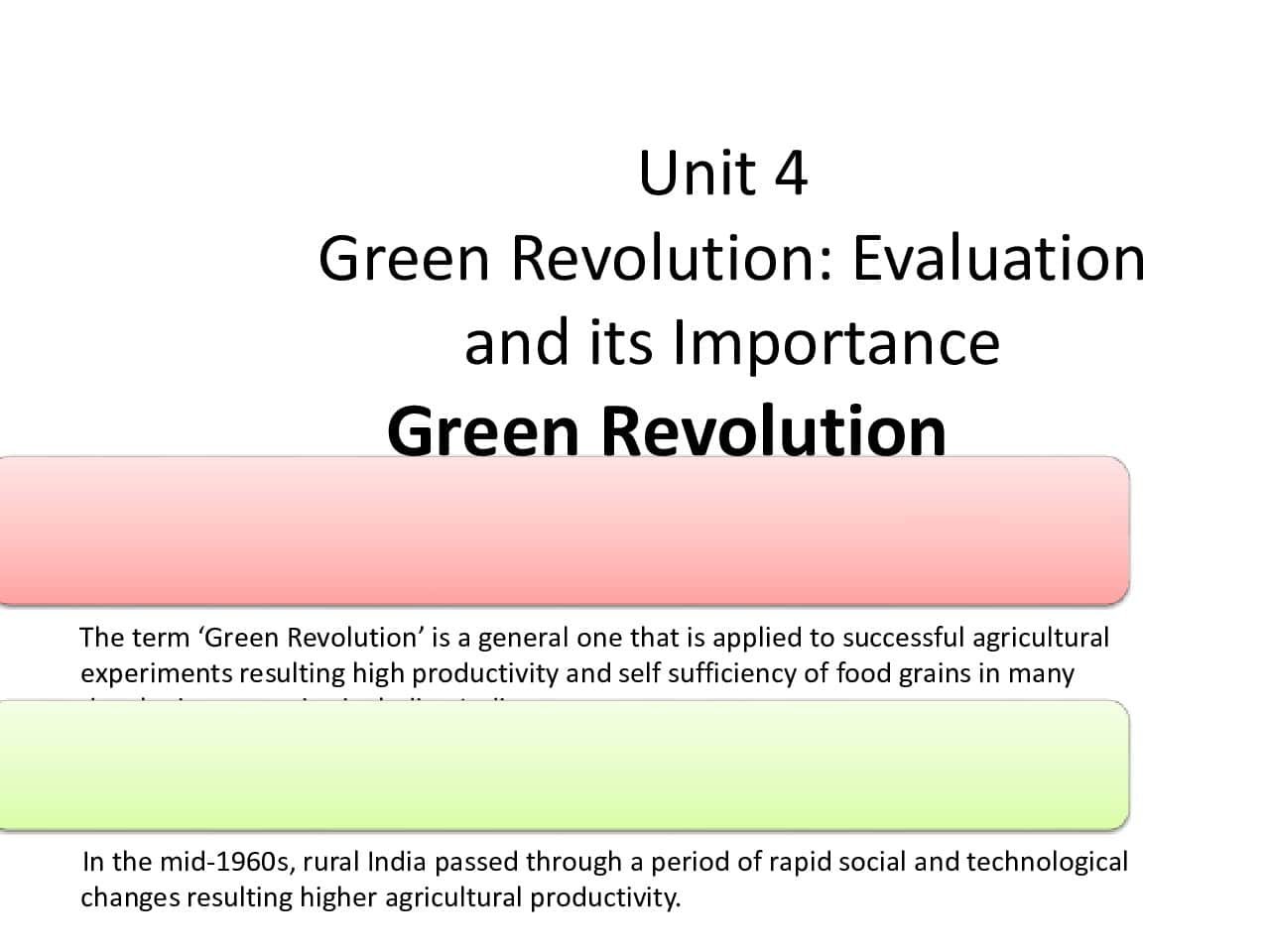
Green Revolution in India covering definition (wheat revolution, packaged revolution), Norman Borlaug’s contribution (semi-dwarf HYV wheat, Nobel Peace Prize), five socio-technological innovations (HYV, land consolidation, tube well irrigation, mechanization, fertilizers/pesticides), M.S. Swaminathan’s role, programmes (IADP, IAAP, HYVP), and India’s wheat production increase from 12.3 to 76.4 million tons
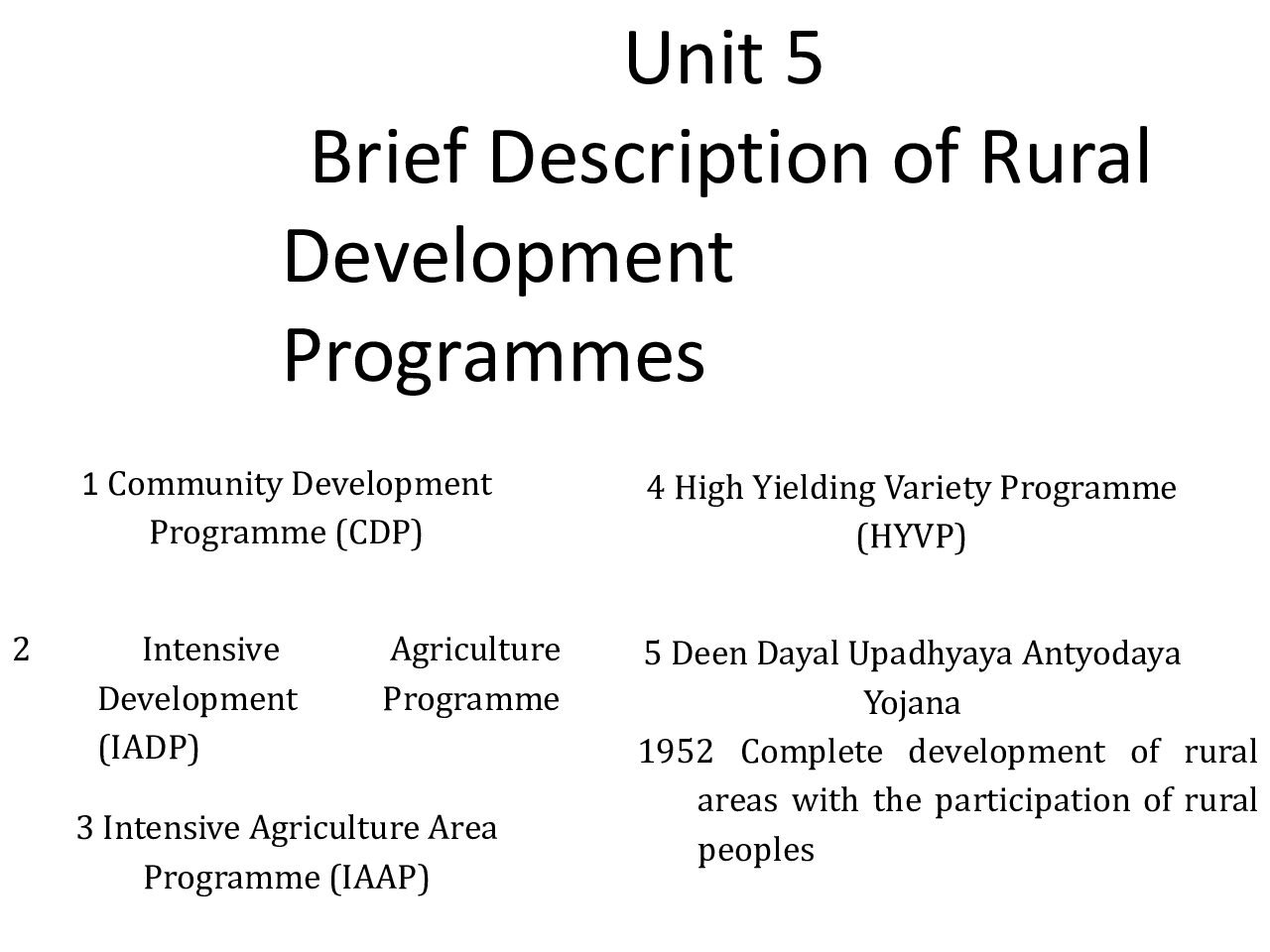
Organizational structure for rural development covering formal and informal organizations, Caste Council/Jati Panchayat (origin, organization with Panchas, meetings for caste rule breaches, punishments including excommunication), jurisdiction, decline factors (modern courts, constitutional panchayats, laws against untouchability), and relevance of Khap panchayats in northern India.