Global population growth continues to rise steadily, projected to exceed 8 billion by 2025, with significant increases in regions such as South Asia and Sub-Saharan Africa. This growth drives escalating demand for food production to ensure food security. Advances in agricultural technology, improved crop yields, and expanded arable land have allowed food production to keep pace with population increases, though challenges remain in regional disparities, resource management, and environmental sustainability. Trade in food commodities is expected to grow substantially to balance supply and demand globally. Despite progress, undernourishment persists in some areas, highlighting the continued need for innovation in sustainable farming and resource-efficient food production.
Fermentation is an anaerobic metabolic process where microorganisms like yeast and bacteria convert sugars into alcohol, organic acids, or gases. This enzyme-driven process generates energy by breaking down carbohydrates without oxygen. Widely used in food production, fermentation creates products such as yogurt, bread, beer, and wine. It also plays a vital role in biotechnology for producing biofuels, enzymes, and pharmaceuticals. The process enhances food preservation, flavor, and texture. Understanding fermentation methods and applications is key for industrial and biotechnological advancements.
This lesson covers recruitment fundamentals, processes, internal and external sourcing methods, factors affecting recruitment, and recent trends like outsourcing and e-recruitment. It emphasizes strategic recruitment planning as essential for building a qualified candidate pool aligned with organizational goals
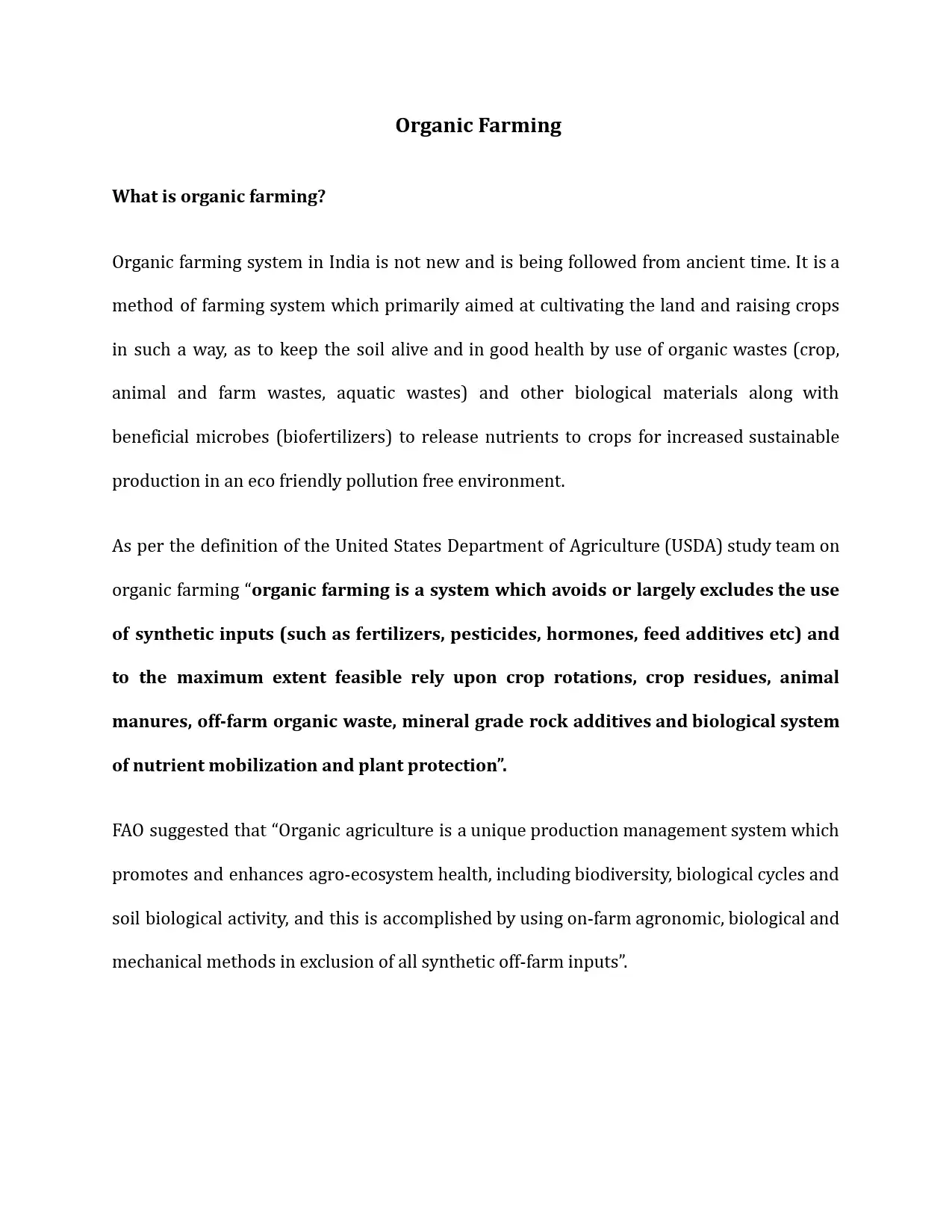
Organic farming is a sustainable agricultural system that avoids synthetic fertilizers and pesticides, focusing on natural processes like crop rotation, composting, and biological pest control to maintain soil health and biodiversity. It is guided by the principles of health, ecology, fairness, and care, aiming to produce healthy food while protecting the environment and animal welfare. Organic farming excludes genetically modified organisms and emphasizes environmentally friendly, ethical practices throughout the food chain.
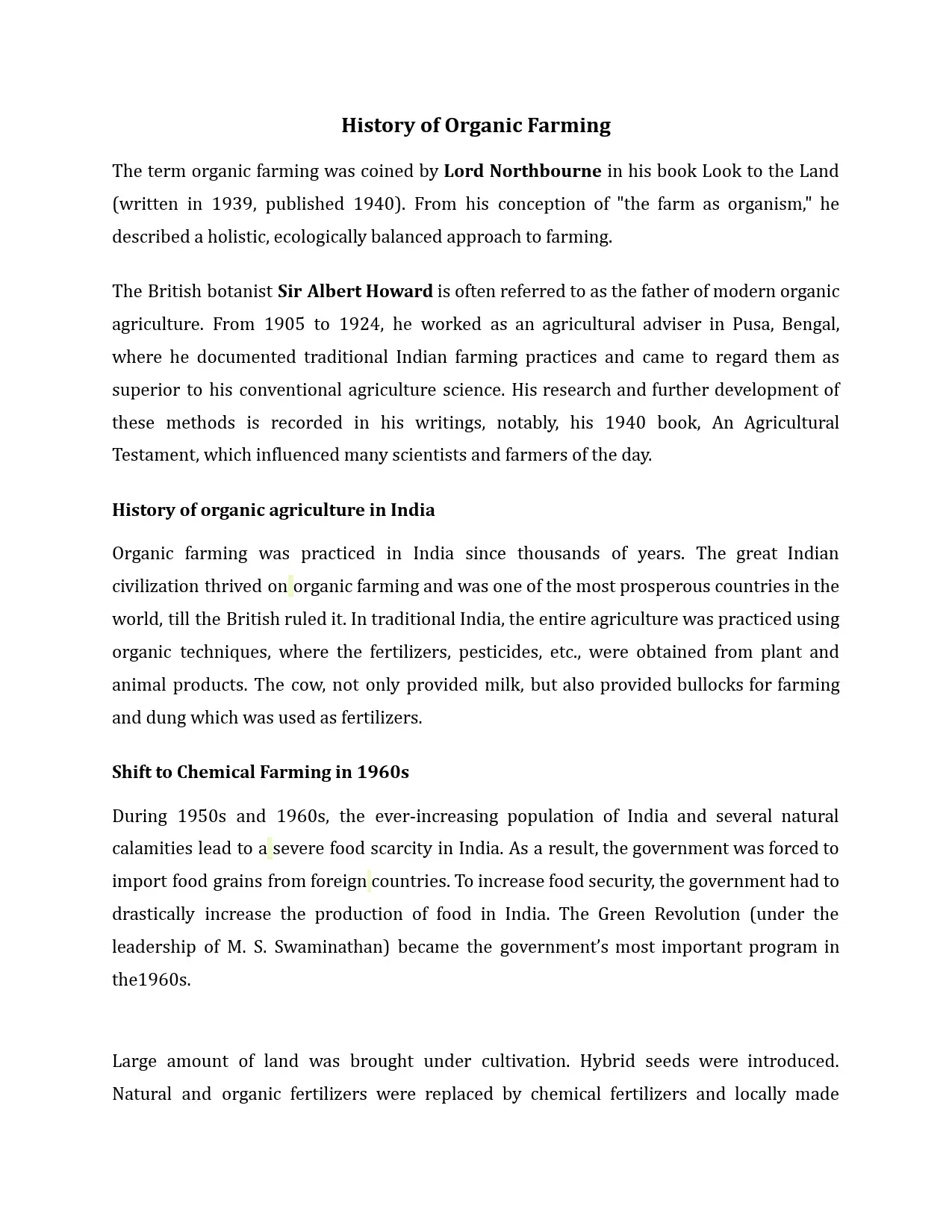
The history of organic farming spans from ancient times, when traditional practices like crop rotation, composting, and livestock integration sustained soil health, to a modern global movement responding to the negative impacts of chemicals and industrialization. Pioneers like Sir Albert Howard and Rudolf Steiner championed an ecologically balanced, chemical-free approach in the 20th century, leading to formal standards and widespread adoption. Organic farming emphasizes soil fertility, biodiversity, and reduced environmental harm, now aided by technology and global certification.