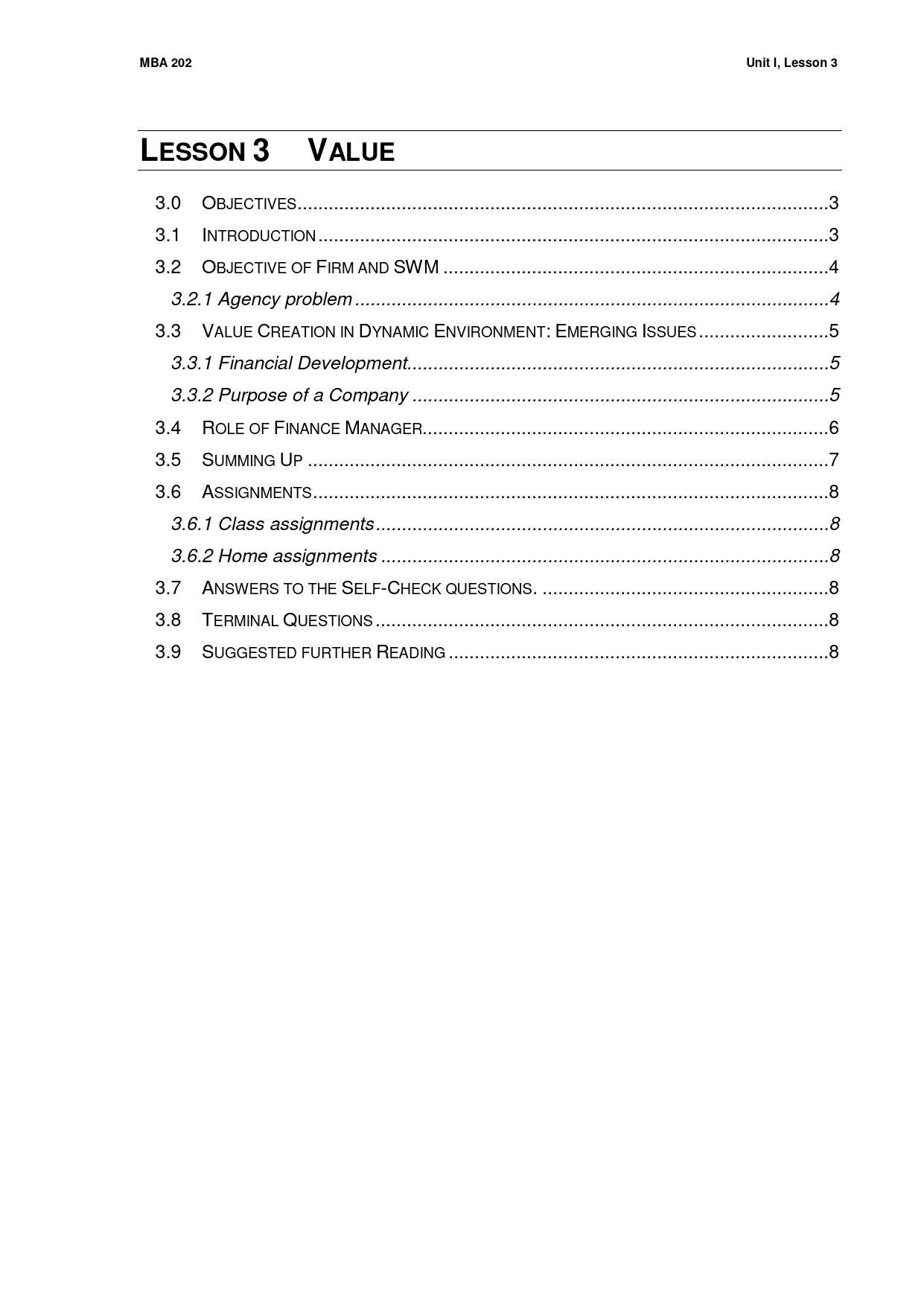
This lesson explores how firms create value, emphasizing the objectives of profit maximization versus shareholder wealth maximization. It addresses agency problems, dynamic value creation, financial development, and the evolving responsibilities of finance managers in today’s competitive and innovative environment, including risk management and stakeholder relationships.
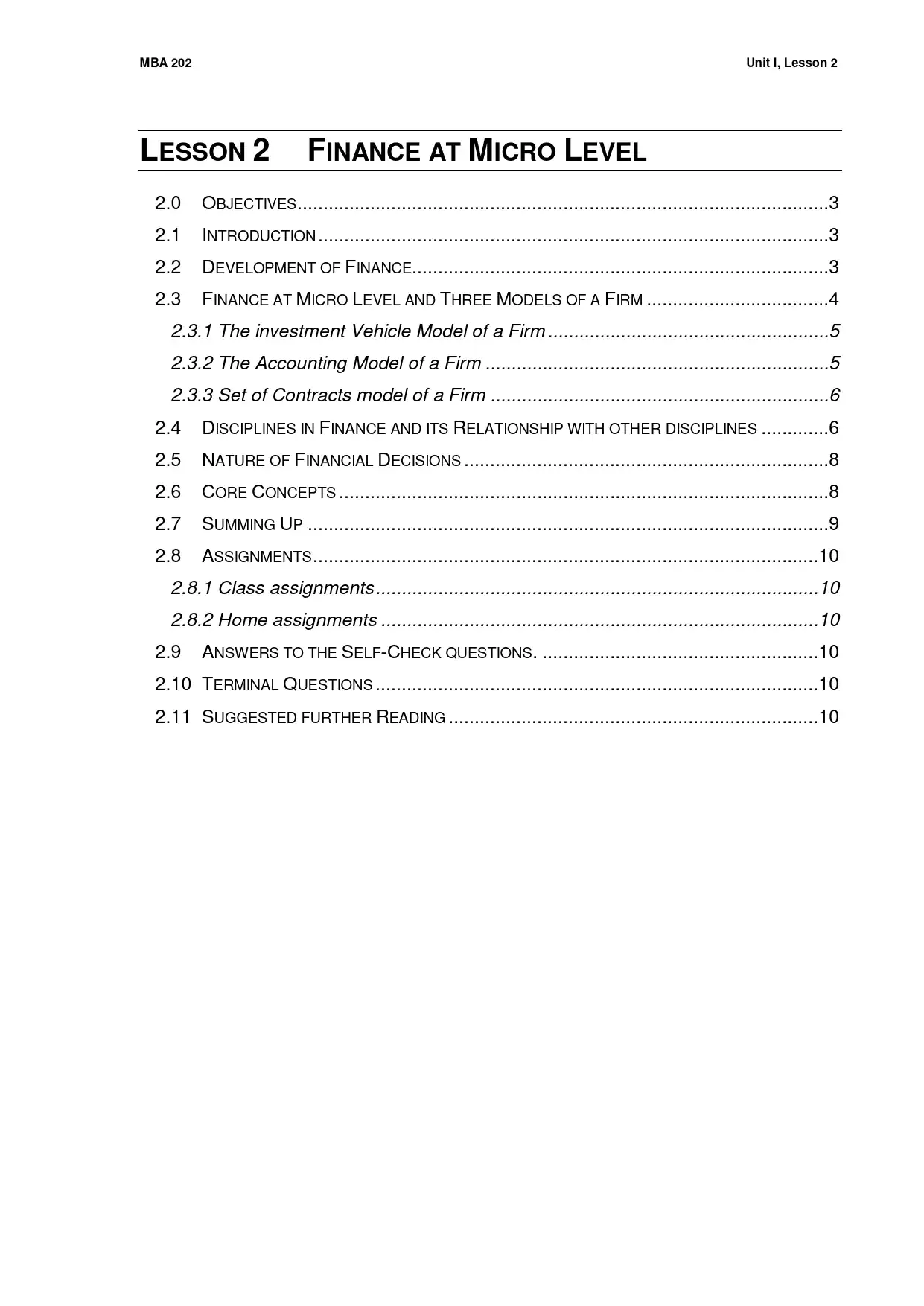
This lesson introduces finance at the micro level, focusing on its application within firms. It details the evolution of finance, core financial concepts, and three key models of a firm: investment vehicle, accounting, and set-of-contracts model. The discussion emphasizes decision-making, the relationship of finance with other disciplines, and the interconnected factors affecting firm financial performance.
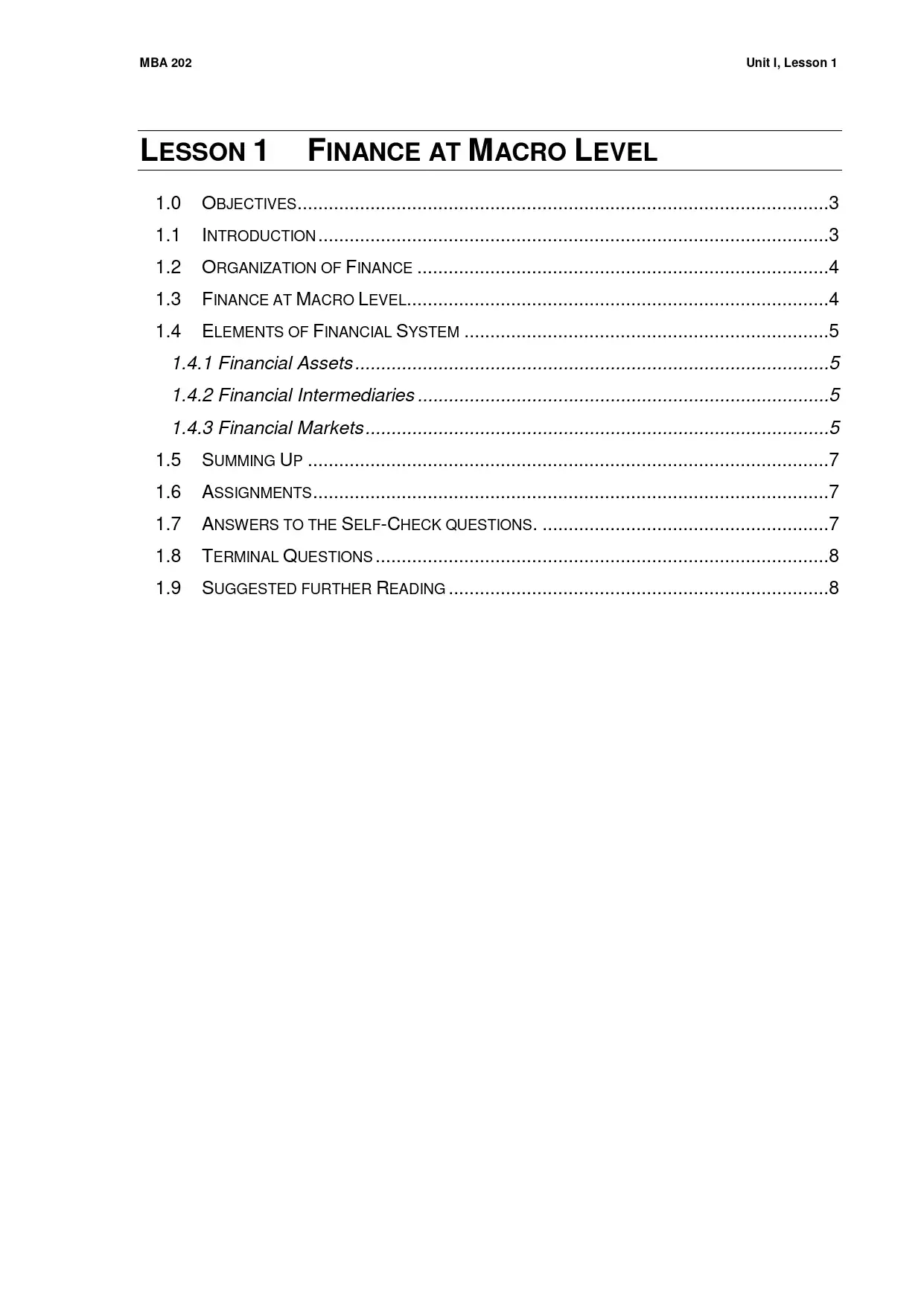
This lesson explains the broad components, scope, and functions of finance at the macro level. It covers financial managers, investors, and financial markets, highlighting how financial decisions influence business environments, market sentiments, and overall economic activity. Elements such as financial assets, intermediaries, and markets are discussed to illustrate how money is raised, managed, and invested efficiently for wealth maximization.
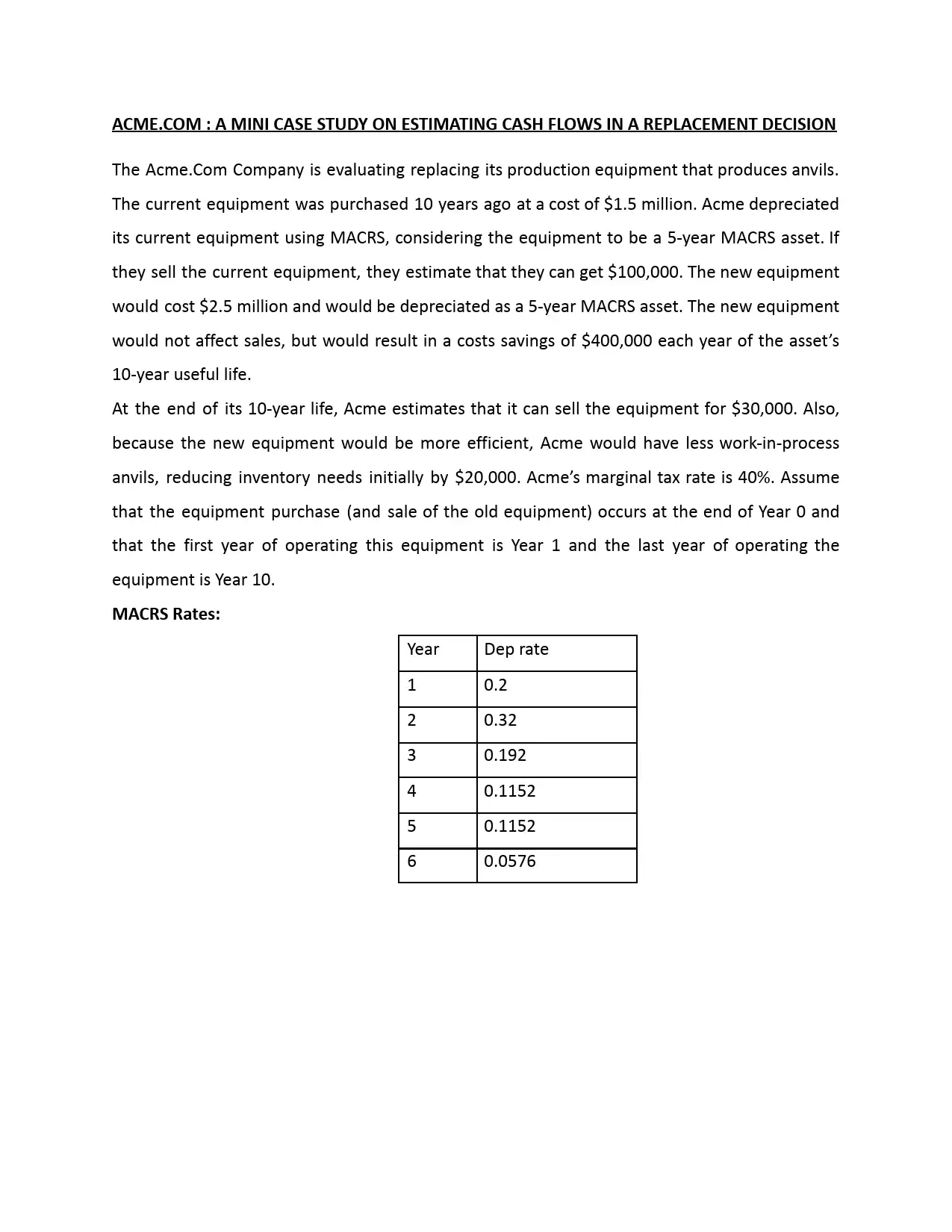
This document is a mini case study analyzing the cash flow implications for Acme.Com Company when replacing its production equipment. It reviews depreciation using MACRS, equipment purchase, sale values, tax effects, inventory changes, and yearly cost savings, providing a comprehensive decision framework for capital equipment replacement in a business setting
Introduction to sampling covering population vs sample, sampling methods, advantages, bias types, parameter vs statistic concepts, and sampling applications.