
Organizational Structure and Design
Covers motivation concepts, characteristics, and theories including Maslow’s hierarchy, Herzberg’s two-factor theory, Theory X/Y/Z, expectancy theory, and equity theory. Focuses on human behavior motivation.

Covers motivation concepts, characteristics, and theories including Maslow’s hierarchy, Herzberg’s two-factor theory, Theory X/Y/Z, expectancy theory, and equity theory. Focuses on human behavior motivation.
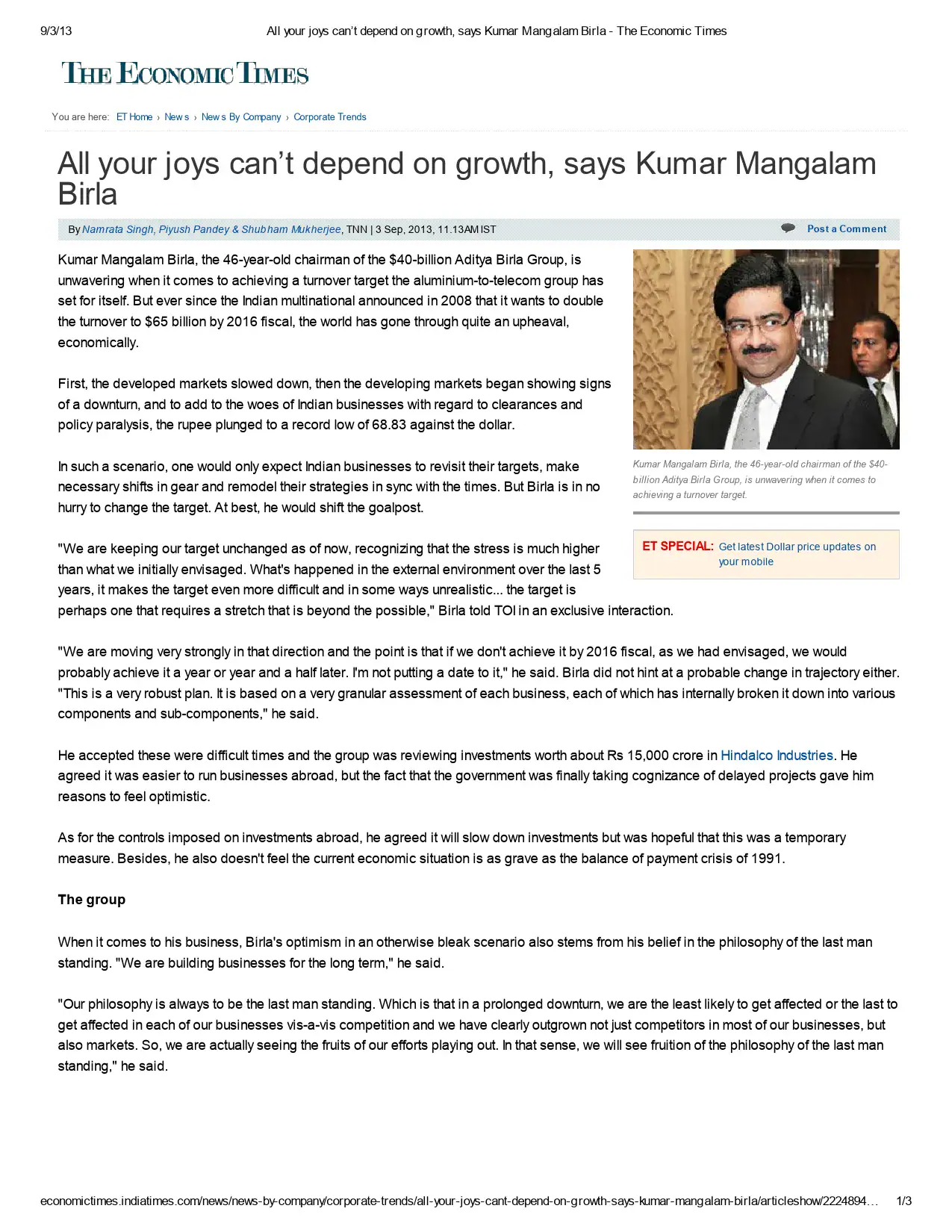
These notes comprises Kumar Mangalam Birla interview discussing Aditya Birla Group’s $65 billion turnover target by 2016, “last man standing” philosophy during economic downturn, dynamic nurturance strategy across diverse businesses (cement, telecom, retail), banking license aspirations, and emphasis on long-term value creation over short-term growth pressures for sustainable business building.
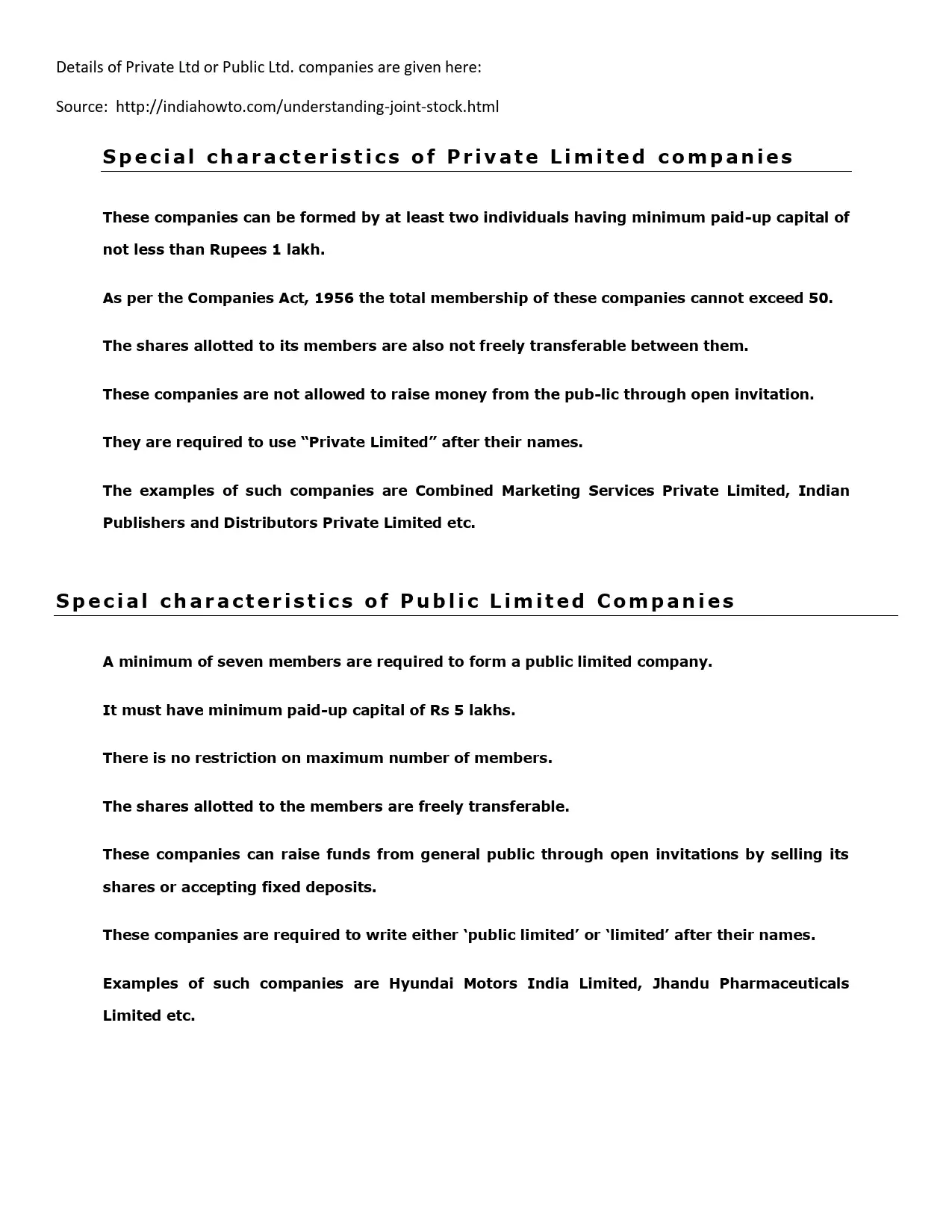
This documents gives comparison between Private Limited and Public Limited companies in India. Private Ltd: minimum 2 members, maximum 50, ₹1 lakh paid-up capital, non-transferable shares, no public fundraising. Public Ltd: minimum 7 members, no maximum limit, ₹5 lakh paid-up capital, freely transferable shares, can raise public funds through share offerings.

Four cornerstones of corporate finance by McKinsey: core-of-value (growth and ROIC drive value creation), conservation-of-value (rearranging claims doesn’t create value), expectations treadmill (market expectations drive performance), and best-owner (value depends on management capabilities). Critiques financial engineering, excessive leverage, and emphasizes timeless economic principles for sustainable value creation.
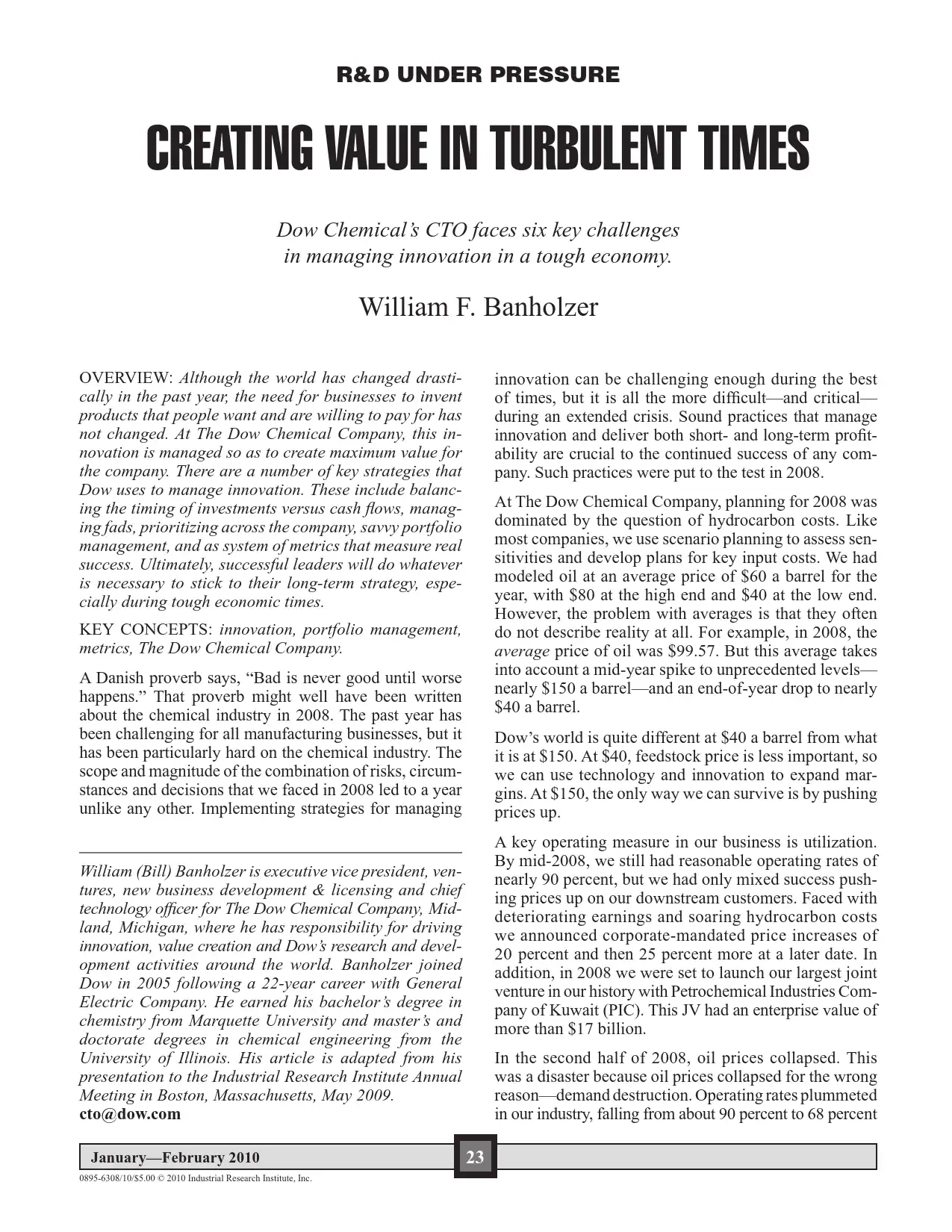
Dow Chemical’s CTO William Banholzer discusses six key challenges for managing innovation during economic turbulence: balancing investment timing vs cash flows, managing fads, prioritization through Innovation Growth Playbook, portfolio management, appropriate metrics (productivity over spending), and talent management. Emphasizes sticking to long-term strategy despite short-term pressures.