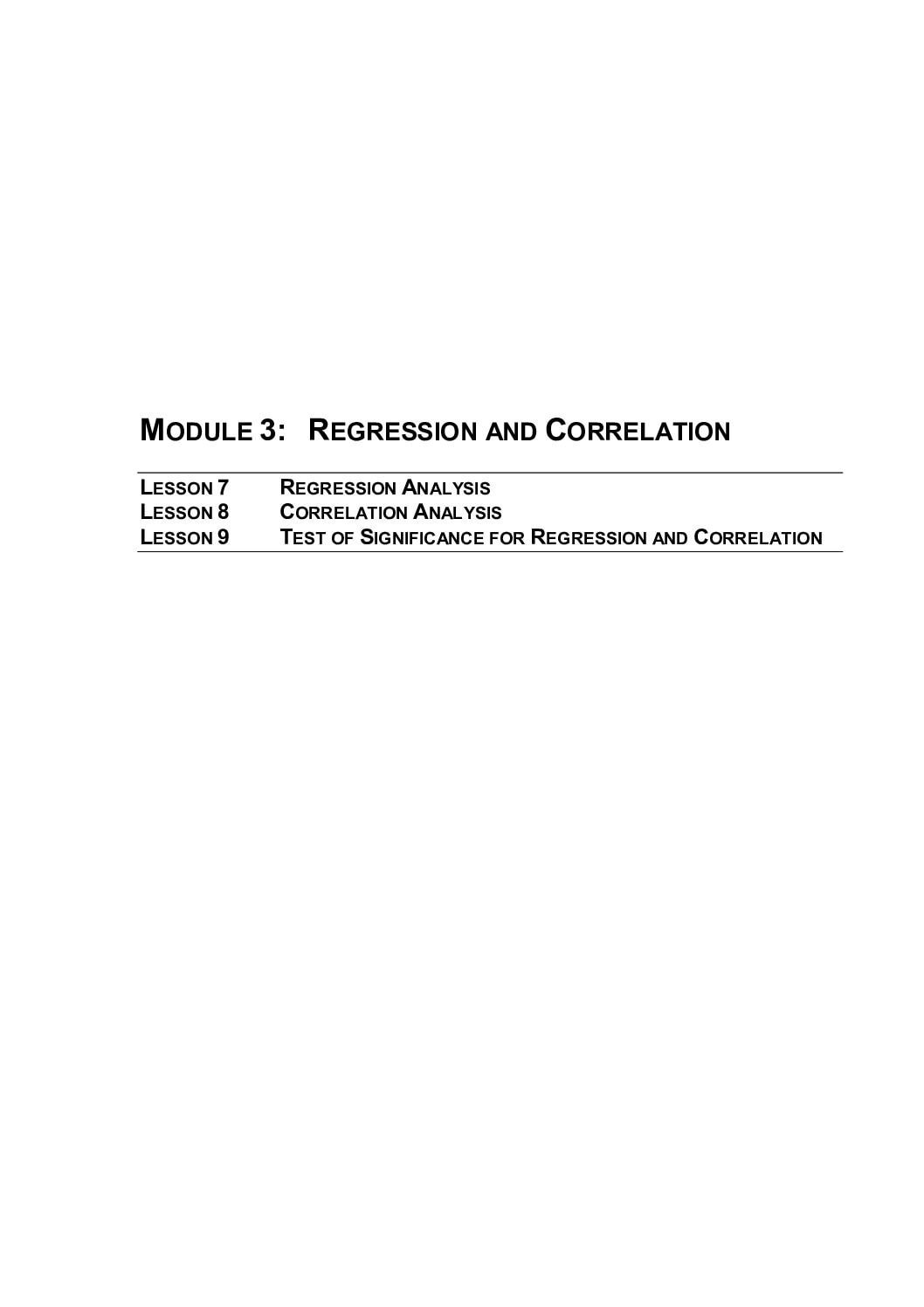
Comprehensive guide to regression analysis covering simple linear regression models using least-squares criterion. Explains dependent and independent variables, regression coefficients, slope interpretation, and point estimates. Covers both regression equations (Y on X, X on Y), their properties, intersection points, and coefficient relationships with detailed mathematical illustrations and business applications.
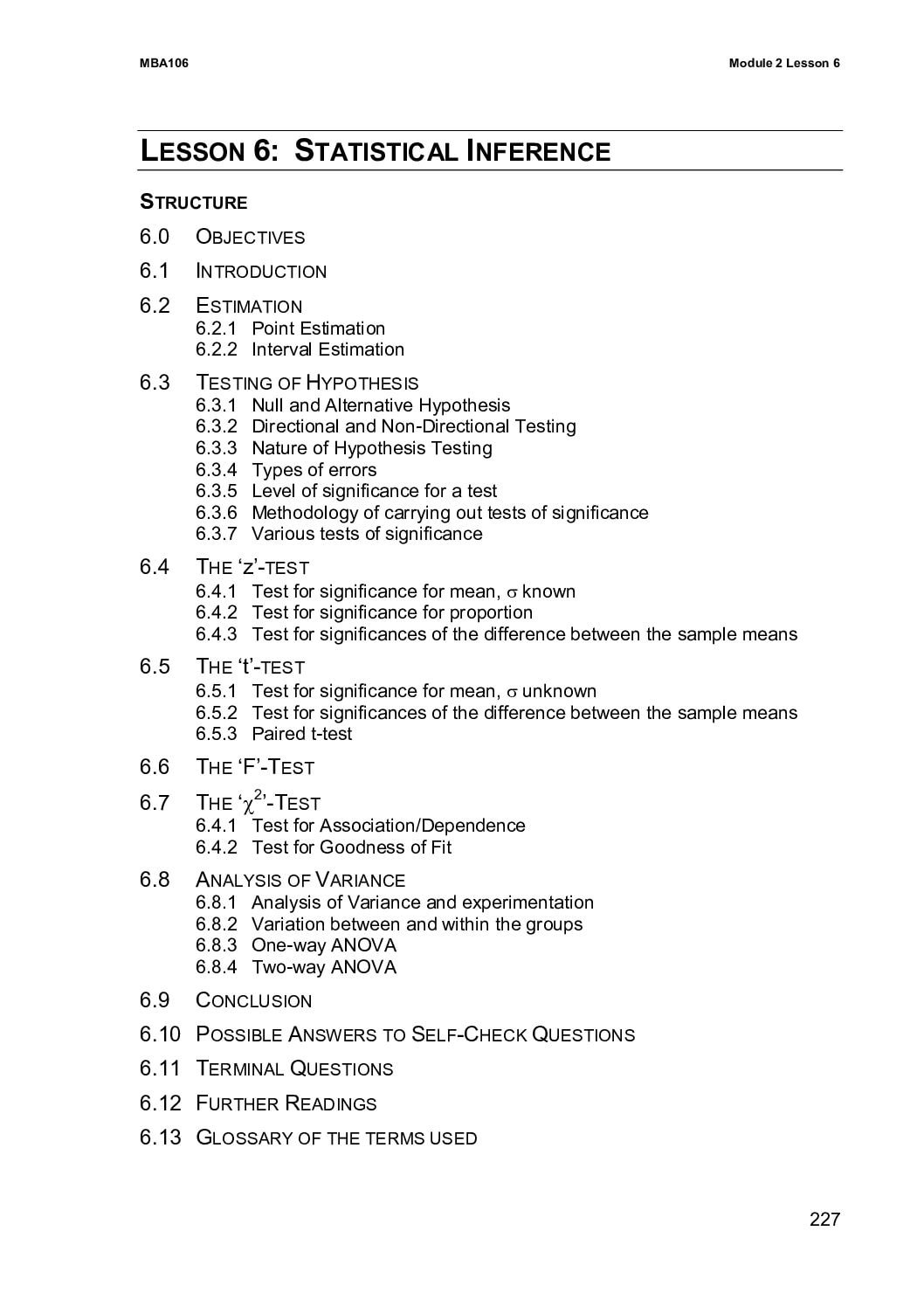
Comprehensive study of statistical inference covering point and interval estimation methods with confidence intervals. Detailed hypothesis testing procedures including null and alternative hypotheses, Type I and II errors, significance levels. Explores various statistical tests: z-test, t-test, F-test, chi-square, paired t-test, and one-way/two-way ANOVA applications.
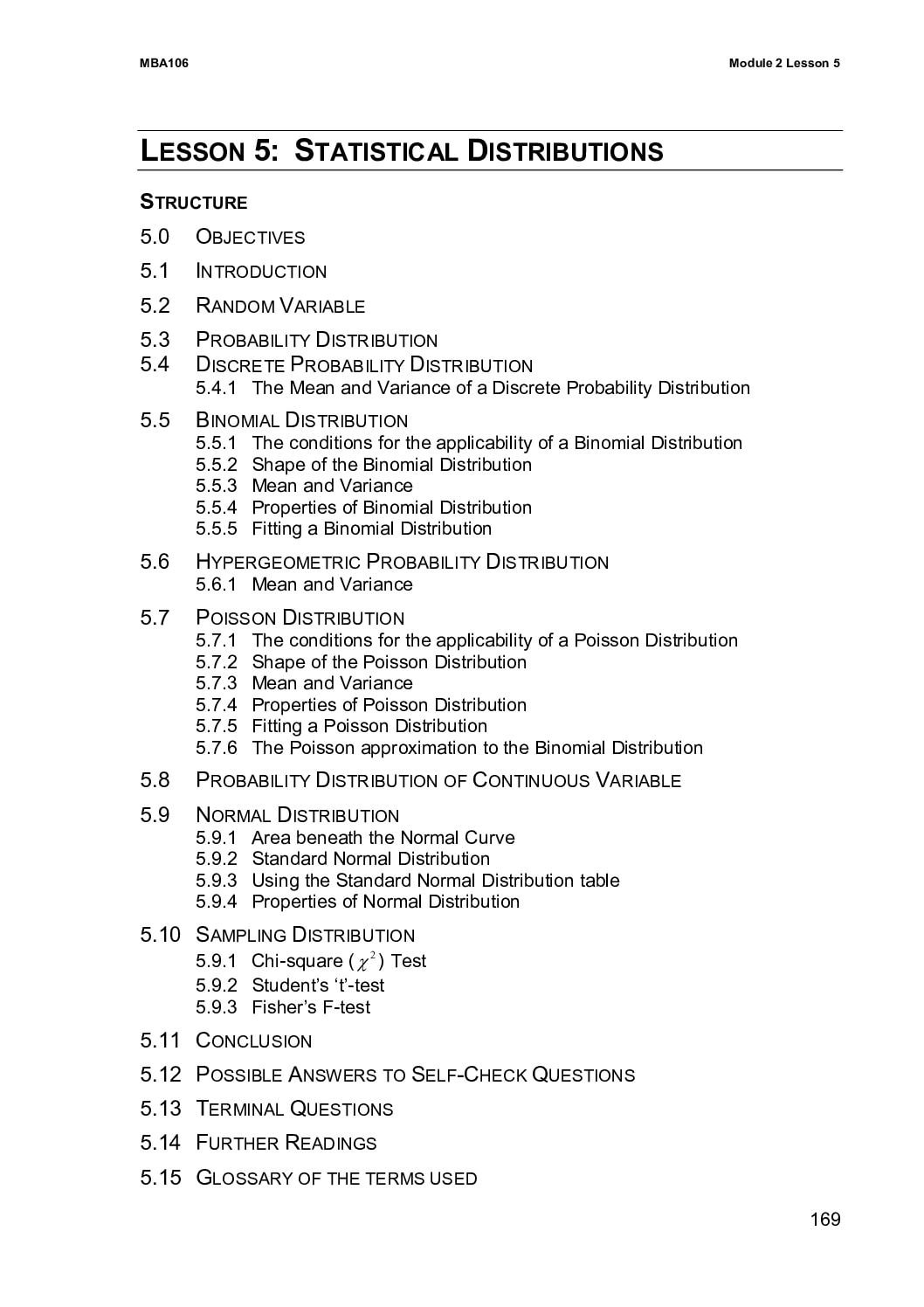
This covers detailed exploration of statistical distributions covering discrete distributions including binomial, hypergeometric, and Poisson with practical applications. Examines continuous distributions focusing on normal distribution, standard normal tables, and z-score calculations. Introduces sampling distributions including chi-square, t-test, and F-test for statistical inference and hypothesis testing.
Comprehensive coverage of probability concepts including classical, relative frequency, and subjective approaches. Explores probability rules for mutually exclusive and non-mutually exclusive events, addition and multiplication rules. Introduces Bayes theorem for sequential events, fundamental counting principles, permutations, combinations, and practical applications with detailed illustrations.
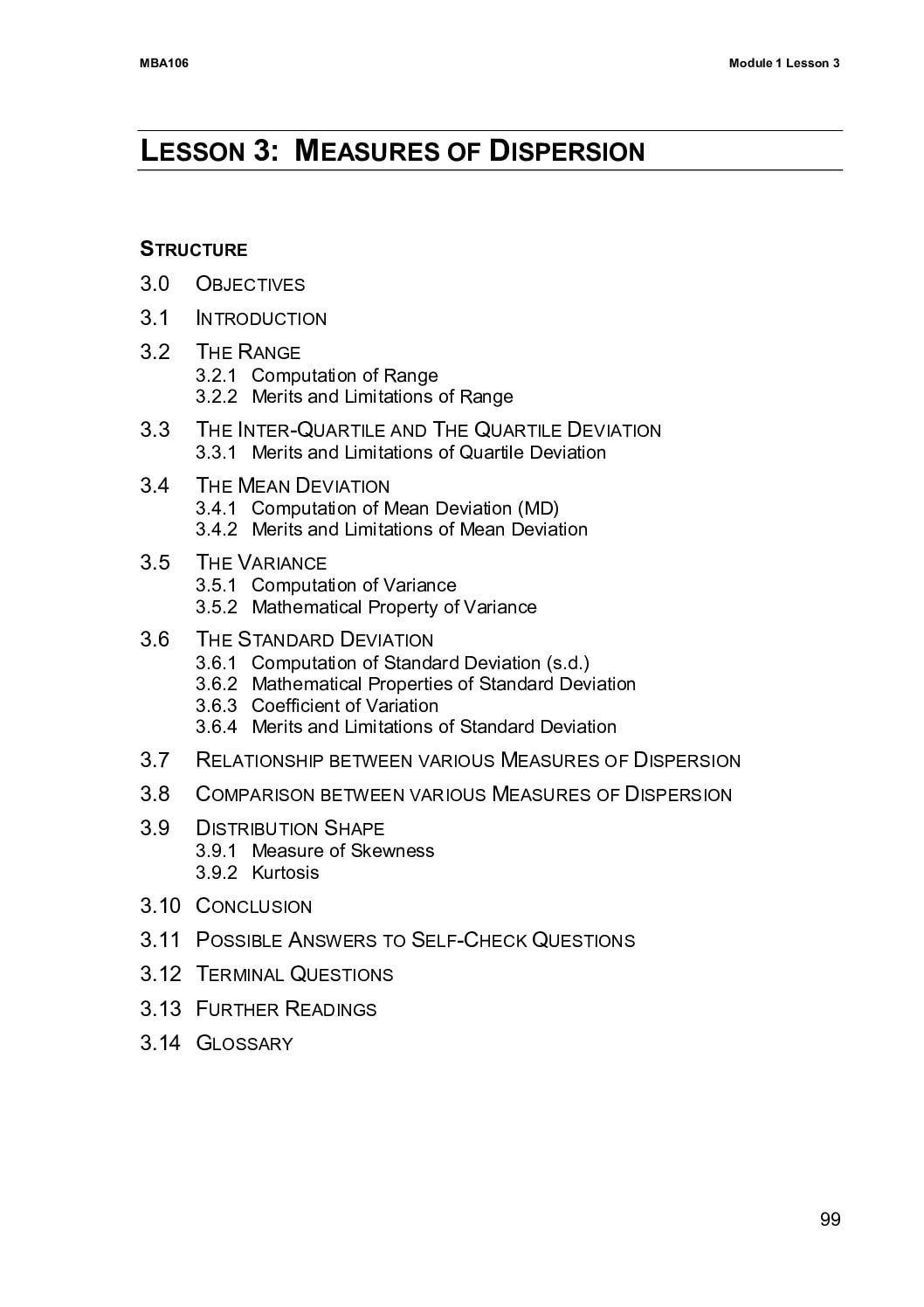
Comprehensive study of dispersion measures including range, quartile deviation, mean deviation, variance, and standard deviation calculations. Explores coefficient of variation for comparing variability between datasets. Covers distribution shape analysis through skewness measures, kurtosis types, and symmetry assessment with practical business applications for consistency and reliability evaluation.