
Globalisation concepts, problems and challenges covering definition (economic, social, cultural, political phenomenon), integration of economies (technology, communication, trading blocs), trade vs aid debate, corporate expansion (MNCs/TNCs characteristics), corporate domination issues, obstacles to Indian business globalization (government policy, high cost, poor infrastructure, obsolescence, resistance to change, poor quality image, supply problems, small size, lack of experience, limited R&D, growing competition, trade barriers, corruption), factors favoring Indian globalization (human resources, wide base, growing entrepreneurship, domestic market, niche markets, NRIs, economic liberalization, competition), Indian business globalization background, benefits and problems comparison.
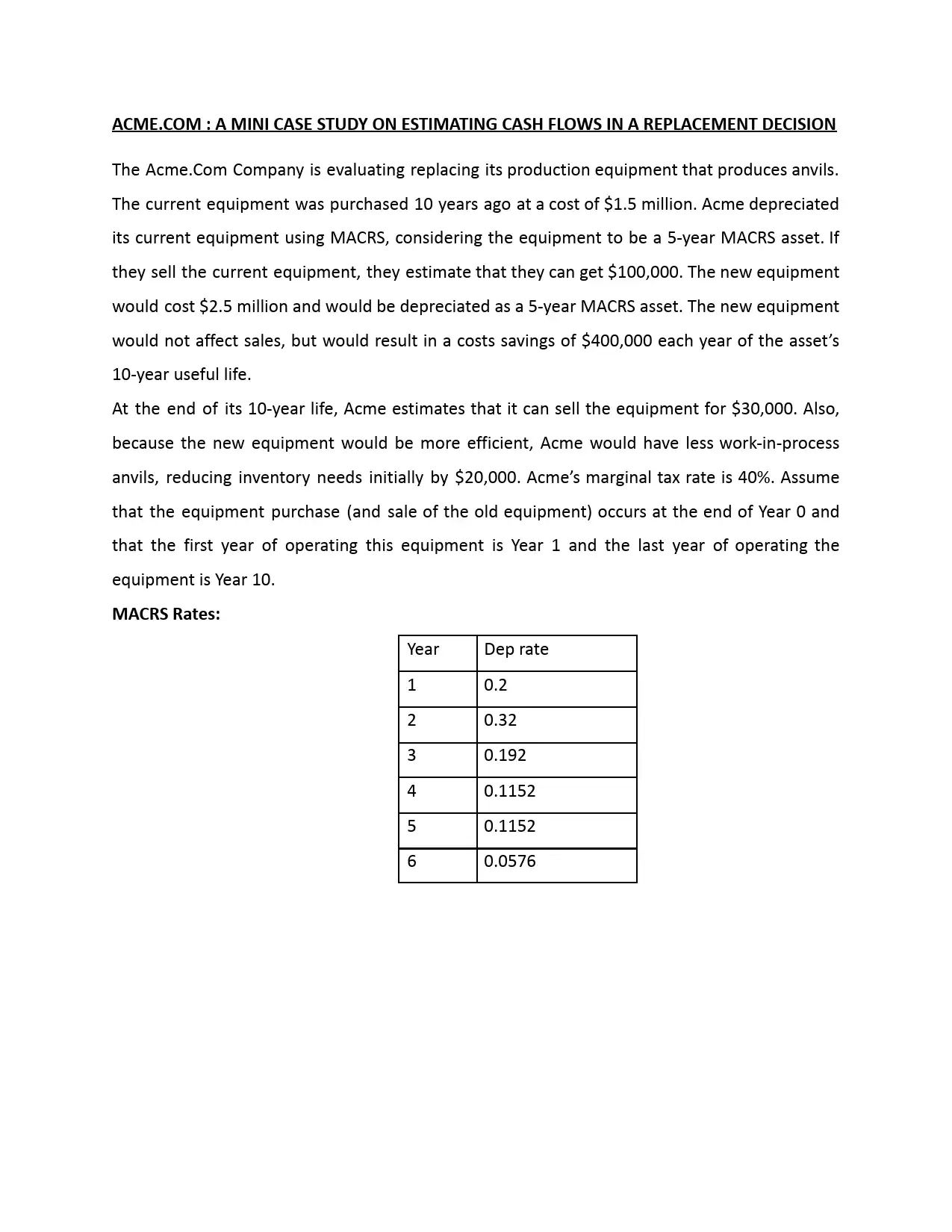
Estimating Cash Flows in Replacement Decisions
This mini case study guides students in estimating cash flows for a capital replacement decision at Acme.Com Company. It covers evaluating the financial impact of replacing production equipment, including asset costs, depreciation (MACRS), initial investment, tax effects, salvage values, cost savings, and inventory implications. The case provides data on equipment purchase/sale timing, annual cost reductions, and depreciation rates over a 10-year asset lifecycle, offering a hands-on scenario for learning capital budgeting methodologies in a real-world business context
Inventory and Receivables Management
This lesson covers management of inventory with EOQ, ABC analysis, MRP, JIT concepts, and receivables management from credit policy formation to monitoring and financing. Techniques and illustrations are provided for cost-benefit analysis, credit decision-making, and optimizing levels for both current assets. Practical guides clarify balancing profitability, risk, and credit strategies for business sustainability
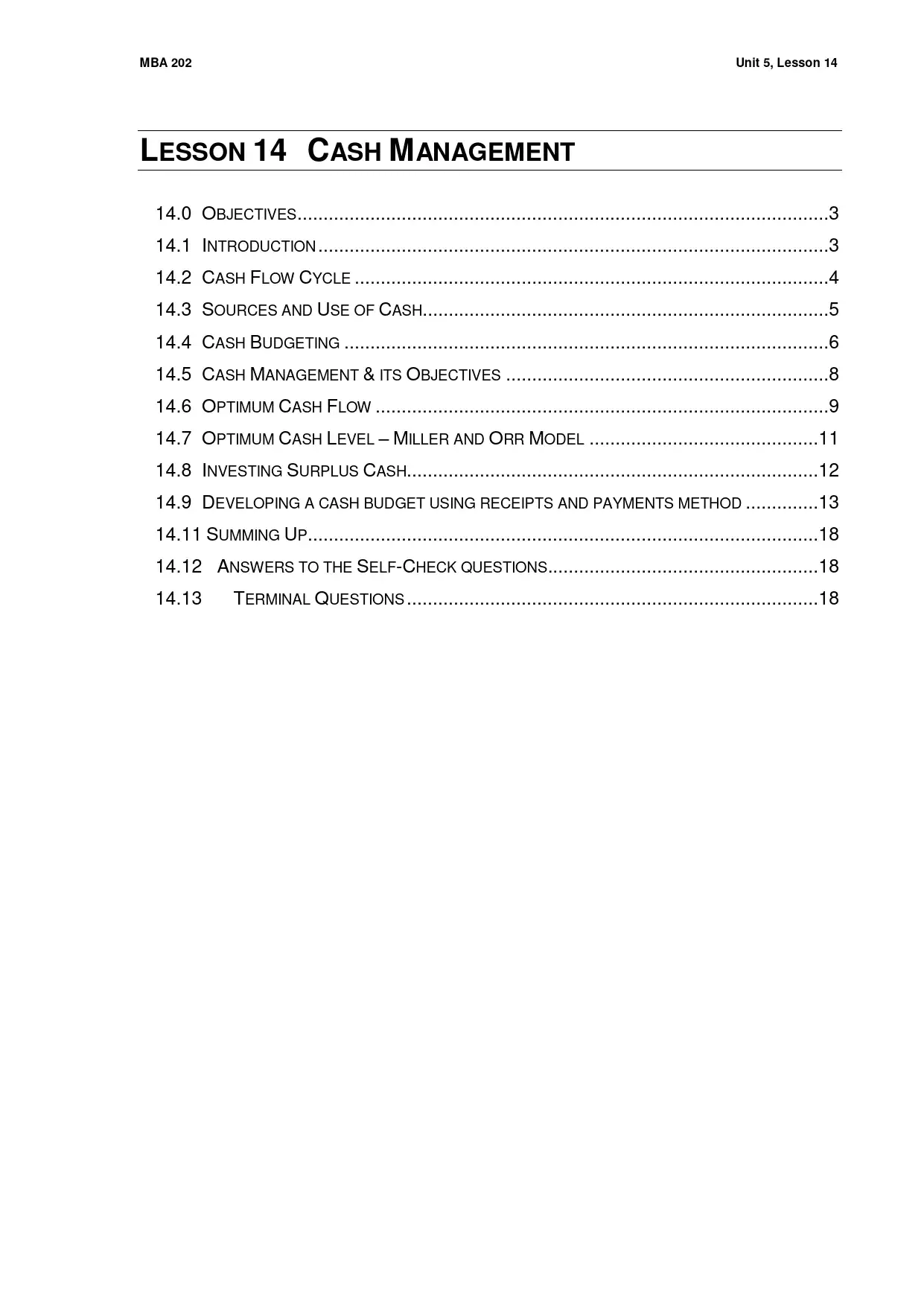
Cash Management, Budgeting, and Optimum Levels
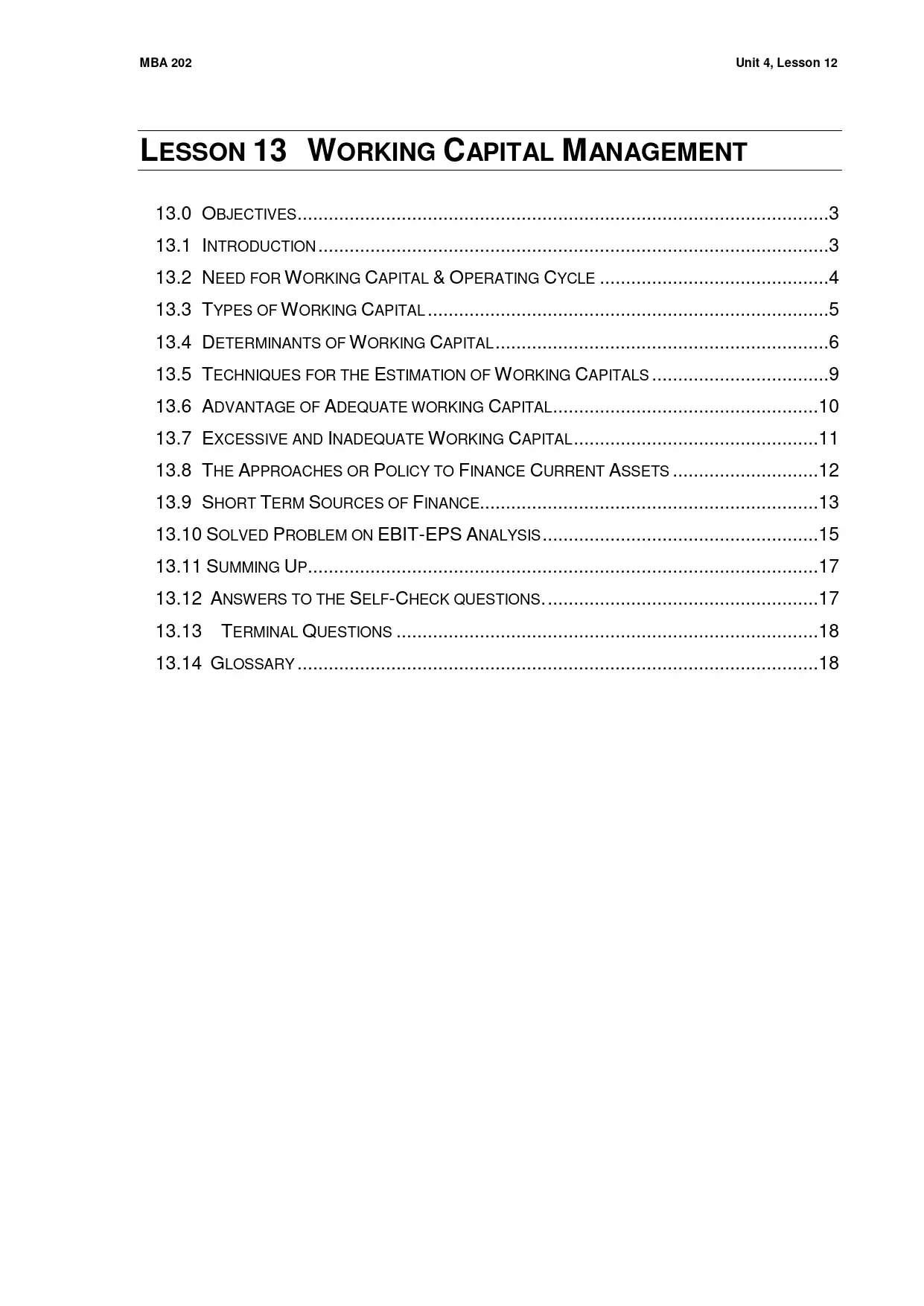
Working Capital Management and Financing Mix
The lesson details working capital concepts (gross, net), determinants, techniques for estimation, advantages, disadvantages of excessive/inadequate capital, and bank/non-bank sources of finance. It introduces the operating cycle, financing approaches (matching, conservative, aggressive), and committee recommendations from RBI for small and large businesses, with problem-solving sections for practical implementation.