The document reviews how plants absorb, transport, and lose water, vital for physiological processes such as photosynthesis and turgor maintenance. It covers key concepts including water potential, transpiration, osmosis, water transport pathways, and the cohesion-tension theory.
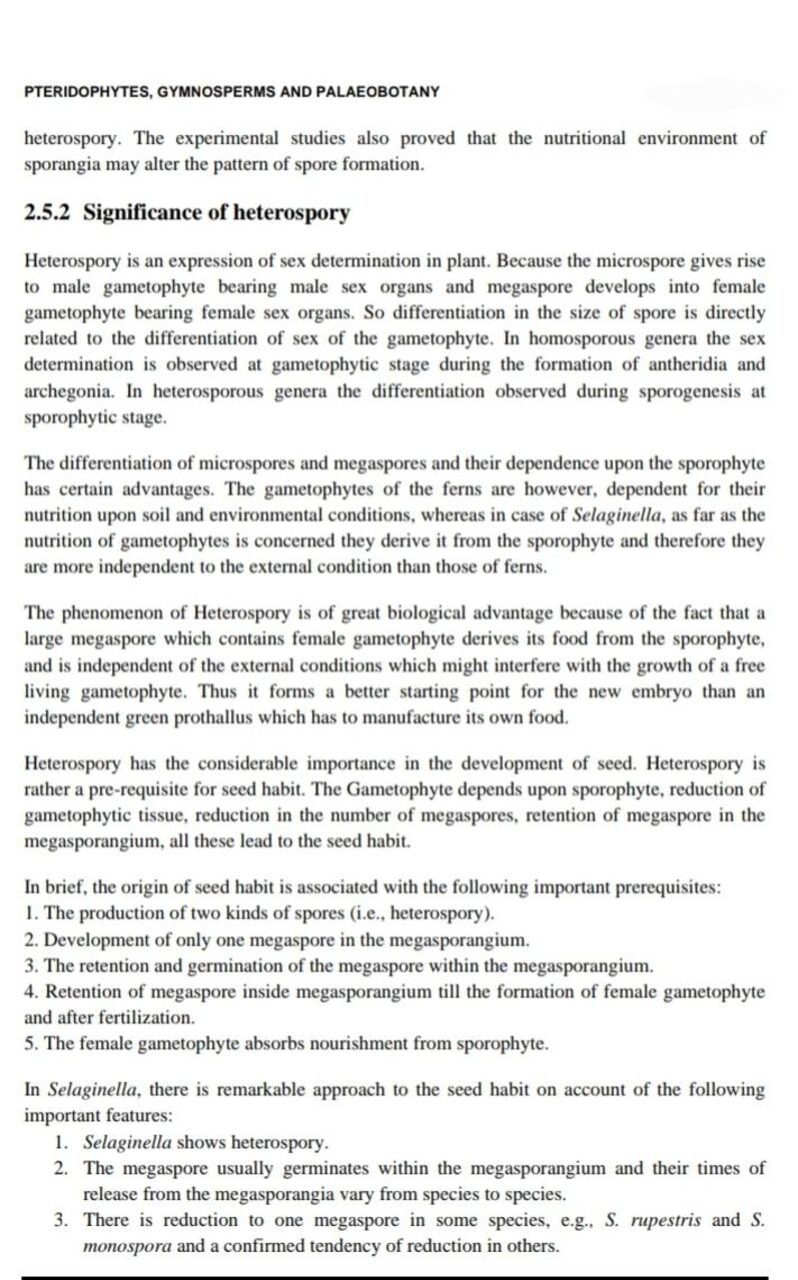
This file explains the concept of heterospory wherein two spore types (microspores and megaspores) develop, related to sex determination. It discusses evidences from fossils, developmental biology, and experimental observations that support the origin and evolutionary importance of heterospory in plant reproduction.
This document covers the evolutionary biology of vascular plants including pteridophytes, gymnosperms, and fossil plants. It focuses extensively on heterospory, its biological significance, paleobotanical evidences, developmental and experimental studies, and its role as a precursor to seed habit development.
Explores membrane transport processes—passive, active diffusion, osmosis—and common transport problems affecting plants (ion imbalance, loss of selectivity, aquatic stress, toxic substance accumulation). Discusses physiological impacts, cellular mechanisms, and strategies for plant stress tolerance and productivity improvement.