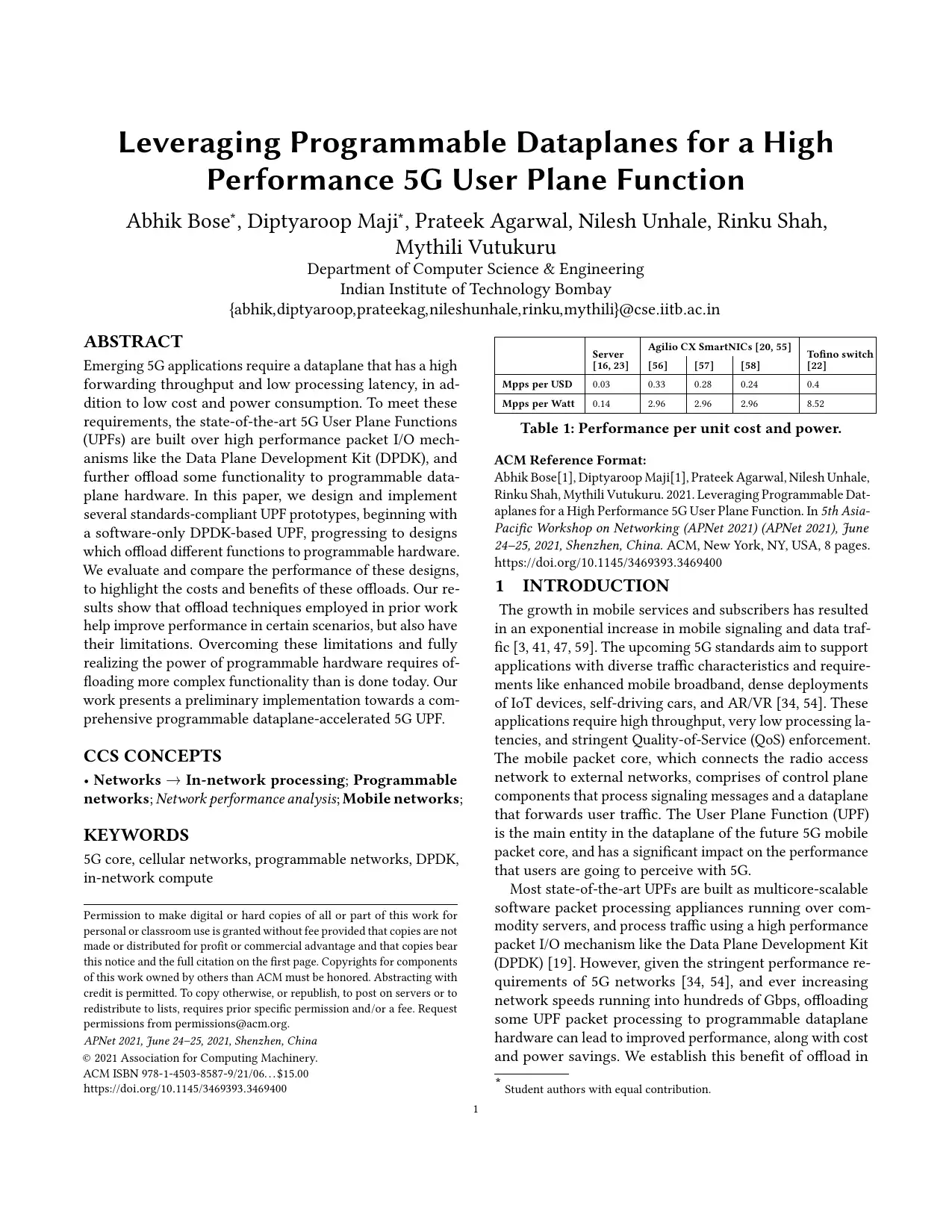
The paper analyzes performance, bottlenecks, and optimization opportunities for UPF designs in 5G using network function virtualization. It benchmarks kernel-bypass, smartNIC, and programmable switch deployments, with a focus on throughput, power efficiency, and scalability constraints in serving millions of subscribers.
AppSteer introduces a Linux/eBPF-based framework that enables network functions to steer requests at application-key granularity (e.g., user ID) instead of only by TCP/UDP flow. This design supports lock-free, per-core partitioned state for compute-intensive NFs (e.g., 5G core NFs), delivering 15-18% more throughput at 16 cores compared to conventional approaches
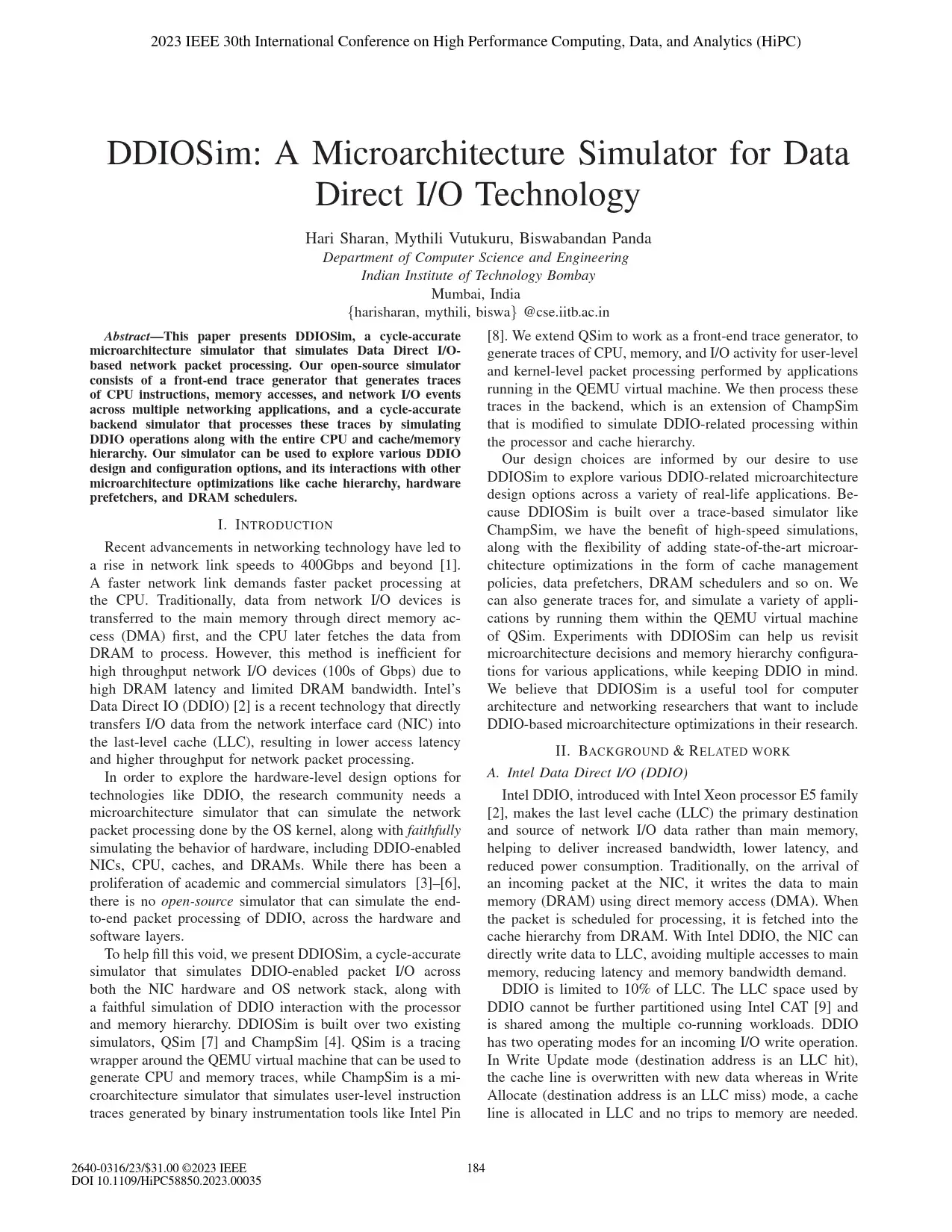
DDIOSim is an open-source, cycle-accurate simulator combining QSim and ChampSim to model Intel’s DDIO technology, which allows direct NIC-to-Last Level Cache (LLC) data transfer. The tool enables researchers to explore design, performance, and system interactions of DDIO-based network architectures, assessing cache/DRAM use, throughput, and latency for diverse workloads
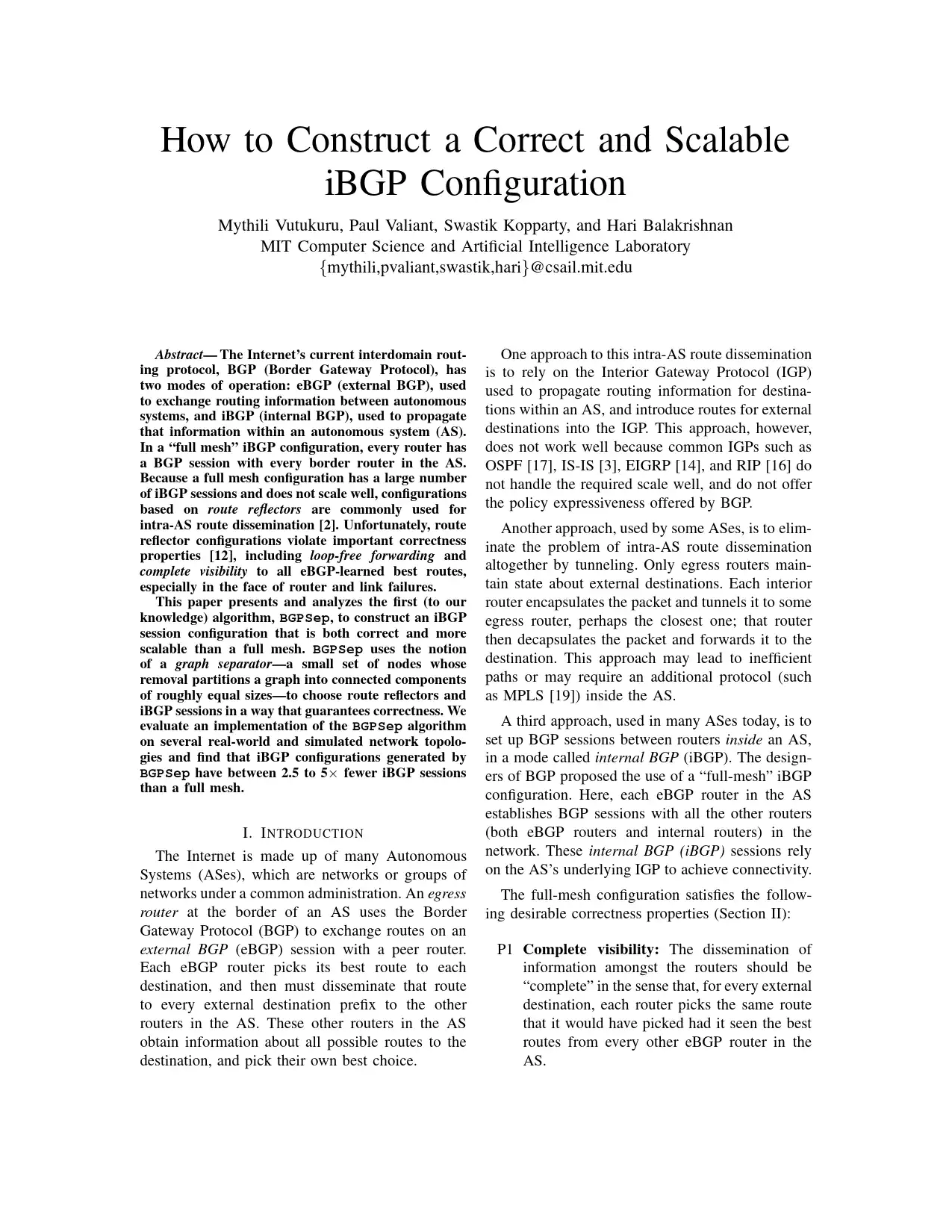
This work proposes BGP Separation (BGPsep), where the forwarding and routing planes of BGP routers are decoupled, enabling more secure and robust Internet routing. The architecture allows for route validation, policy enforcement, and easier manageability of routing infrastructure, reducing attack surfaces and improving reliability.
Pyramis presents a hierarchical control-plane architecture for managing large-scale programmable networks (e.g., with many P4 switches). By partitioning device control among distributed controllers, it achieves scalability and modularity without sacrificing consistency, ensuring performance in both configuration change rate and rule installation.