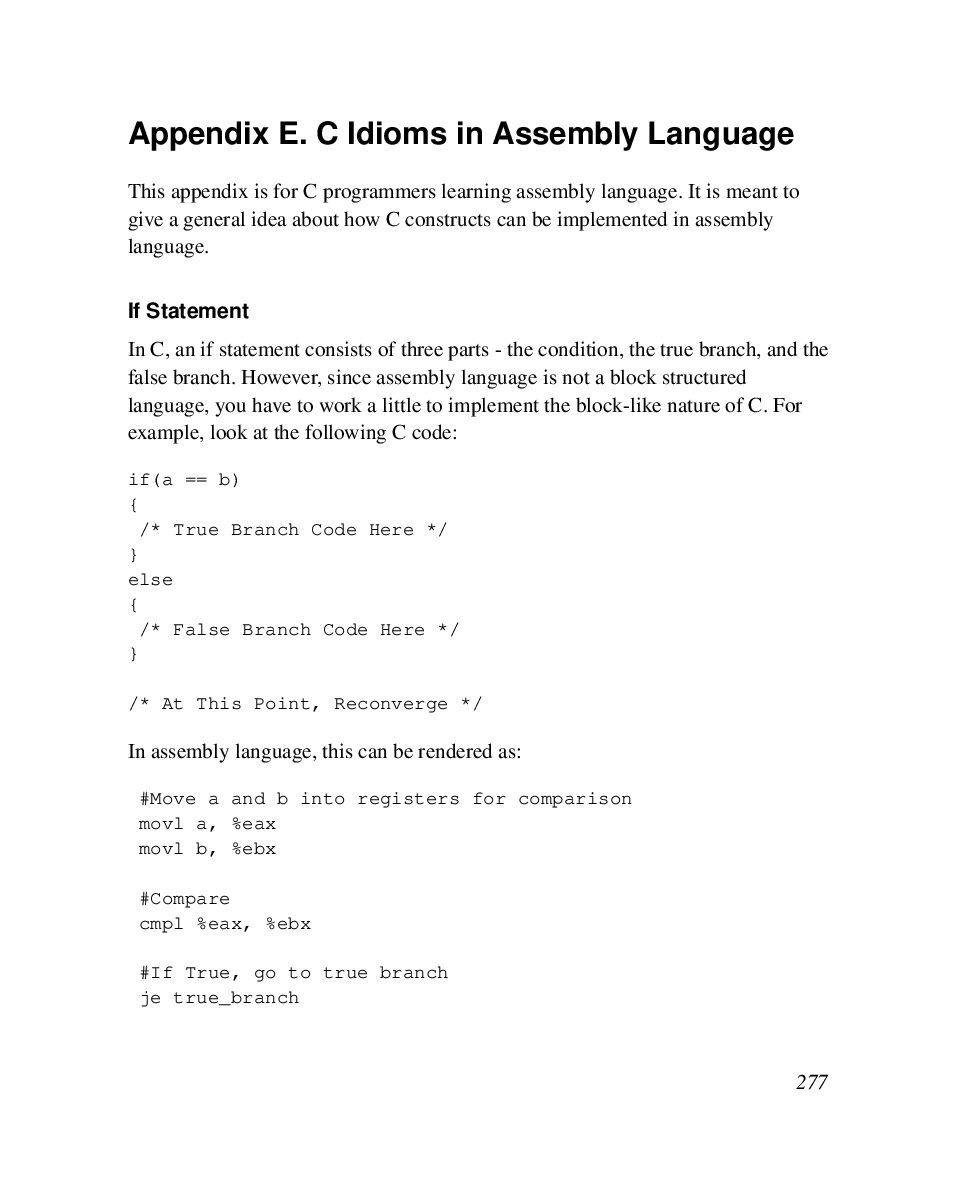
Explains how C constructs (if statements, loops, function calls, variables, structs, pointers) translate to x86 assembly language. Includes practical examples showing block structures, stack operations, register usage, and memory addressing modes with implementation details.
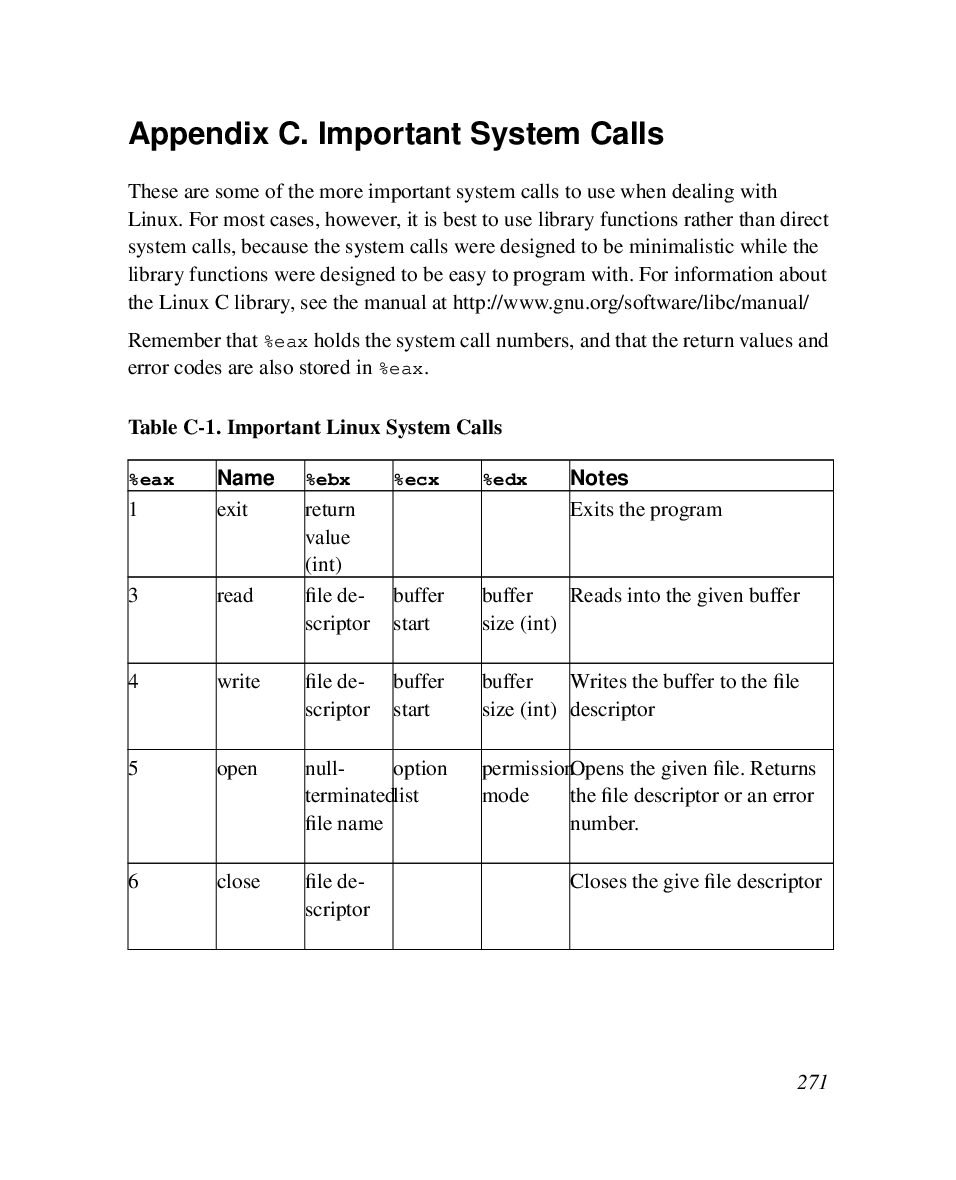
Covers important Linux system calls including file operations (read, write, open, close), directory management (chdir, mkdir, rmdir), process control (getpid), and memory management (brk). Provides reference table with parameters and usage notes for system-level programming.
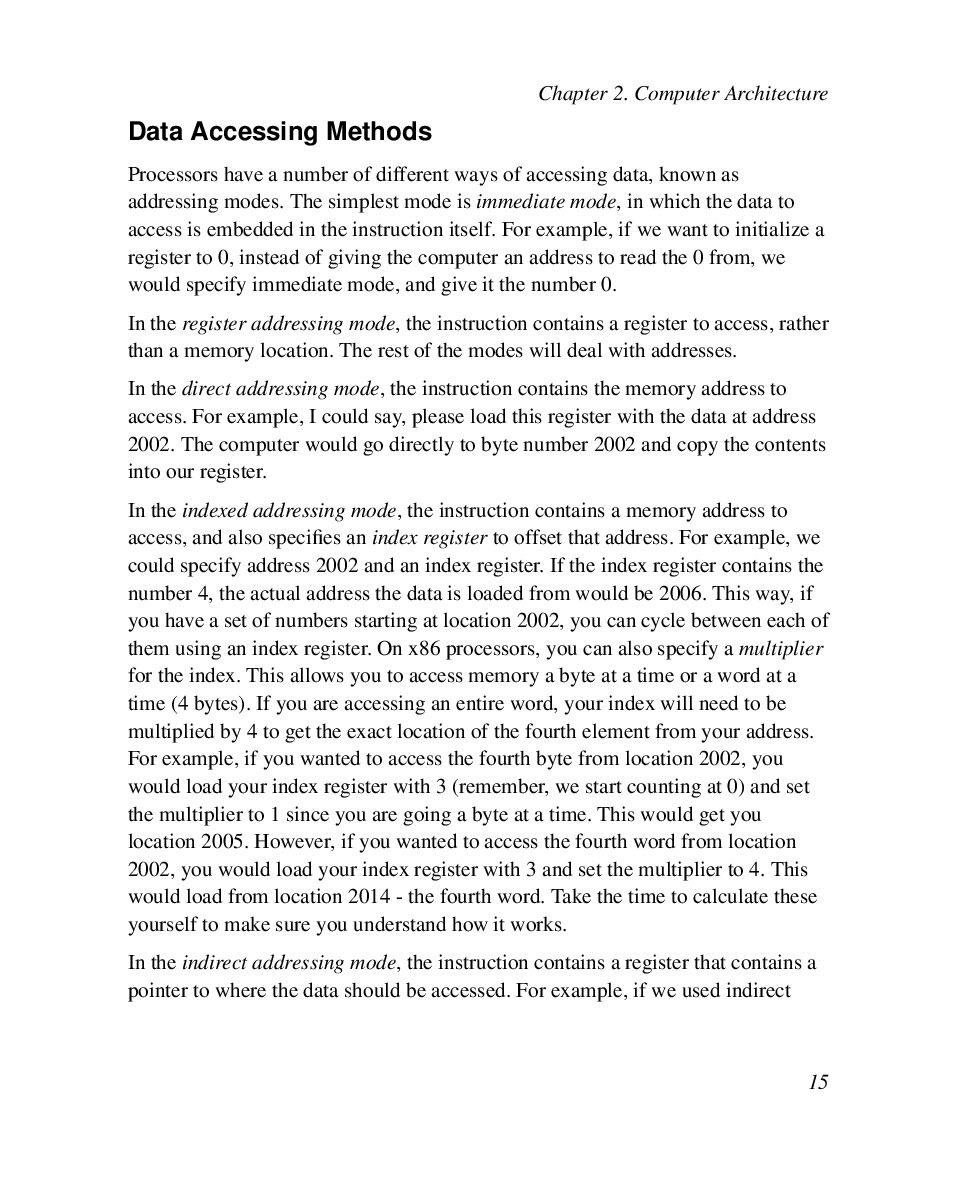
Detailed coverage of addressing modes: immediate, register, direct, indexed, indirect, and base pointer addressing. How to access data in different ways and when to use each mode for efficient memory access.
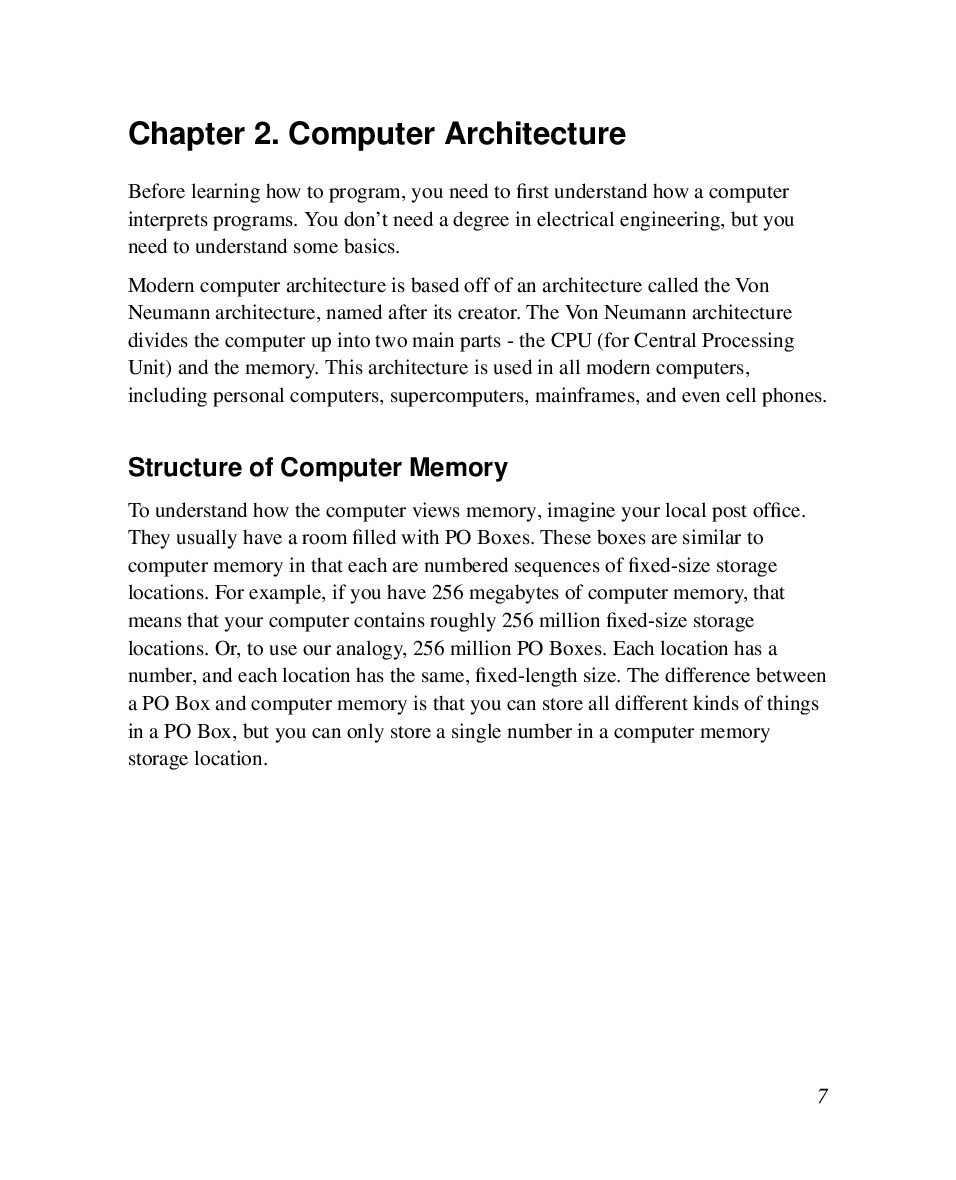
Explanation of Von Neumann architecture, CPU components, fetch-execute cycle, registers, memory structure, and basic data storage. Understanding how computers interpret data and the relationship between CPU and memory.
A study on CPU interfaces and application programming interfaces, covering how software uses CPU instructions and system calls for low-level hardware interaction and efficient program execution.