This lecture introduces foundational design principles of computer systems such as modularity, abstraction, layering, virtualization, hierarchy, concurrency, caching, indexing, replication, and logging to build robust systems.
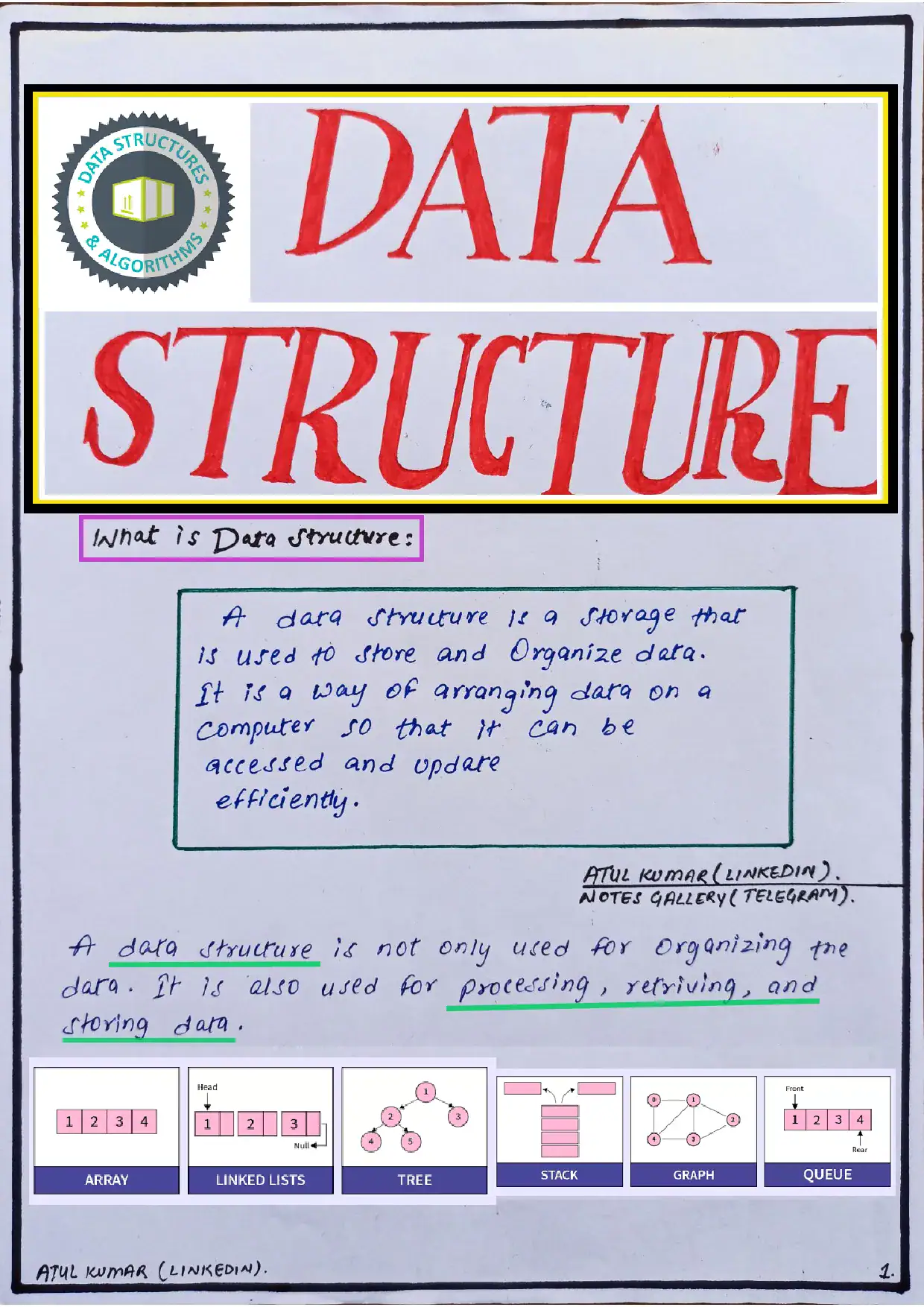
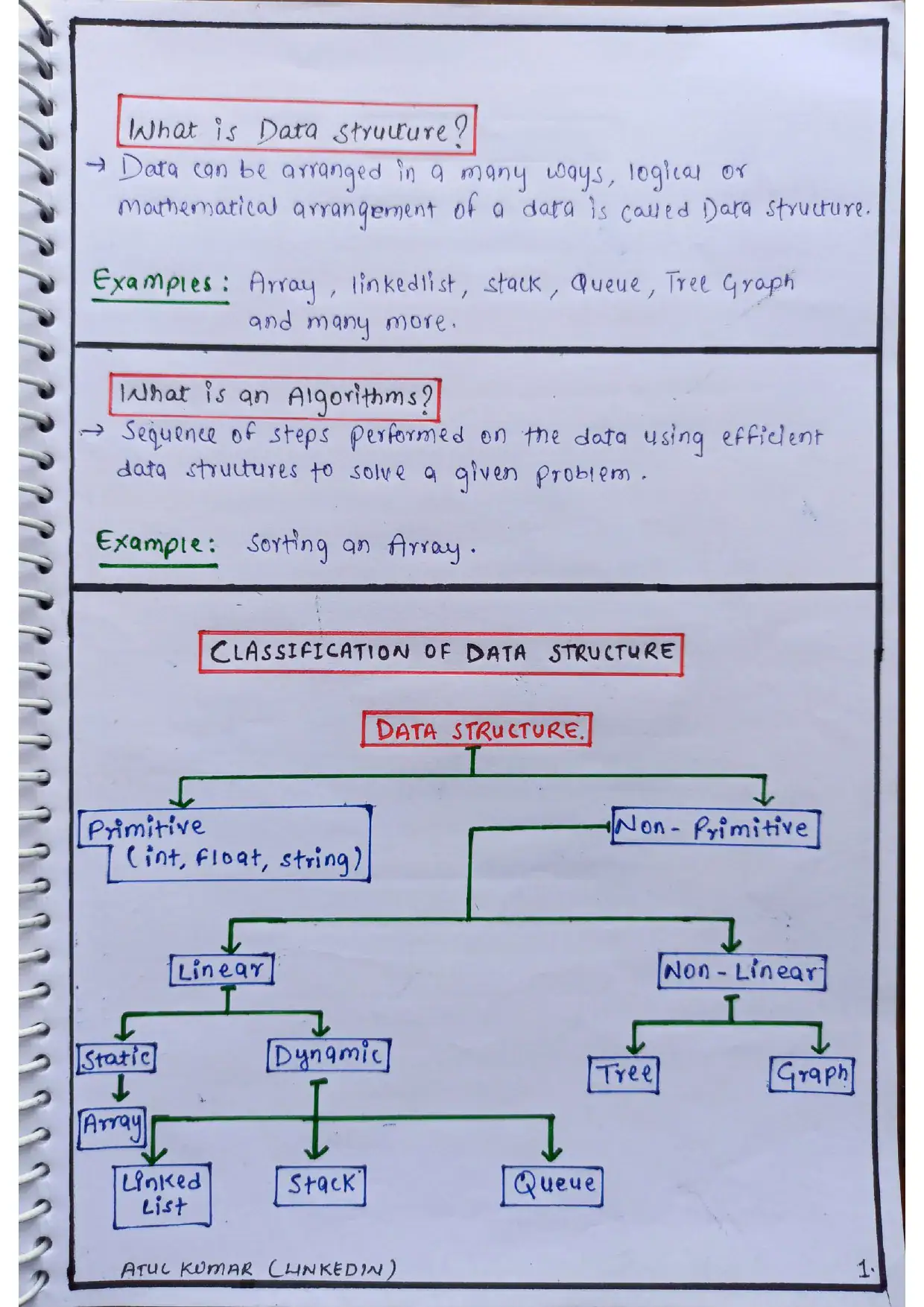
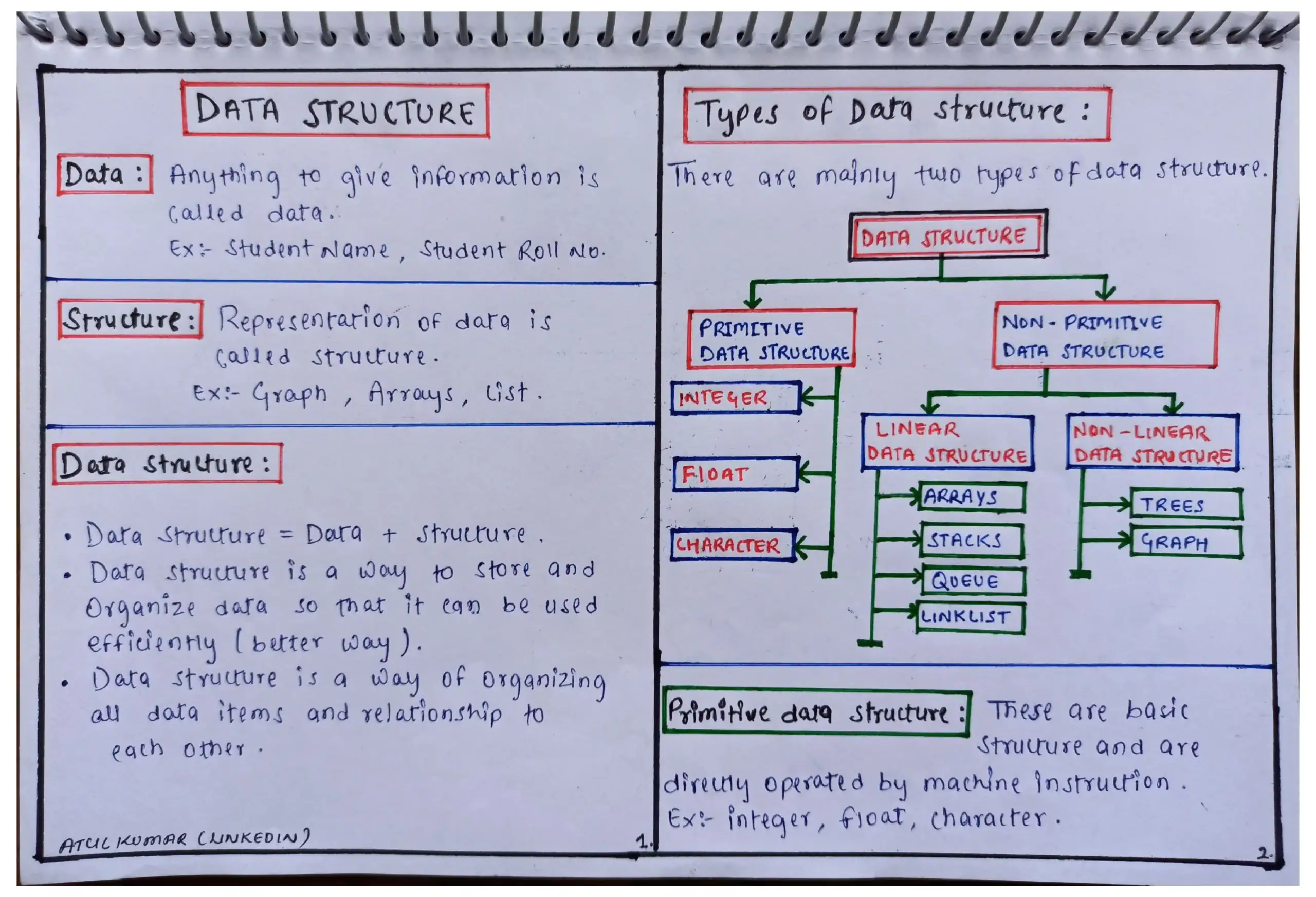
This PDF provides a thorough discussion on data structures with detailed explanations and examples. It explains what data structures are, the differences between data types and data structures, and classifies data structures into linear, non-linear, static, and dynamic types. It covers arrays, linked lists (types and applications), stacks (LIFO principle and applications), queues (FIFO principle and uses), trees (hierarchical structure, types, and applications), and graphs (nodes and edges characteristics, applications including social networks and Google Maps).
Concise summary notes on fundamental data structures such as arrays, linked lists, stacks, queues, trees, and graphs, highlighting definitions and key operations for rapid revision. Suitable for quick study and exam preparation.
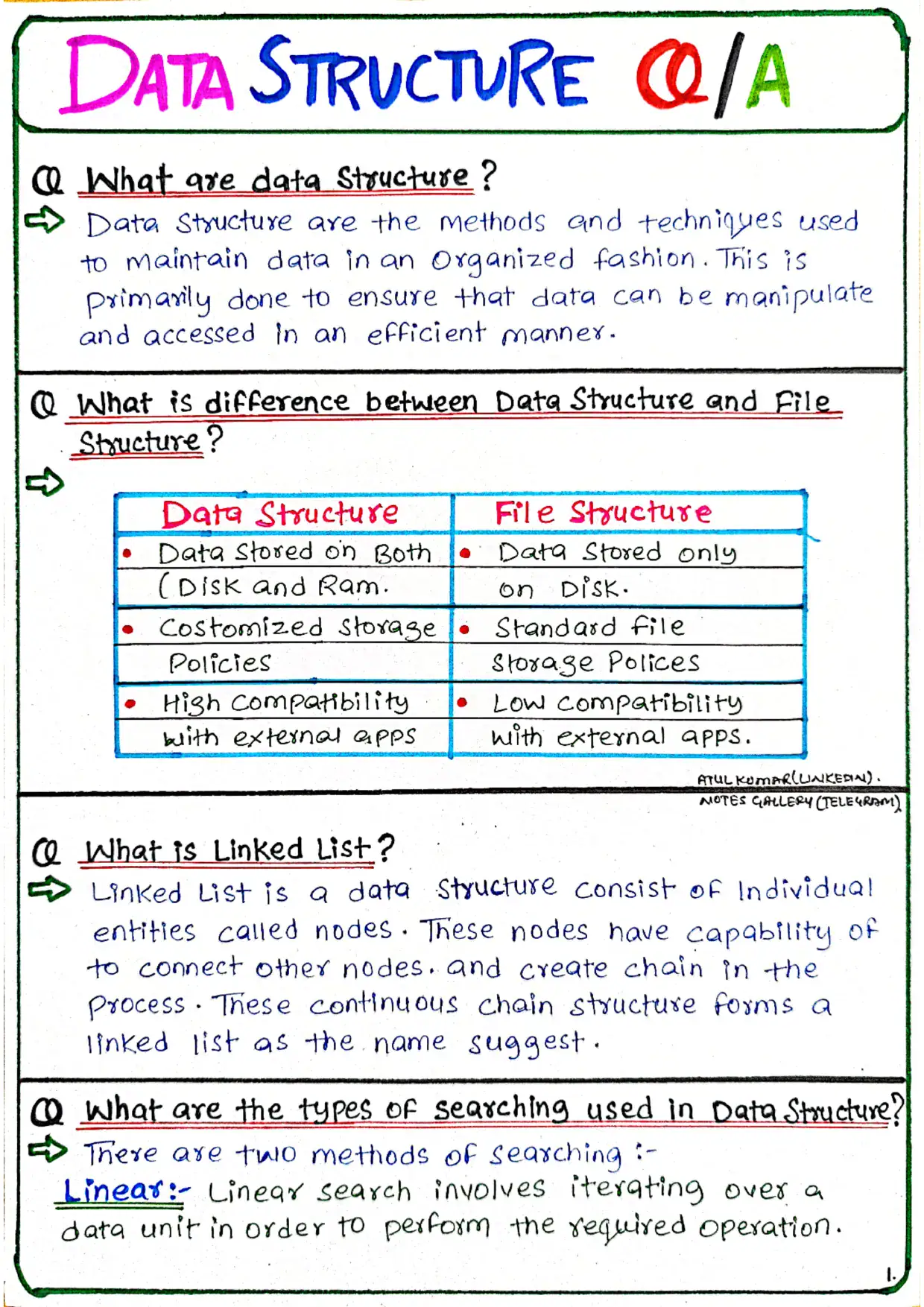
This PDF presents a curated collection of frequently asked interview questions on data structures including linked lists, stacks, queues, trees, and graphs. It explains fundamental concepts and differences with concise answers, making it ideal for interview preparation and quick revision.
Detailed notes covering core data structures such as arrays, linked lists, stacks, queues, trees, and graphs. It also includes fundamental algorithms for sorting and searching with explanations and illustrative diagrams, useful for academic studies and interview preparations.