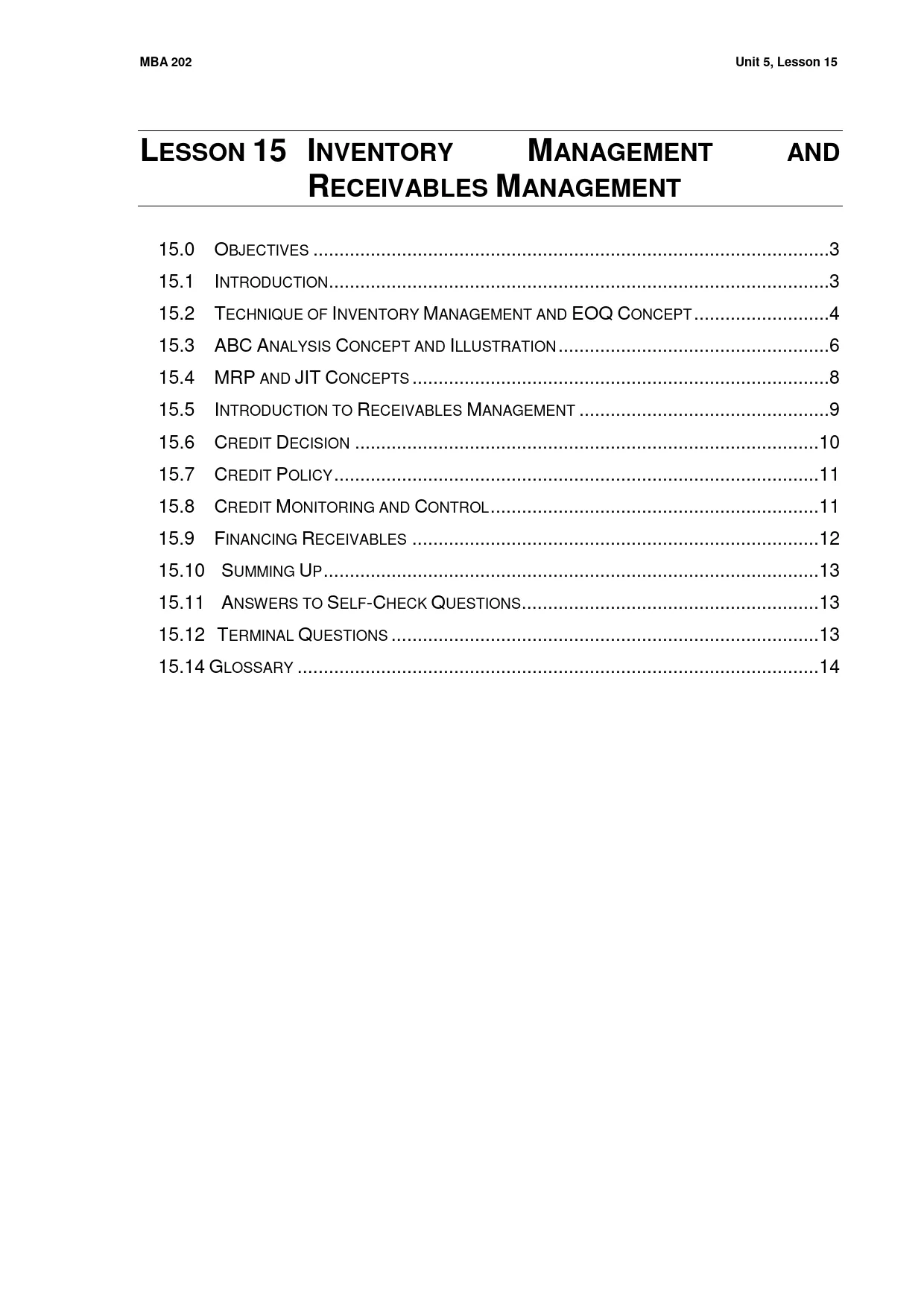
This lesson covers techniques and theory for inventory and receivables management, such as EOQ, ABC Analysis, JIT, MRP, credit decision-making, policy design, credit monitoring, and financing options for receivables. It presents practical formulas, illustrations, and decision frameworks for managers.
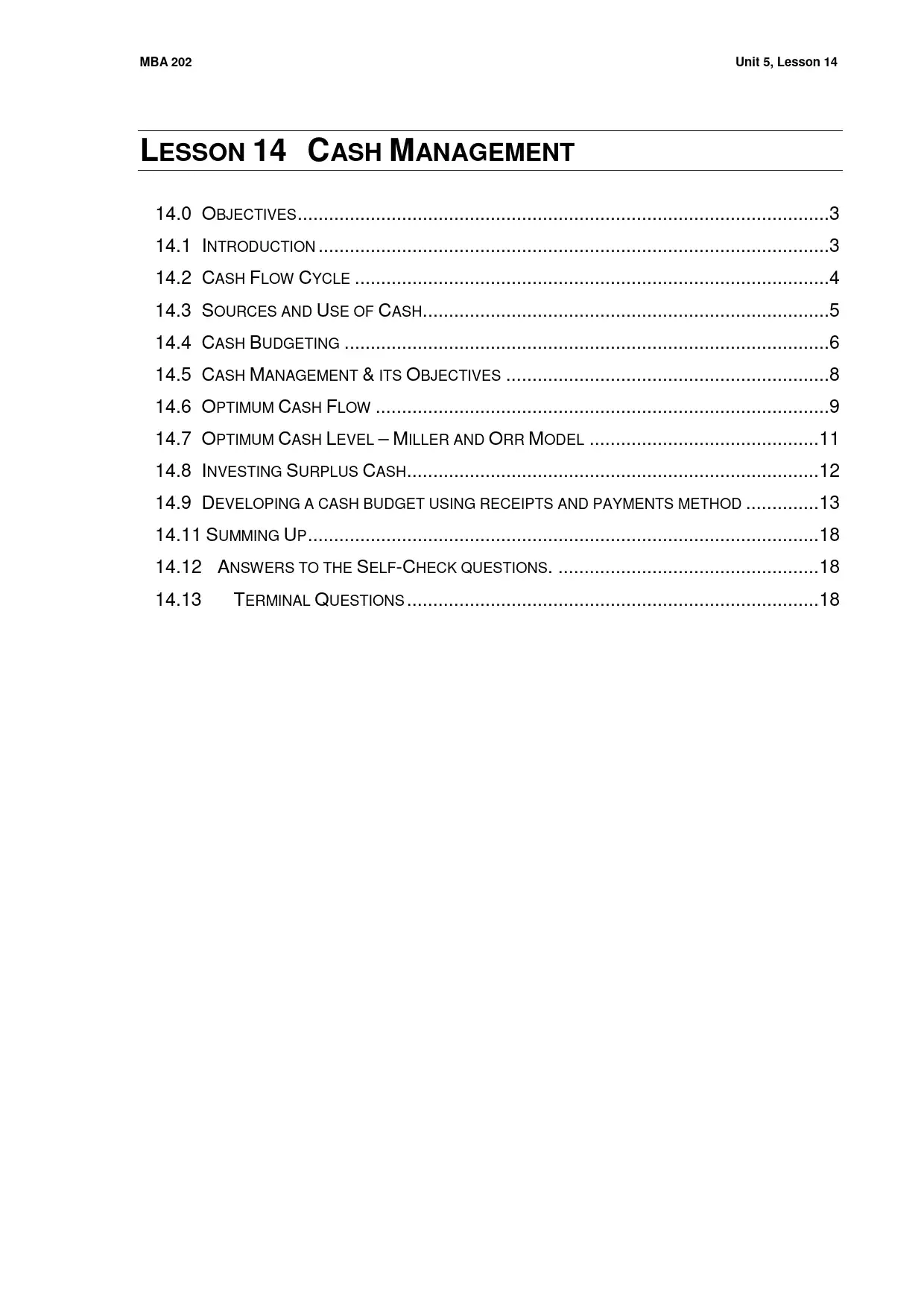
The lesson explains cash flow cycles, sources and uses of cash, budgeting methods, objectives of cash management, optimum cash flow models, and investment in marketable securities. It also details budgeting using real scenarios and showcases both Baumol and Miller-Orr models for managing optimum cash levels.
This lesson explores types, determinants, and techniques of working capital management, advantages of adequate vs. excessive or inadequate working capital, operating cycle, short-term financing sources, and committee recommendations. Practical insights aim to help businesses manage liquidity, efficiency, and profitability.
Focused on practical capital structure decision-making, this lesson covers features of a sound capital structure, EBIT-EPS analysis, cash flow and valuation approaches, business risk, operating vs. financial leverage, and differences in capital structures across industries. Includes case study and business risk assessment.
This lesson discusses capital structure, debt vs. equity, financial leverage, optimal capital structure, Modigliani-Miller Propositions, arbitrage, Net Income and Net Operating Income approaches, and leverage measures such as DSCR, debt-equity ratio, and more. Comprehensive glossary and theoretical frameworks included.