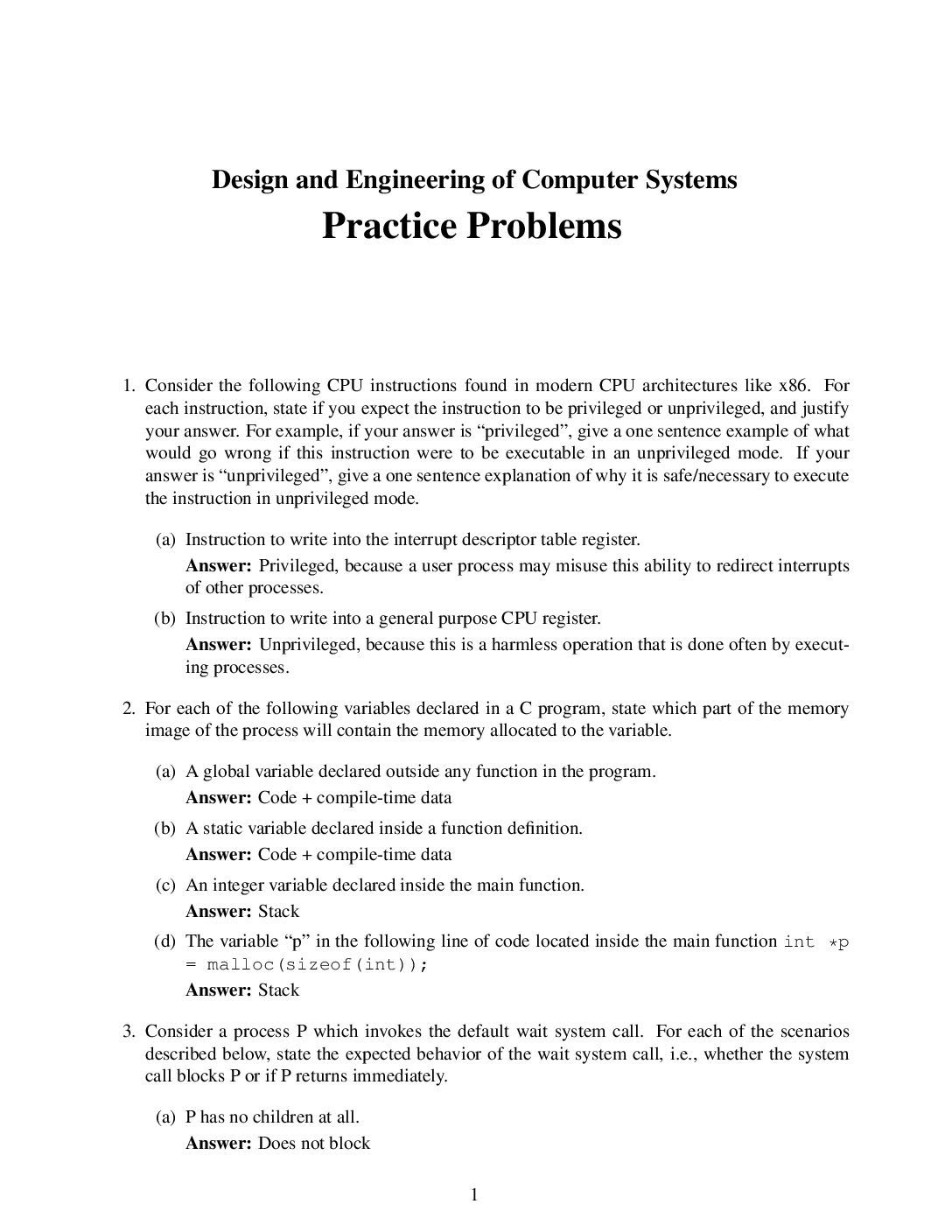
OS Concepts and Design
Comprehensive practice problems covering OS fundamentals including CPU instructions, memory management, process management, threading, concurrency control, virtual memory, paging, and filesystem operations.

Comprehensive practice problems covering OS fundamentals including CPU instructions, memory management, process management, threading, concurrency control, virtual memory, paging, and filesystem operations.
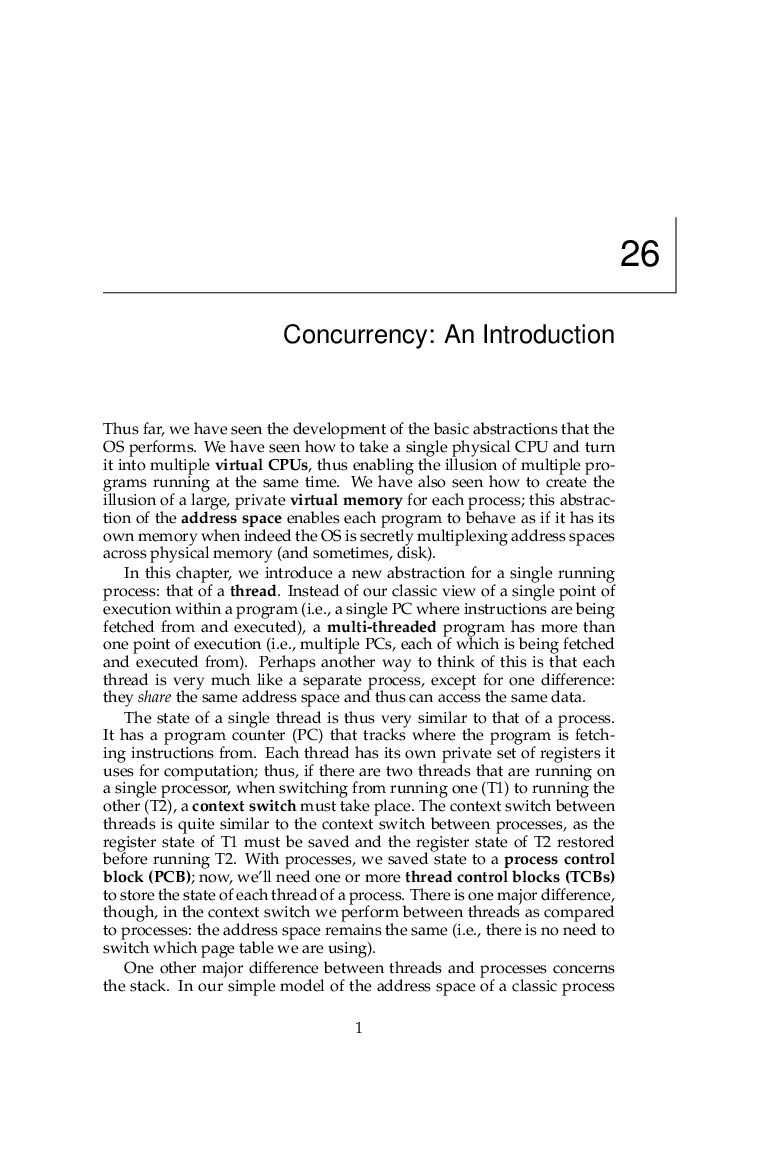
Introduces fundamental concepts of threads including thread creation, management, context switching, and thread design patterns. Explores differences between processes and threads, benefits of multithreading, and challenges in thread-based programming.
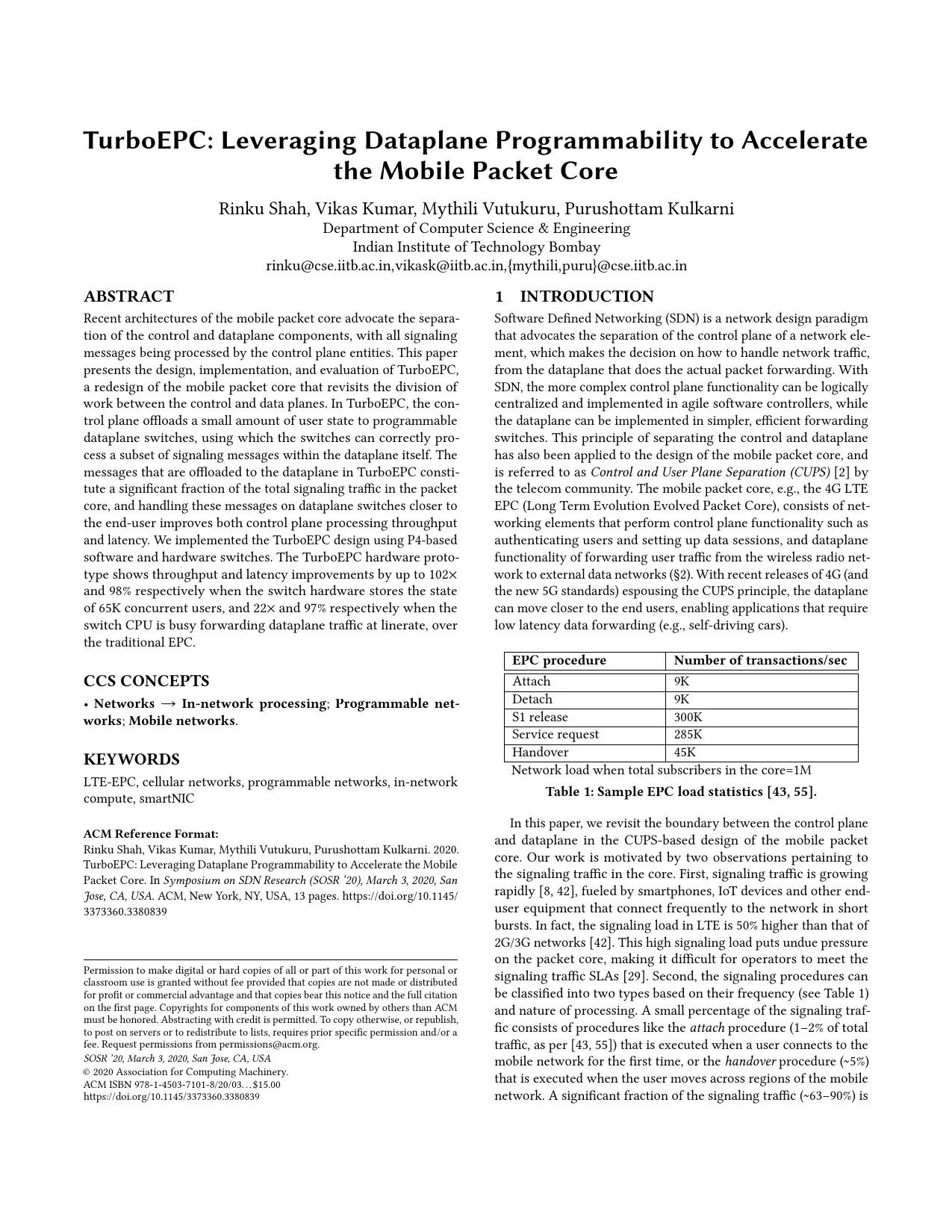
TurboEPC redesigns the mobile packet core by offloading a portion of signaling message processing to programmable dataplane switches, alleviating control plane bottlenecks and reducing latency. The approach partitions user state across switches, supports replication for fault tolerance, and implements series and parallel switch designs for scalability. Hardware and software prototypes demonstrate up to 102% throughput increase and 98% latency reduction.
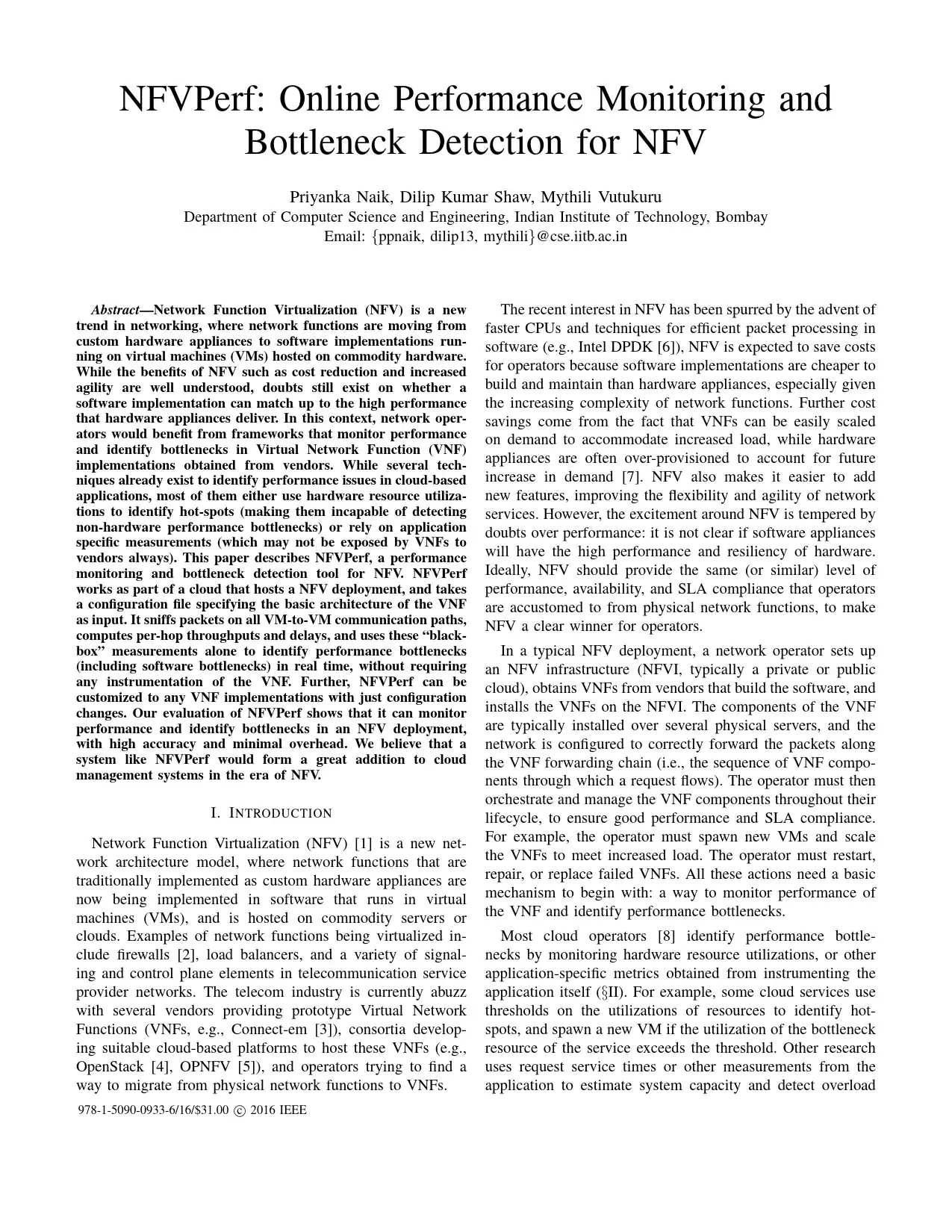
This paper examines the performance of network functions deployed using virtualization, highlighting measurement techniques, bottlenecks, and optimization strategies for achieving high throughput in NFV platforms.
This paper explores adaptive queue management mechanisms for web servers under heavy load, presenting algorithms that respond to real-world traffic to improve fairness, responsiveness, and user quality of experience in overloaded environments.