by Aleena Parvez | Nov 13, 2025
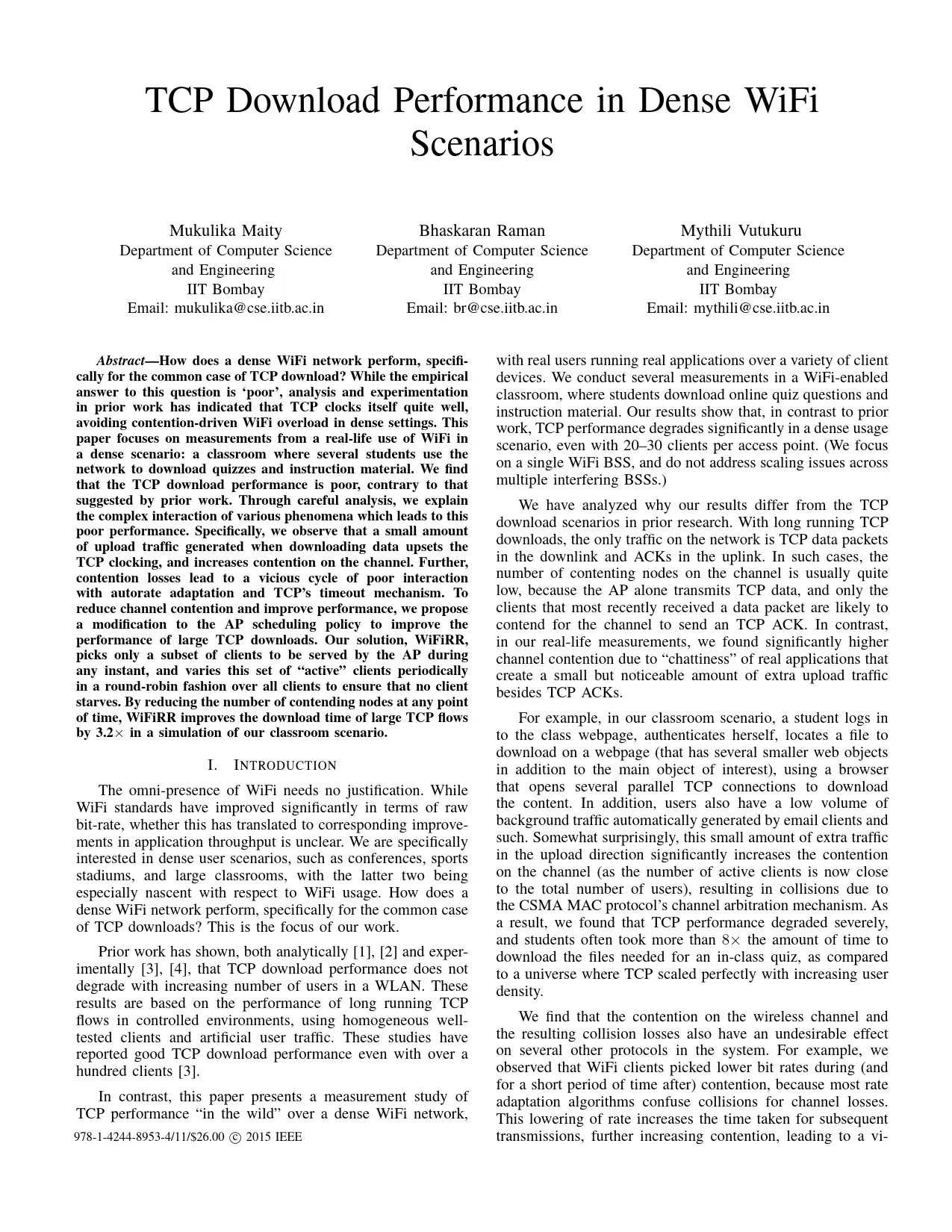
This study analyzes TCP download performance in densely populated WiFi networks, revealing real-world degradation due to client upload traffic and MAC contention. The authors propose WiFiRR, an AP-side scheduling policy that improves large TCP download time by reducing contention, validated by simulations and experiments.
by Aleena Parvez | Nov 13, 2025
This lecture introduces the IO subsystem, covering device models, device controllers, device drivers, IO communication methods like programmed IO, interrupts, and direct memory access (DMA). It also explains the OS’s role in managing device IO via layered abstractions.
by Aleena Parvez | Nov 13, 2025
This lecture details demand paging in virtual memory systems, explaining page tables, page faults, swap space, page replacement policies like FIFO and LRU, and how OS handles page faults and optimizes memory usage
by Aleena Parvez | Nov 13, 2025
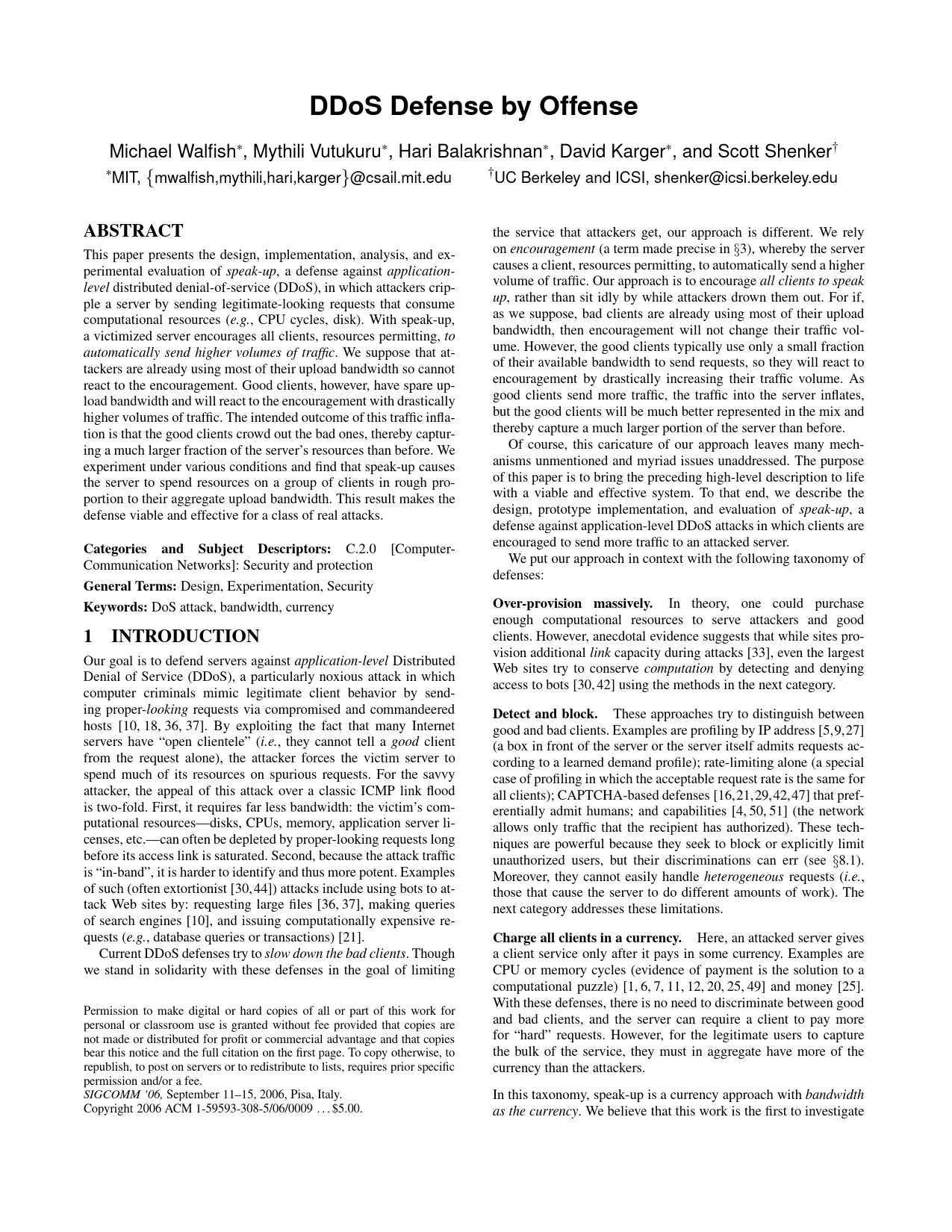
This paper proposes Speak-up, a bandwidth-based defense mechanism against application-level DDoS attacks. It encourages all clients to send traffic proportional to their upload bandwidth, allowing legitimate clients to outcompete attackers fairly. The system includes a virtual auction and payment channels to enforce proportional resource sharing.
by Aleena Parvez | Nov 13, 2025
This document explains IO virtualization concepts including device passthrough, paravirtualization, and virtual device drivers. It discusses challenges in virtualizing hardware devices for multiple virtual machines and solutions to maintain performance and security in IO operations.
