Introduces semaphores as synchronization primitives invented by Dijkstra. Covers binary semaphores as locks, semaphores for ordering, producer-consumer problem, reader-writer problem, dining philosophers, and implementing semaphores using locks and condition variables.
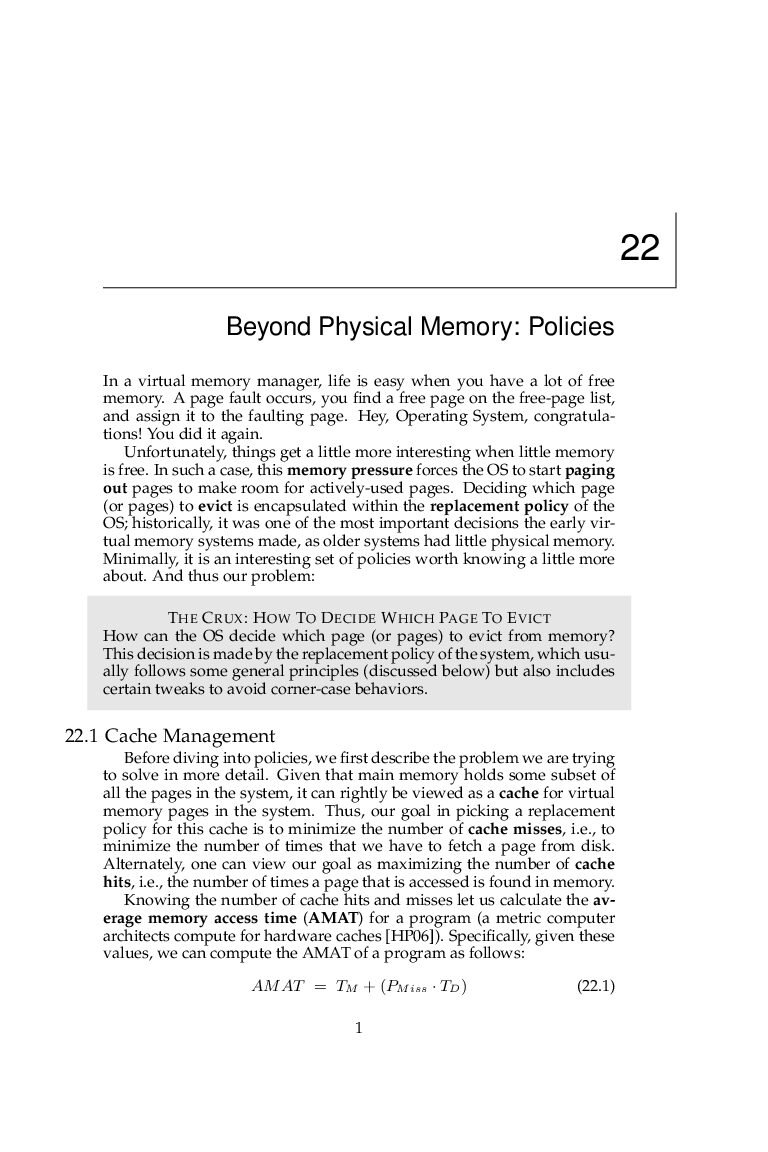
Discusses page replacement policies for virtual memory management including optimal, FIFO, Random, and LRU algorithms. Covers cache management, average memory access time (AMAT), working sets, clock algorithm, and techniques to handle memory pressure.
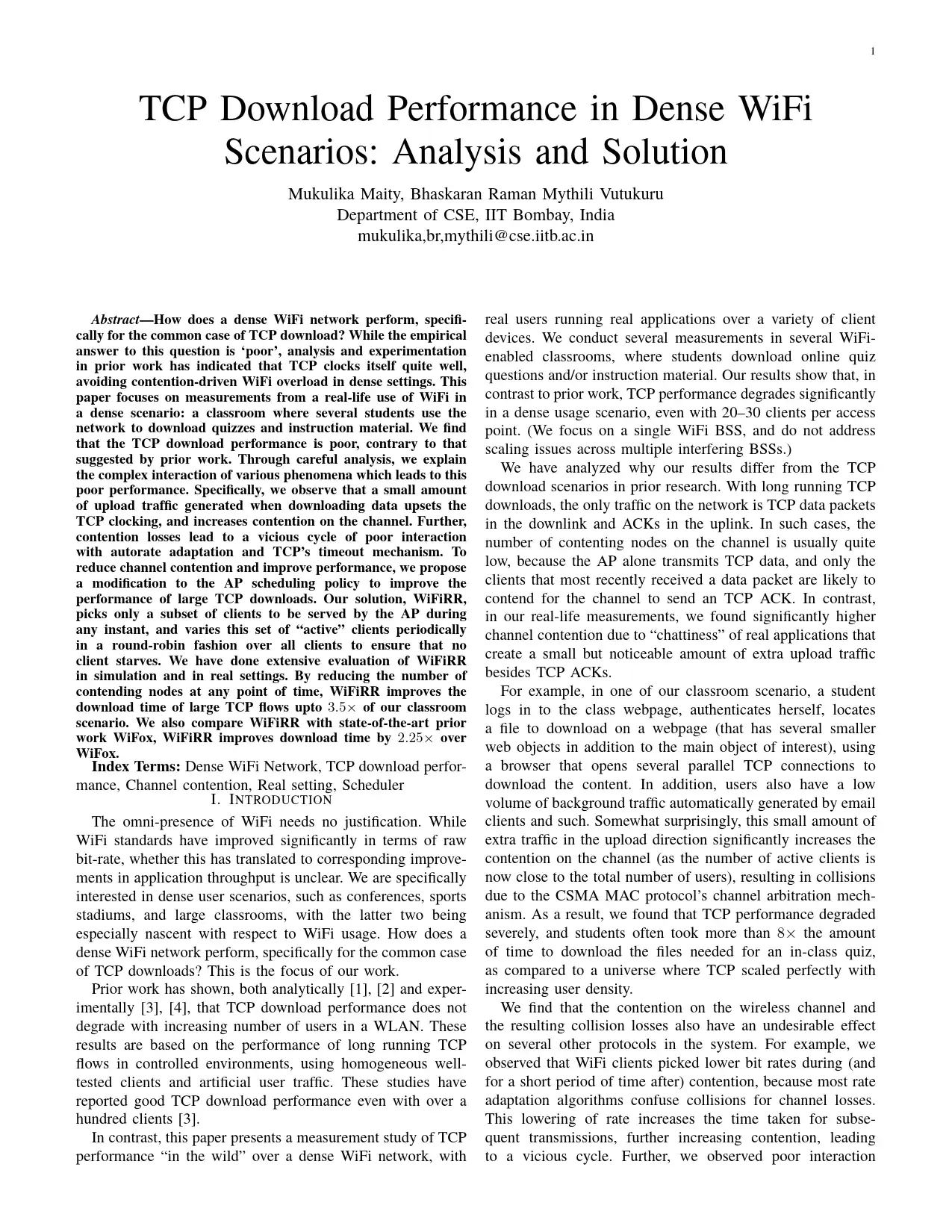
This work presents an in-depth analysis of TCP download performance challenges in realistic, dense WiFi environments with real user traffic. By evaluating classroom measurements and proposing the WiFiRR round-robin scheduler, the paper demonstrates improved download times and reduced contention compared to standard approaches.
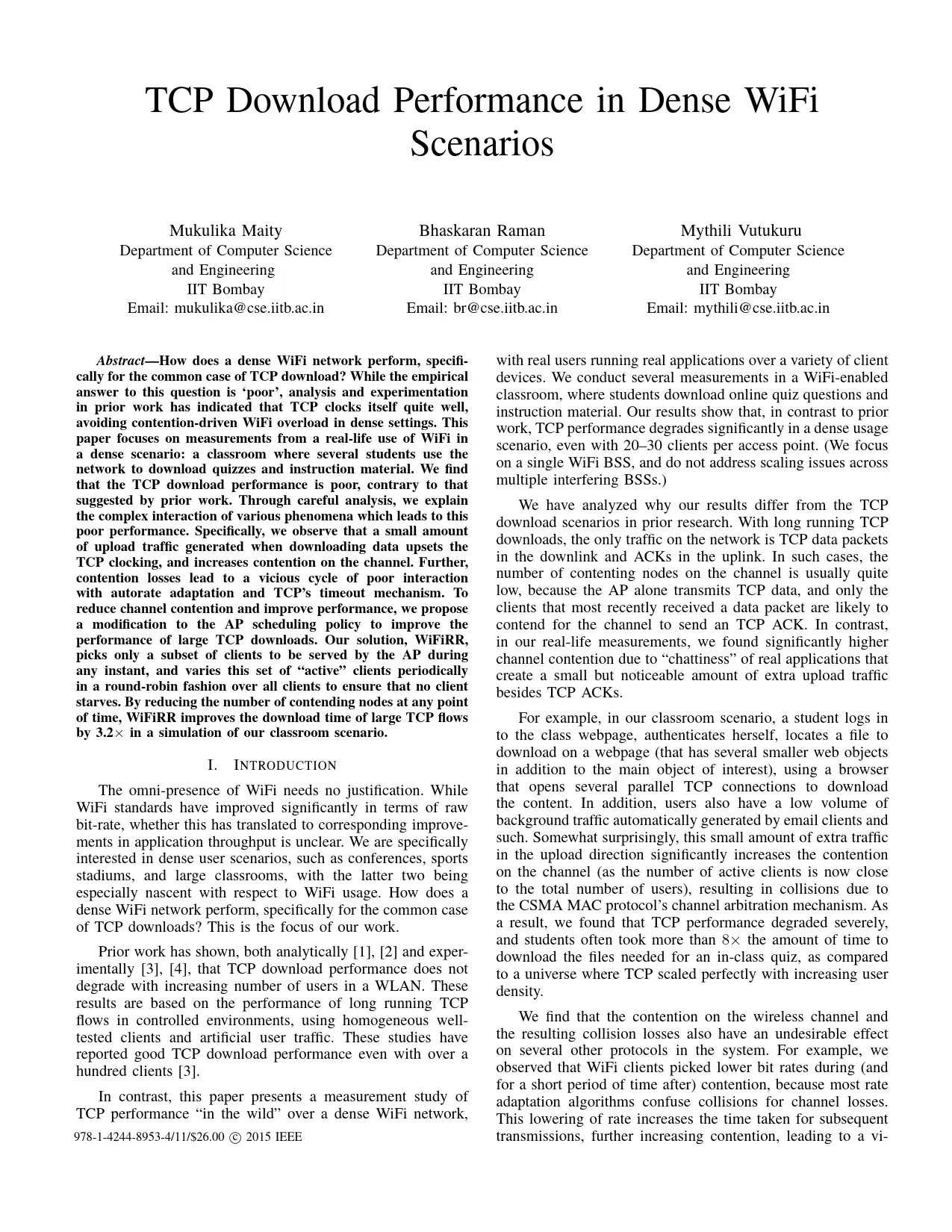
This study analyzes TCP download performance in densely populated WiFi networks, revealing real-world degradation due to client upload traffic and MAC contention. The authors propose WiFiRR, an AP-side scheduling policy that improves large TCP download time by reducing contention, validated by simulations and experiments.
This lecture focuses on memory management techniques like virtual addressing, page tables, segmentation, paging, TLBs, and MMU operations. It discusses process isolation, address translation, and hardware-software collaboration in managing memory efficiently.