Industrial Disputes Meaning and Causes

Industrial Disputes Meaning and Causes

Industrial disputes covering meaning and definition per Industrial Disputes Act 1947 Section 2(k), distinction between employers-workmen disputes, types of disputes (interest disputes and rights disputes), impacts on employers (production stoppage, cost increase, profit fall, compensation liability, loss of prestige, labor alienation), impacts on employees (income loss, personal injury, psychological effects, employment threat), impacts on economy (national productivity decline, resource wastage, political unrest), causes of industrial disputes (economic: wages, allowances, working conditions, leave, retrenchment; non-economic: victimization, indiscipline, violence), types of industrial actions (overt: strikes, picketing, work-to-rule, go-slow, sit-ins; covert: absenteeism, sabotage, labor turnover, exclusion from decision-making).

Trend Projection and Seasonal Effects Analysis

Trend Projection and Seasonal Effects Analysis

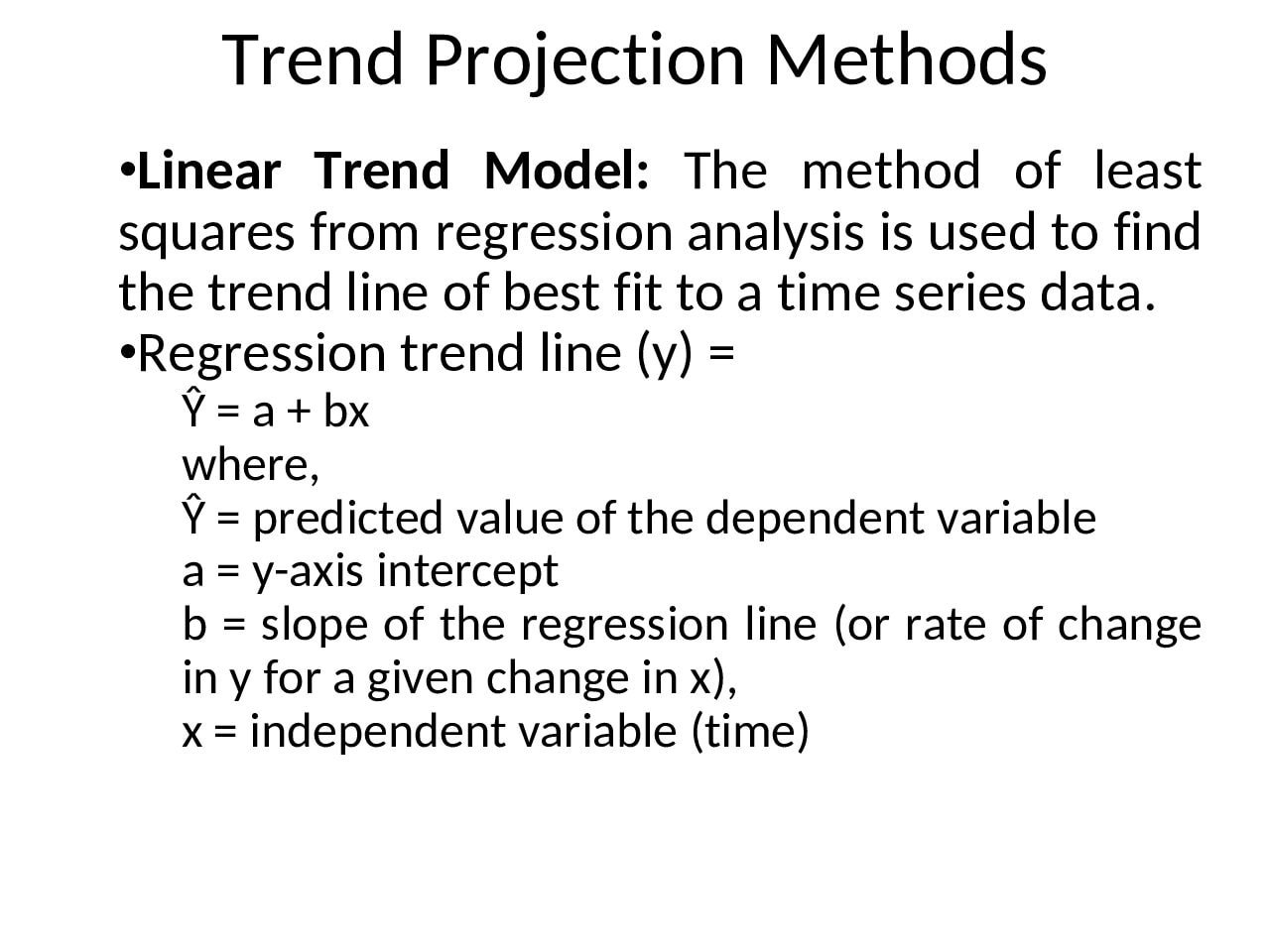
Trend projection methods covering linear trend model, regression trend line equation (Ŷ = a + bx), normal equations for calculating a and b constants, properties of best fit trend line, solved examples for sugar factory and tourist arrivals data, seasonal effects measurement and seasonal index calculation (simple averages method, ratio-to-trend method, ratio-to-moving average method, link relatives method), deseasonalized values calculation, cyclical variations measurement, relative cyclical residual calculation with solved examples.

Human Resource Planning and Forecasting

Human Resource Planning and Forecasting

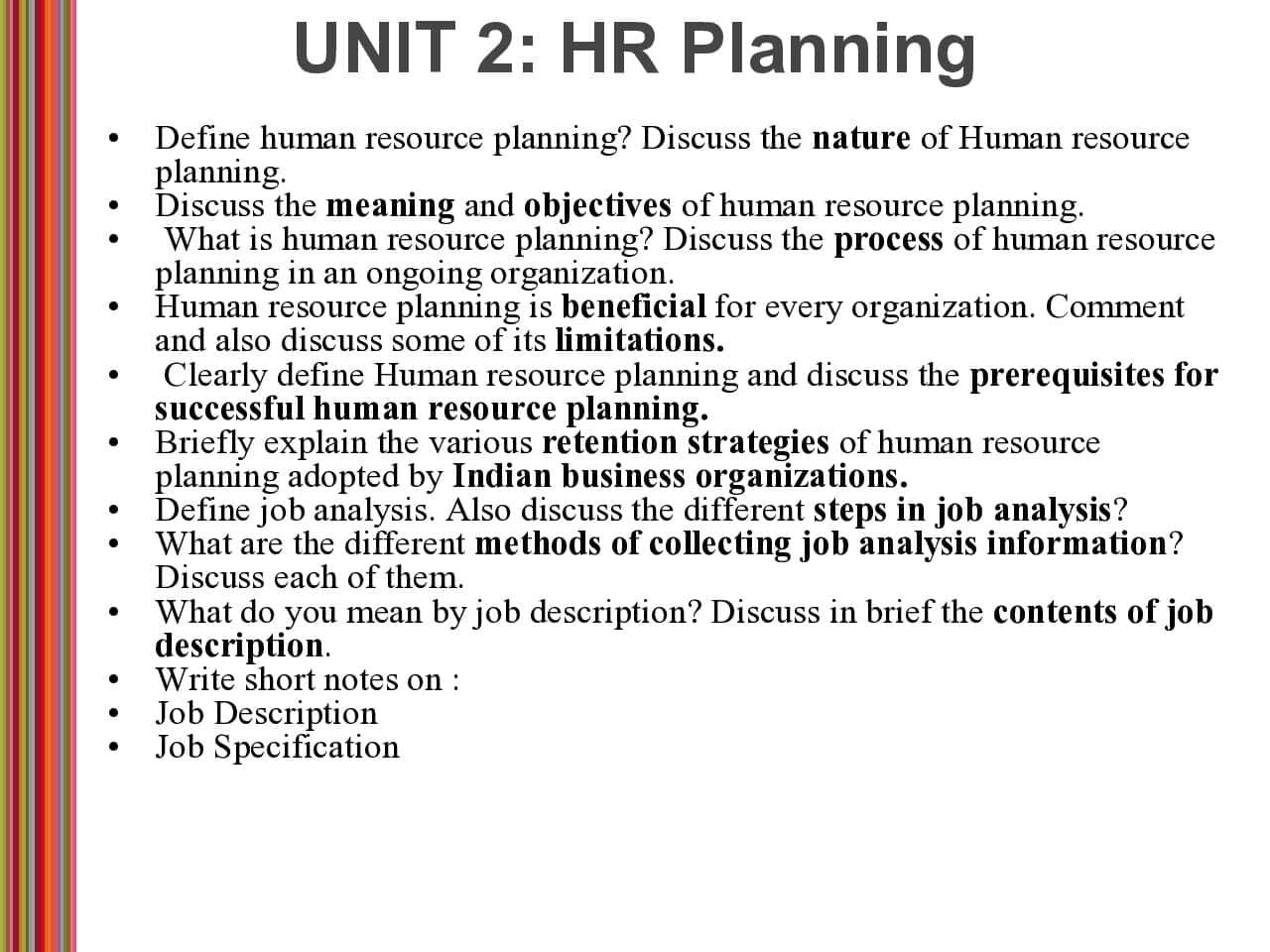
Human resource planning covering definition (assessing organization’s HR needs, forecasting future demand and supply), meaning, objectives/aims, importance, limitations, HRP process (project HR supply, forecast HR needs, compare forecast with supply, plan policies and programs, evaluate effectiveness), HR forecasting (three major steps), planning for anticipated shortages (transfer, train, overtime, increase productivity, hire part-time/temporary/permanent, subcontract, capital substitution).

Linear Programming Applications

Linear Programming Applications

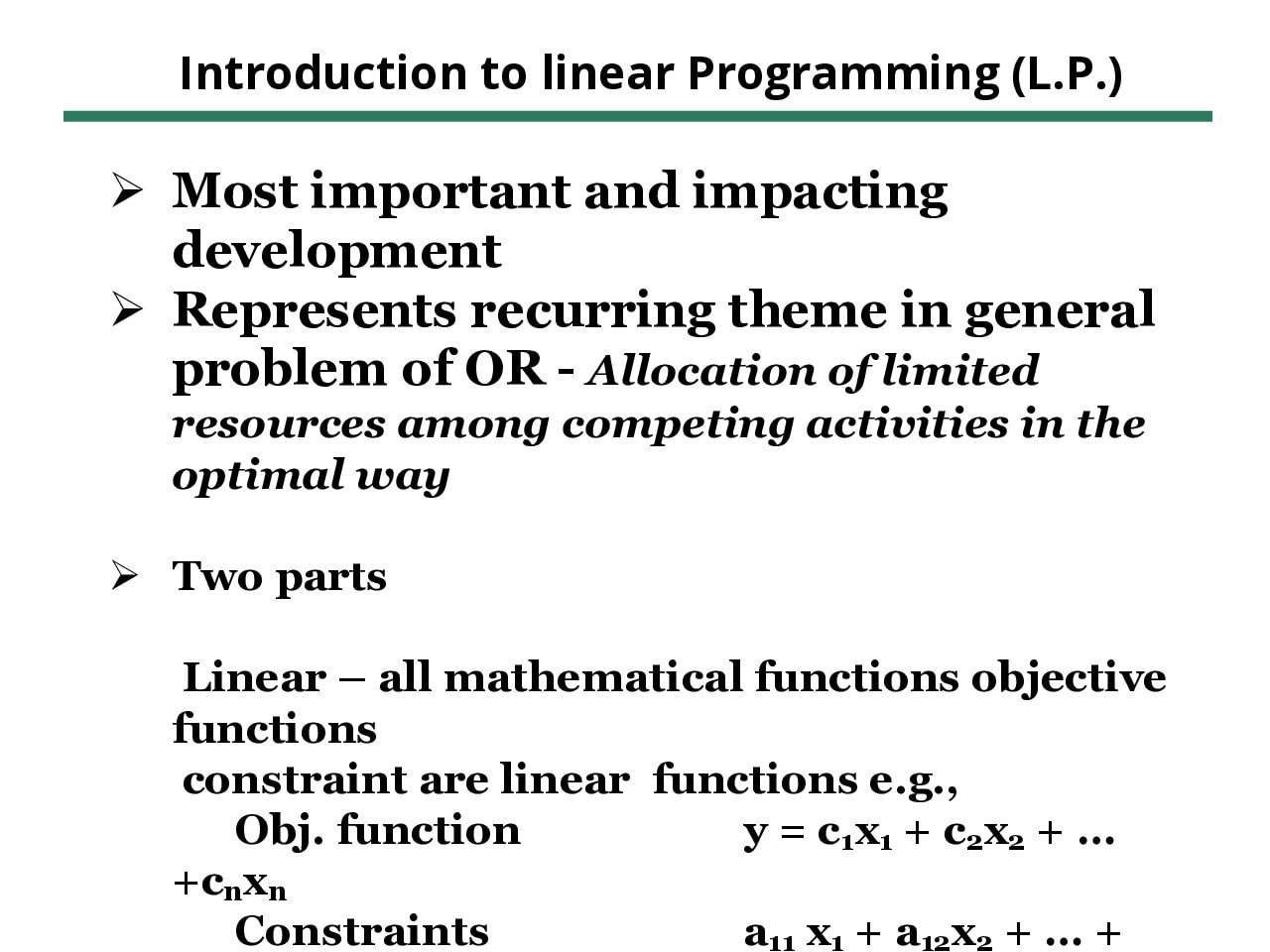
Linear programming applications covering introduction to LP (allocation of limited resources, linear functions), terminology (cost/profit coefficients, technological coefficients, resource coefficients, decision variables), transportation problem, marketing research problem, model example (TechEdge Company PC manufacturing, LP formulation, graphical solution method, corner point analysis, optimal solution determination), important terms (constraint boundary, corner-point solutions, feasible solution, infeasible solution, feasible region, CPF solution, adjacent solutions).

Introduction to Operations Research and Modeling

Introduction to Operations Research and Modeling

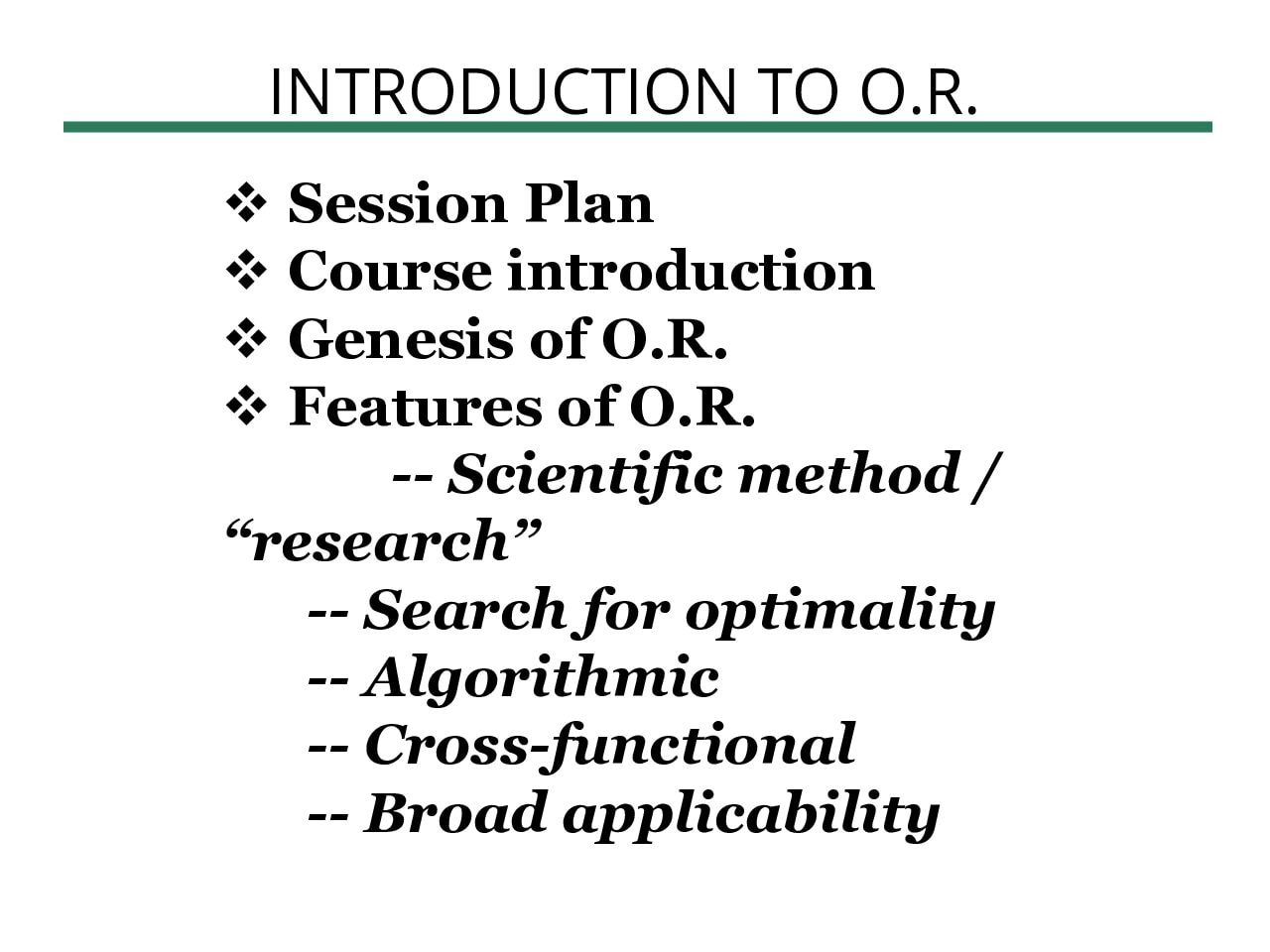
Introduction to operations research covering course introduction, genesis of OR (WWII origins, post-war growth), features of OR (scientific method/research, search for optimality, algorithmic, cross-functional, broad applicability), steps in OR implementation, important problem features (decision variables, parameters, objective function types, constraints, relevant data), formulation of mathematical model, solving and testing model, application, prerequisites (elementary row operations, Gaussian reduction), characteristics of OR, examples.