This lesson covers management of inventory with EOQ, ABC analysis, MRP, JIT concepts, and receivables management from credit policy formation to monitoring and financing. Techniques and illustrations are provided for cost-benefit analysis, credit decision-making, and optimizing levels for both current assets. Practical guides clarify balancing profitability, risk, and credit strategies for business sustainability
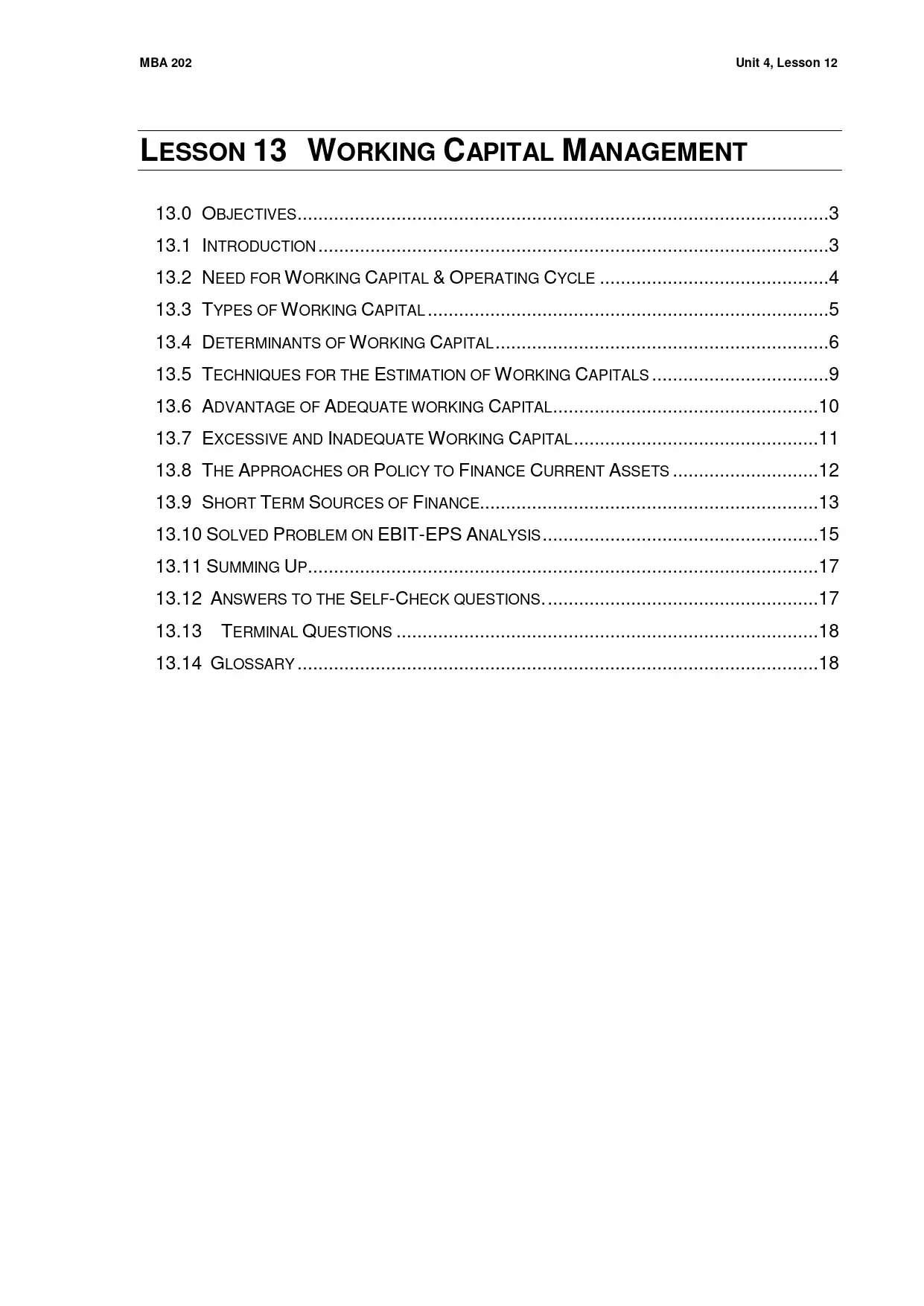
The lesson details working capital concepts (gross, net), determinants, techniques for estimation, advantages, disadvantages of excessive/inadequate capital, and bank/non-bank sources of finance. It introduces the operating cycle, financing approaches (matching, conservative, aggressive), and committee recommendations from RBI for small and large businesses, with problem-solving sections for practical implementation.
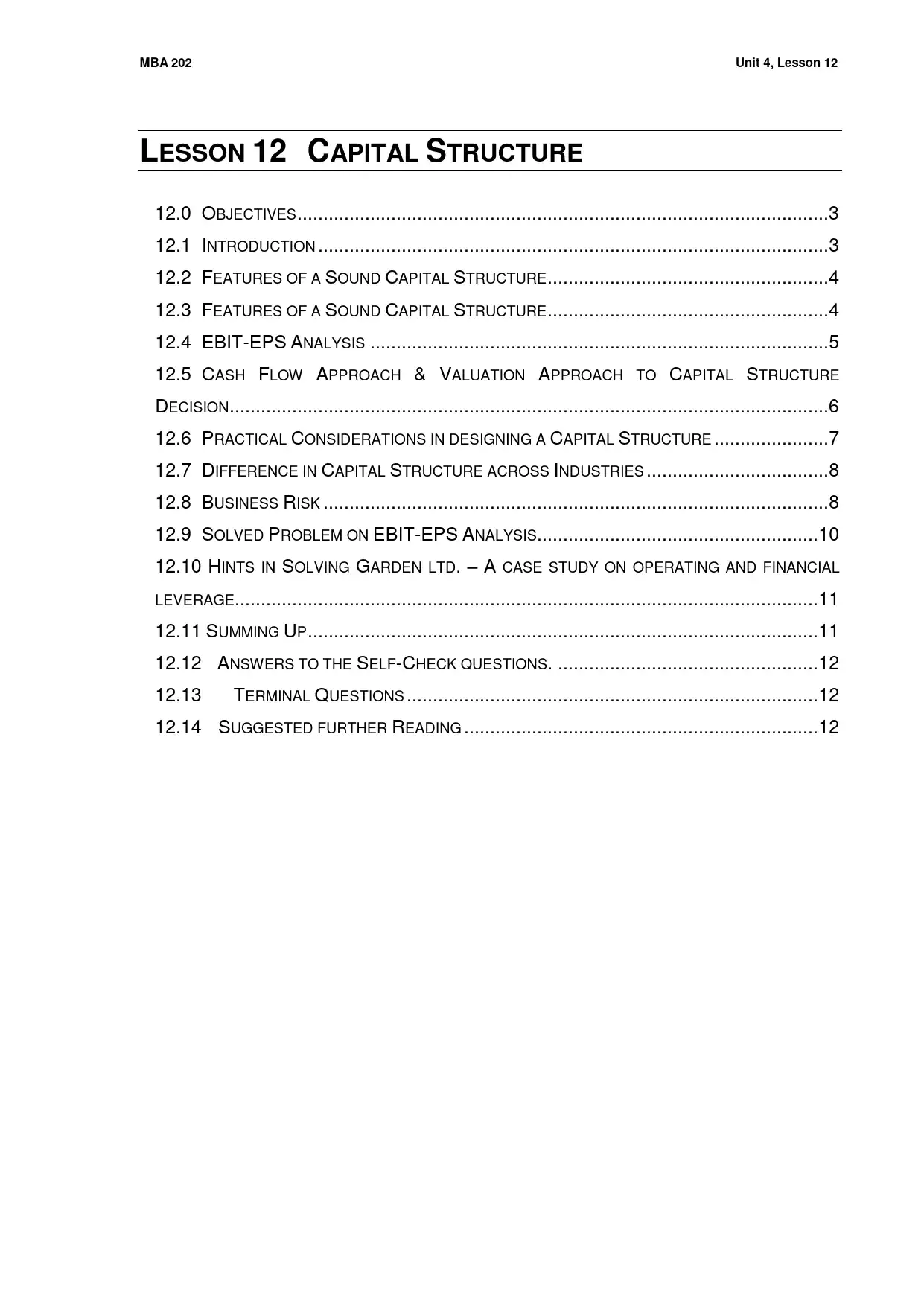
This lesson explores practical capital structure decision-making, including features of sound capital structures, EBIT-EPS analysis, cash flow and valuation approaches, control, flexibility, loan covenants, and agency costs. It discusses capital structure differences across industries, as well as business, operating, and financial risk, using solved cases and analytical models to guide managers.
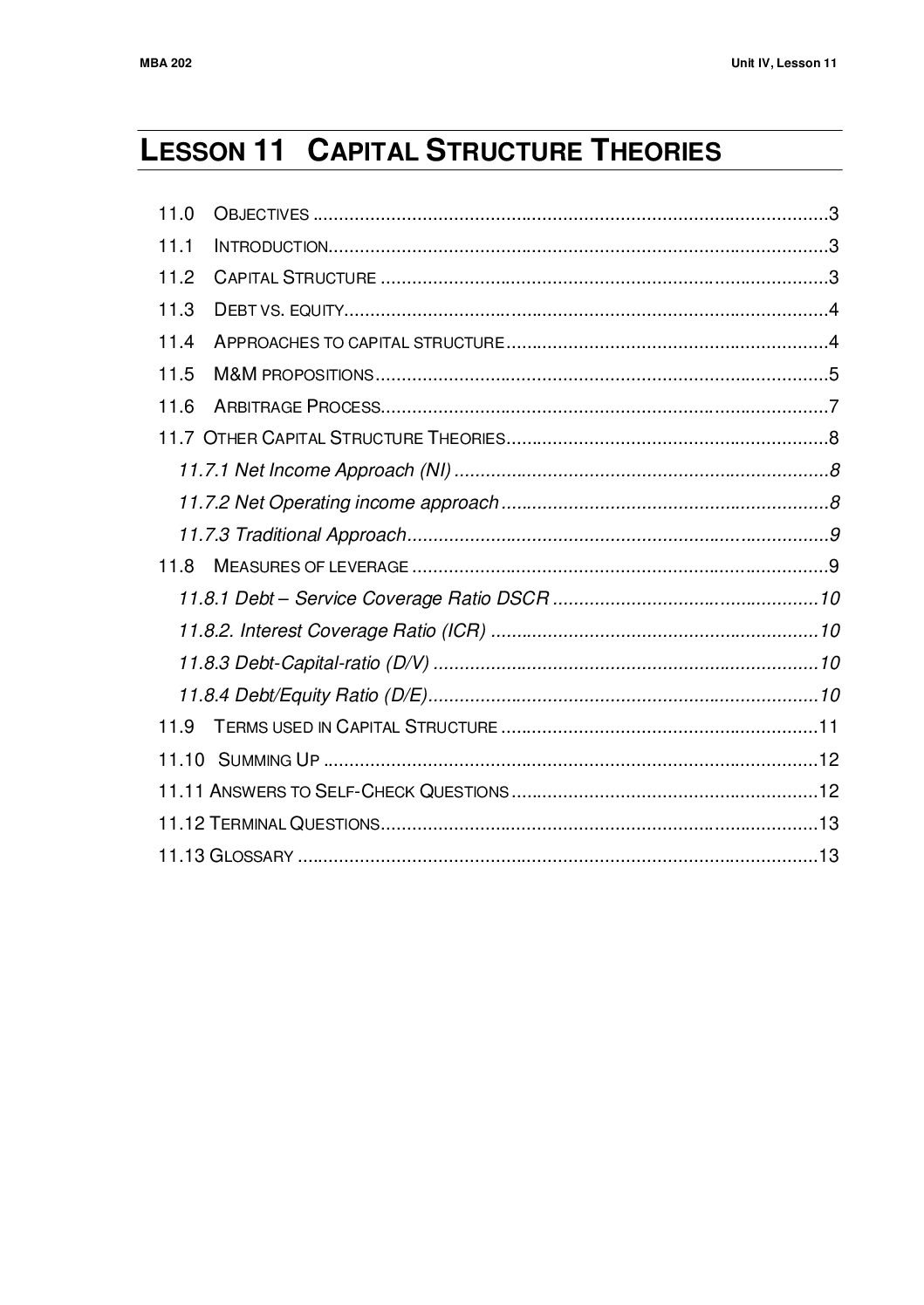
The lesson tackles theories of capital structure—debt vs. equity, Modigliani-Miller propositions, arbitrage process, Net Income and Net Operating Income approaches, and traditional theory. It explains leverage ratios (DSCR, ICR, Debt-Capital, Debt-Equity) with real-world finance applications, offering practical insights for structuring business financing and evaluating company performance.