Comprehensive chronological history from Leeuwenhoek (1673) through 20th century covering soil microbiology development, pioneering scientists (Winogradsky-nitrification, Beijerinck-enrichment culture, Fleming-penicillin), nitrogen fixation discovery (rhizobia, free-living Azotobacter), mycorrhiza research, soil ecology concepts, and modern soil microbiological applications in agriculture and sustainability.
Detailed study of plasmids (circular extrachromosomal DNA) and transposons (mobile DNA elements), including plasmid types (F/R/Col plasmids), properties (replication, conjugation), applications in genetic engineering (vectors, selection markers), transposon structure (IS elements, Tn elements), mechanisms of transposition, mutagenesis potential, and biotechnological applications in gene cloning.
Comprehensive study of transduction as phage-mediated DNA transfer including two types: generalized transduction (random bacterial DNA packaging into phage particle during lytic cycle) and specialized transduction (specific bacterial genes transferred during lysogenic cycle). Covers transducing phages, host range limitations, DNA integration mechanisms, and applications in gene mapping and molecular biology.
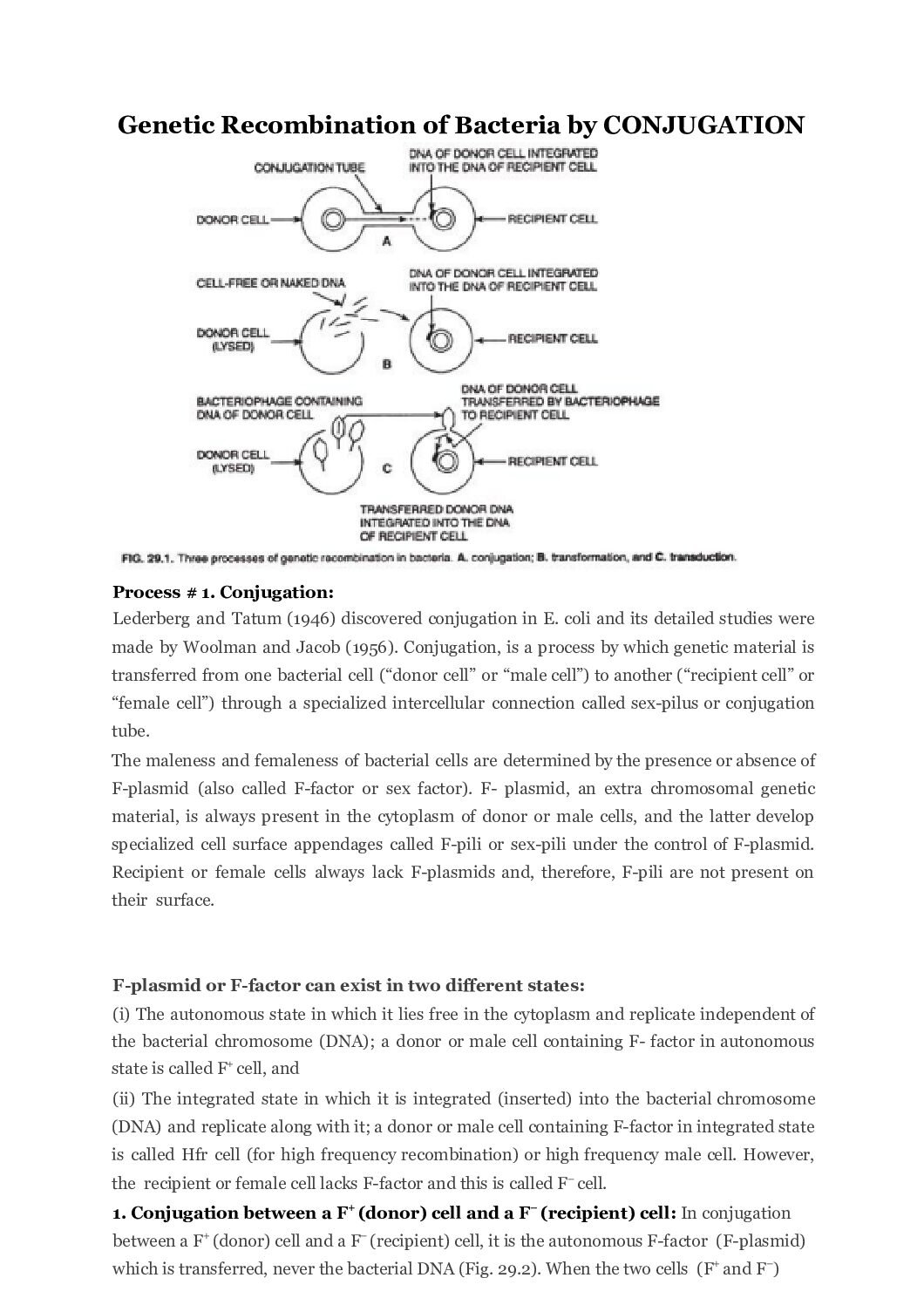
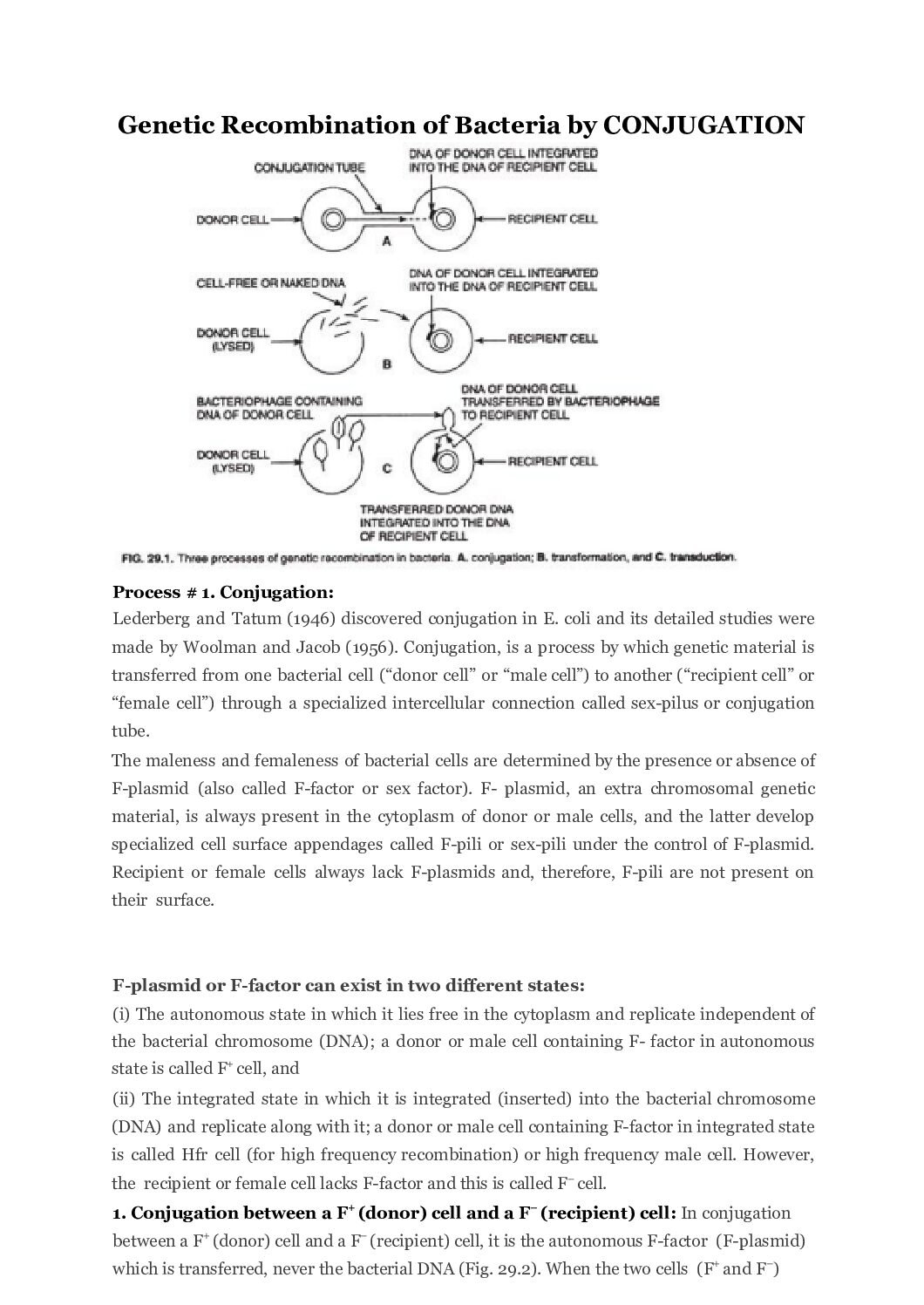
Comprehensive coverage of conjugation as direct bacterial genetic transfer via pilus (sex pilus). Details F plasmid (fertility plasmid) structure and function, formation of mating bridge between F+ (donor) and F- (recipient) cells, step-by-step DNA transfer mechanism, Hfr strains, genetic mapping using interrupted mating, and advantages over other gene transfer methods (requires direct contact, phage-resistant).