by Aleena Parvez | Oct 31, 2025
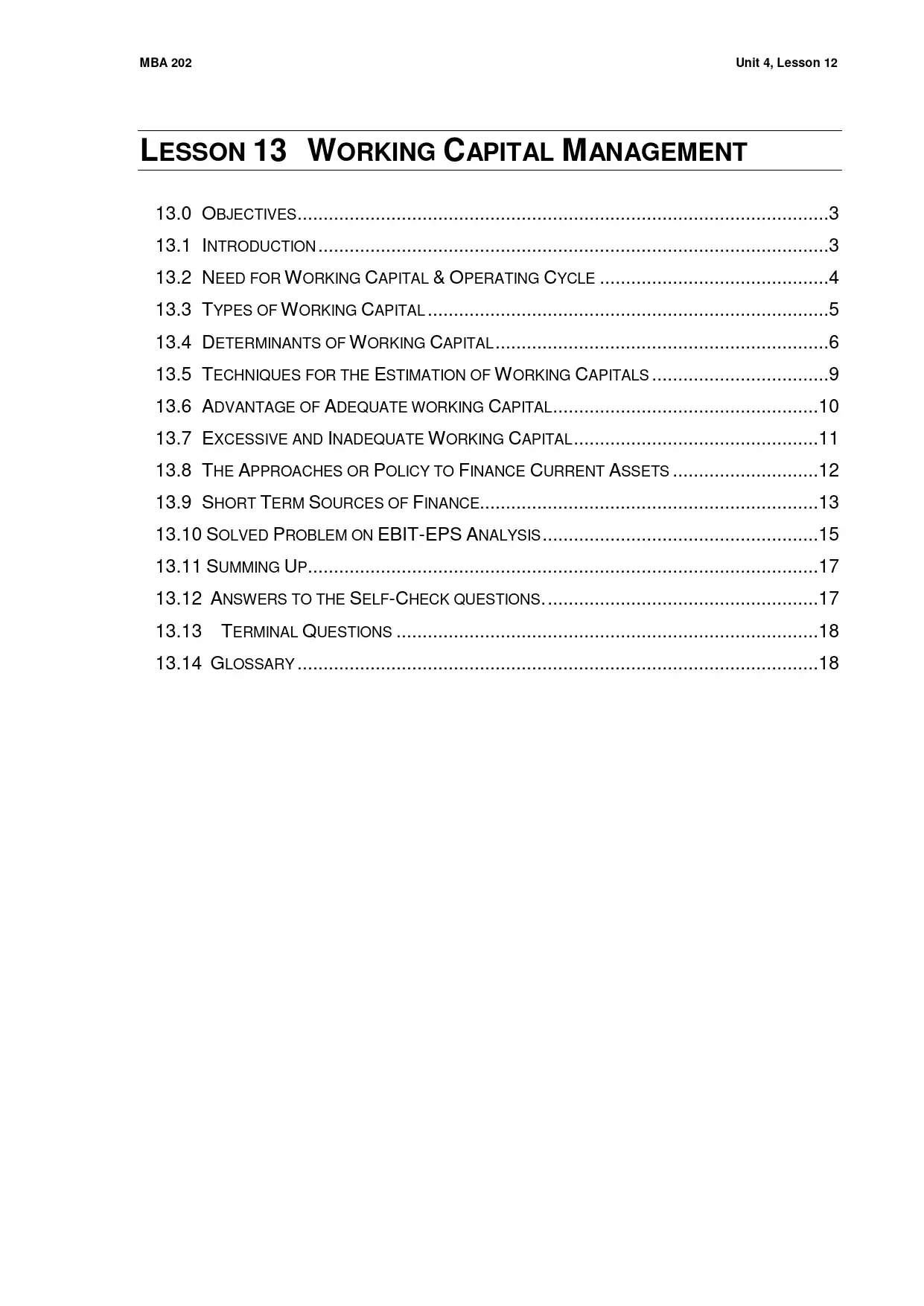
The lesson details working capital concepts (gross, net), determinants, techniques for estimation, advantages, disadvantages of excessive/inadequate capital, and bank/non-bank sources of finance. It introduces the operating cycle, financing approaches (matching, conservative, aggressive), and committee recommendations from RBI for small and large businesses, with problem-solving sections for practical implementation.
by Aleena Parvez | Oct 31, 2025
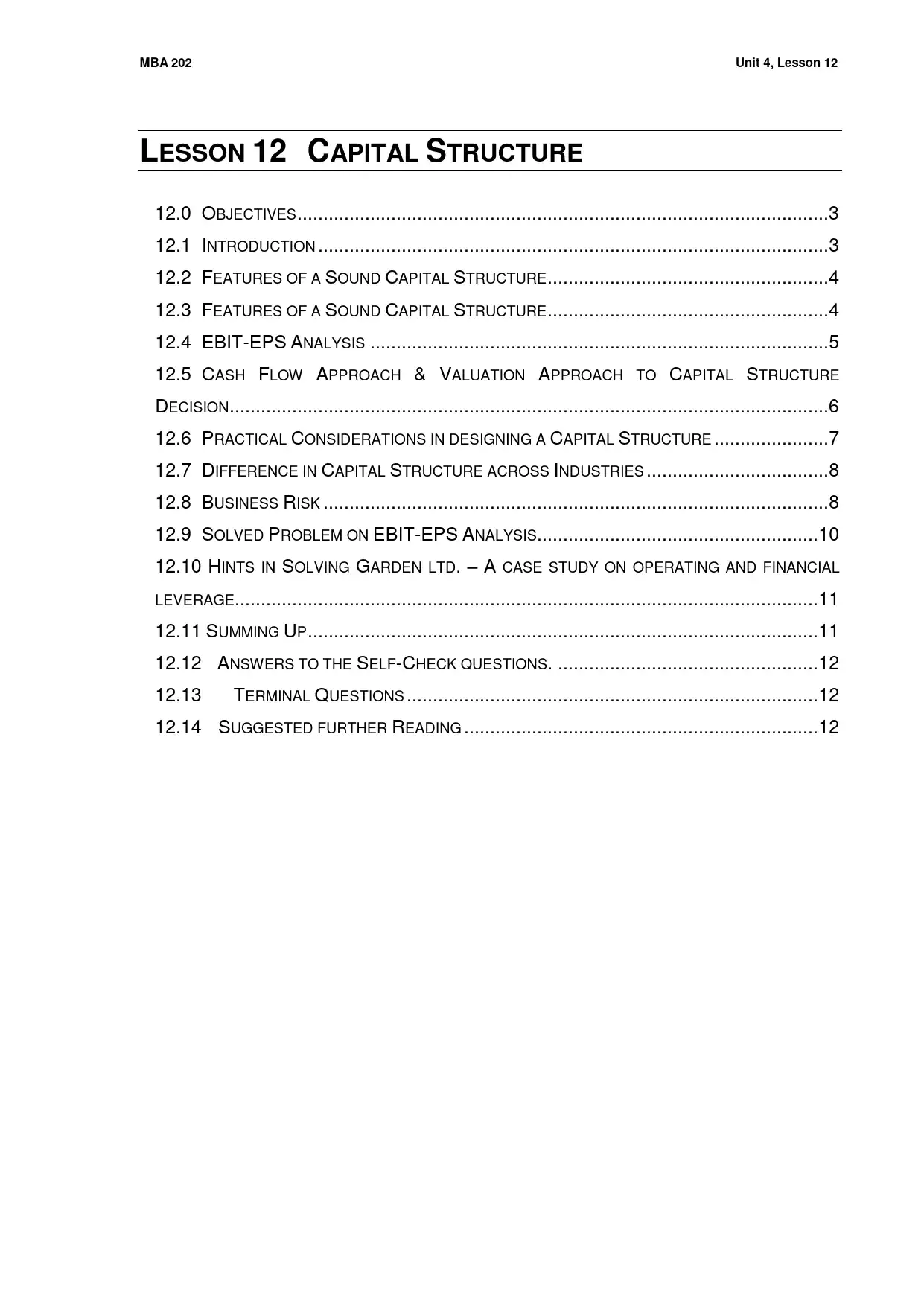
This lesson explores practical capital structure decision-making, including features of sound capital structures, EBIT-EPS analysis, cash flow and valuation approaches, control, flexibility, loan covenants, and agency costs. It discusses capital structure differences across industries, as well as business, operating, and financial risk, using solved cases and analytical models to guide managers.
by Aleena Parvez | Oct 31, 2025
The lesson tackles theories of capital structure—debt vs. equity, Modigliani-Miller propositions, arbitrage process, Net Income and Net Operating Income approaches, and traditional theory. It explains leverage ratios (DSCR, ICR, Debt-Capital, Debt-Equity) with real-world finance applications, offering practical insights for structuring business financing and evaluating company performance.
by Aleena Parvez | Oct 31, 2025
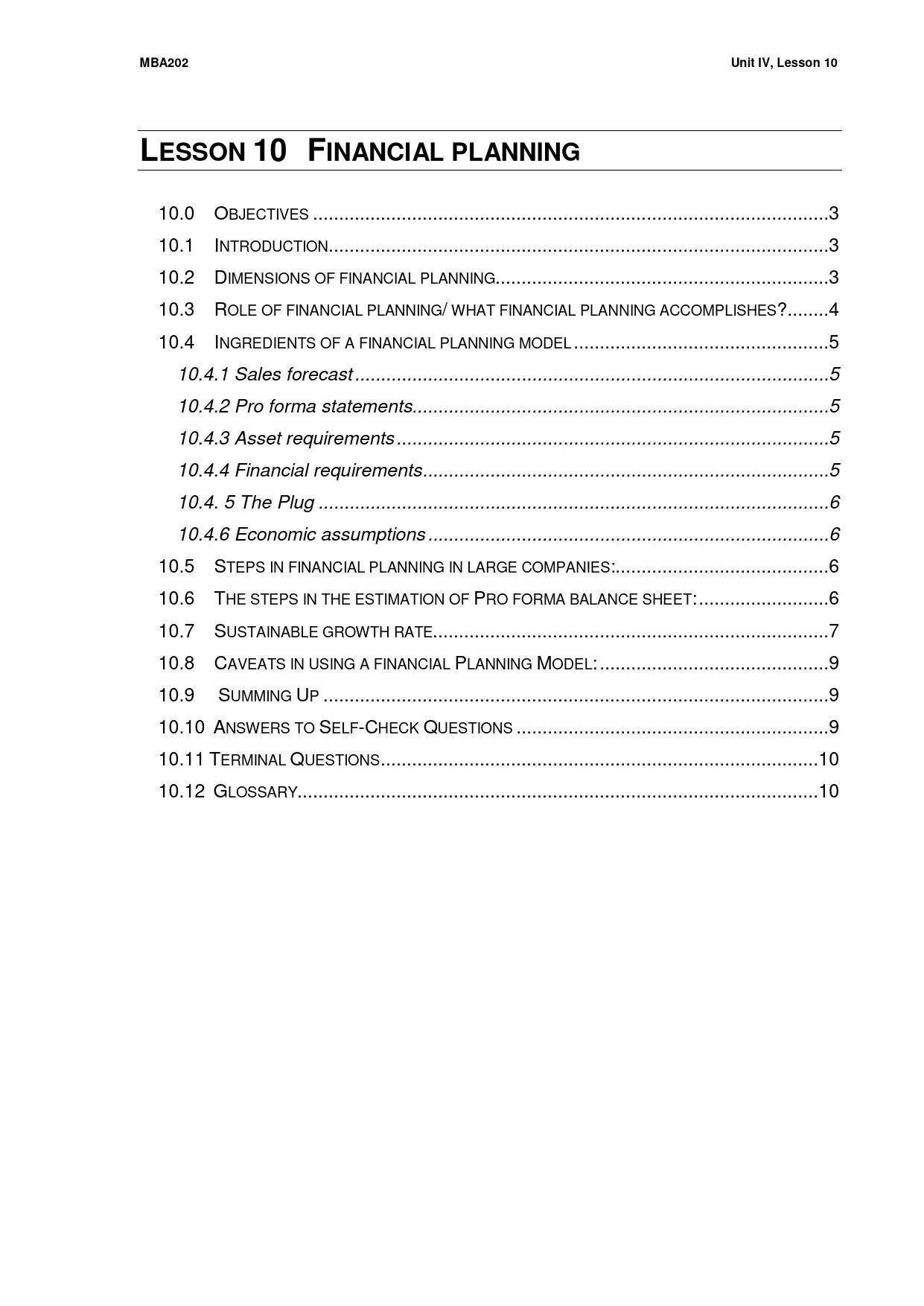
The lesson covers financial planning models, key dimensions, sustainable growth rate, scenario analysis, sales forecasting, pro forma statements, and steps for preparing financial plans and projected balance sheets. It focuses on best practices and caveats in planning, ensuring companies understand funding needs, risk assessment, and the impact of external and internal growth strategies in decision-making.
by Aleena Parvez | Oct 31, 2025
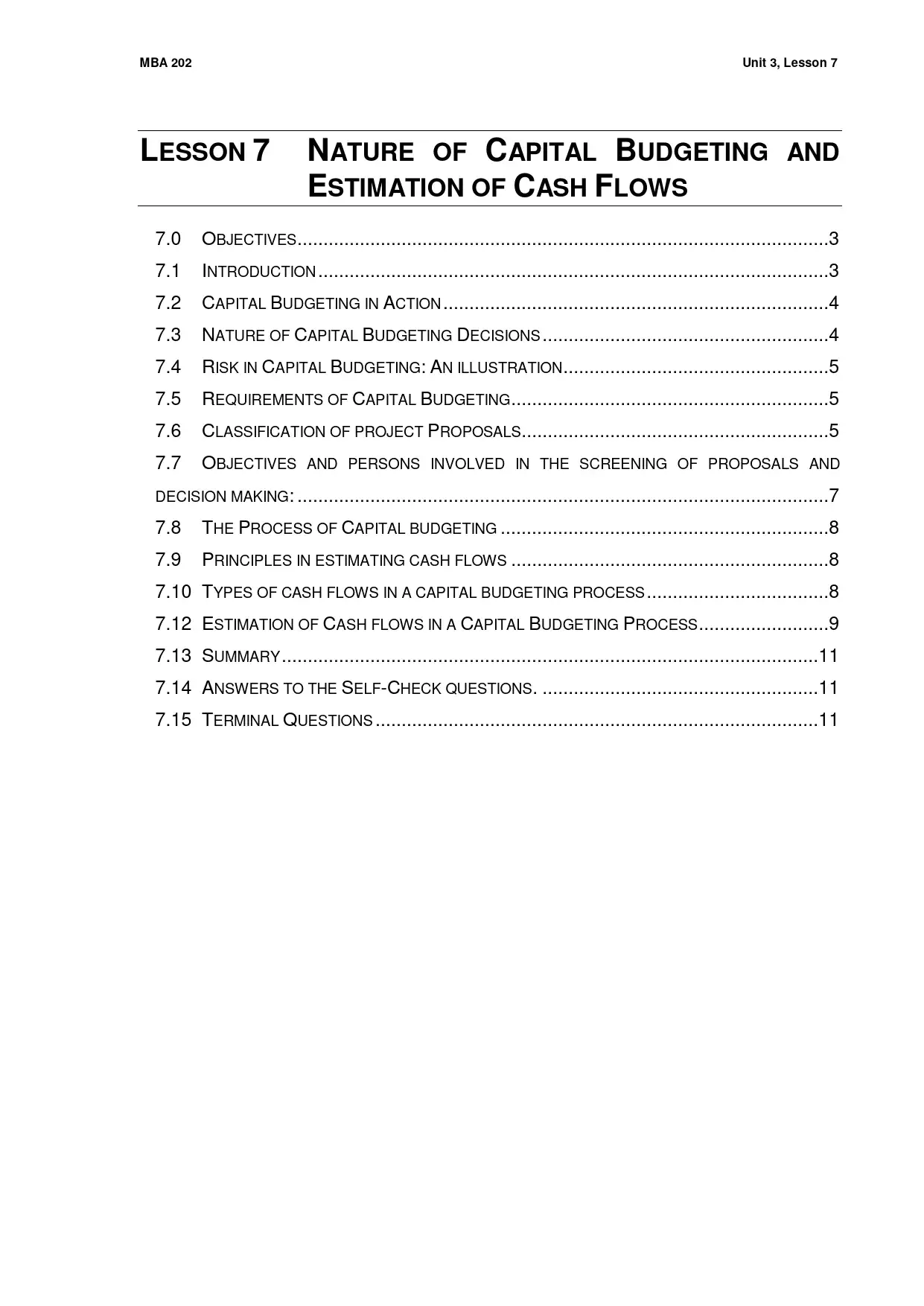
This lesson introduces capital budgeting concepts, the process of evaluating long-term investments, risk illustration, types and classification of project proposals, and stepwise procedures in project screening. It focuses on cash flow estimation methods—initial, net, and terminal—various principles for accurate projection, and offers real-world case examples showing the importance of analyzing sector performance, technological changes, and financial impacts when selecting projects
