Human Resource Planning and Forecasting

Human Resource Planning and Forecasting

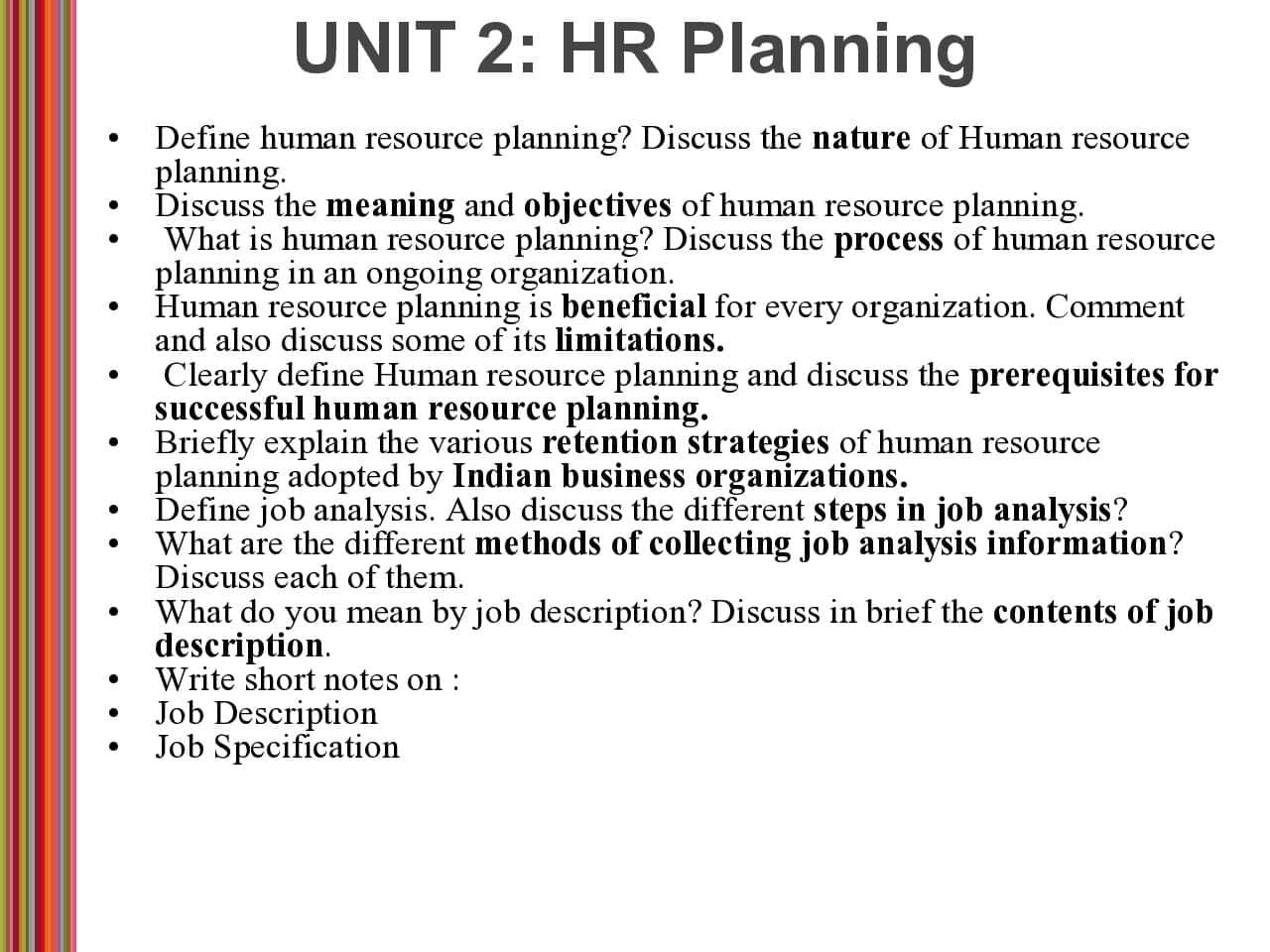
Human resource planning covering definition (assessing organization’s HR needs, forecasting future demand and supply), meaning, objectives/aims, importance, limitations, HRP process (project HR supply, forecast HR needs, compare forecast with supply, plan policies and programs, evaluate effectiveness), HR forecasting (three major steps), planning for anticipated shortages (transfer, train, overtime, increase productivity, hire part-time/temporary/permanent, subcontract, capital substitution).

Selection Interviewing and Induction

Selection Interviewing and Induction

Selection interviewing and induction covering selection definition, difference between recruitment and selection (5 key differences), importance and significance of selection, selection methods (bio data form, interviews, written tests, group discussion, role plays, selection tests), types of interviews (unstructured, situational, behavior description, comprehensive structured, structured behavioral, oral interview boards), conducting effective interviews, advantages and disadvantages of interview method, induction/orientation.

Job Analysis, Description and Specification

Job Analysis, Description and Specification

Job analysis, description and specification covering definitions, importance, job analysis as basic HRM tool (staffing, training, compensation, safety, employee relations, legal), reasons for conducting, steps in job analysis, types of data collected, job analysis methods (questionnaires, observation, work sampling, diary/log, interviewing, specialized, computerized), writing job description (sections, essential functions), job specification (KSAs required, specifications based on judgment vs statistical analysis), person specification (attainment, experience, abilities, aptitude, interests), case study (Apollo Hospital storekeeper).

Performance Appraisal Methods

Performance Appraisal Methods

Performance appraisal methods covering meaning of performance appraisal, what to measure and how to measure, appraisal methodologies (graphic rating scale, alternation ranking, paired comparison, forced distribution, critical incident, narrative forms, BARS, computerized), advantages and disadvantages of methods, reasons for appraisal program failure, rating errors (halo effect, leniency, central tendency, similarity errors, bias), and how to avoid appraisal problems through training, regular feedback, clear standards.

Recruitment Sources

Recruitment Sources

Recruitment sources covering internal and external recruitment sources, internal recruitment methods (promotions, transfers, rehiring, succession planning), external recruitment sources (advertisements, employee referrals, educational institutions, employment agencies, internet recruiting), recent trends (outsourcing, poaching, e-recruitment), advantages and disadvantages of internal and external recruitment, and industry examples (TCS, Wipro recruitment procedures).